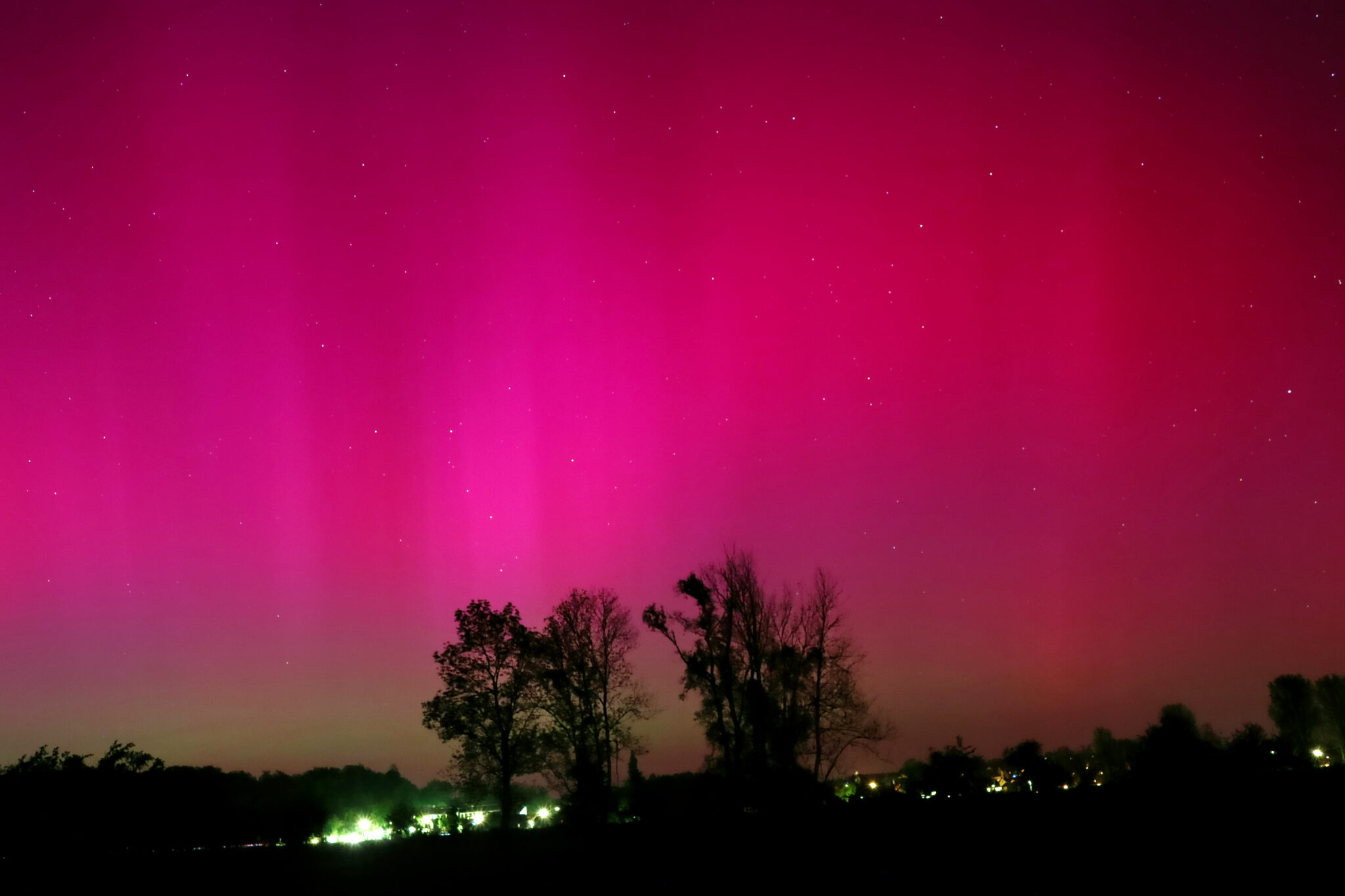
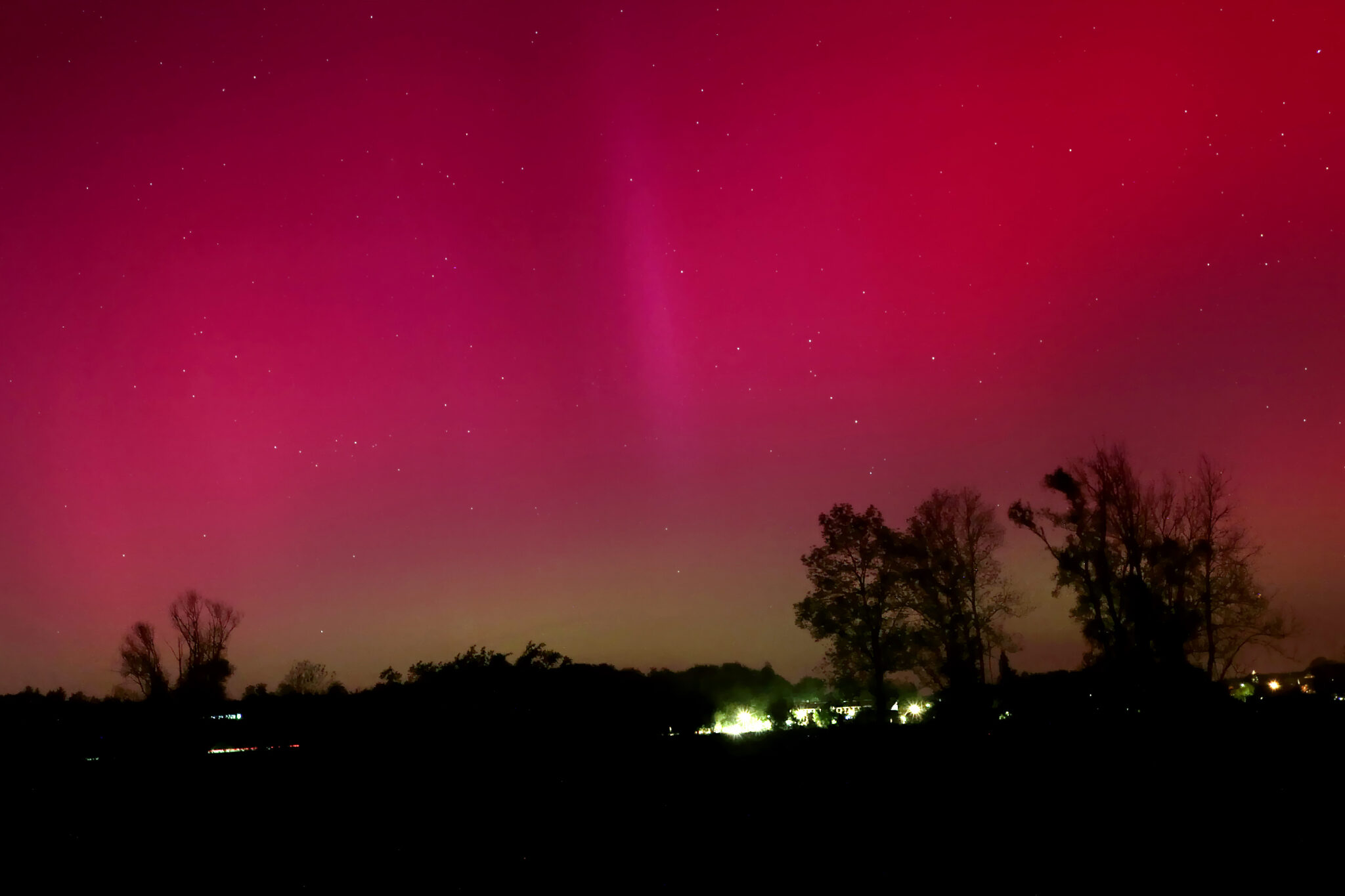
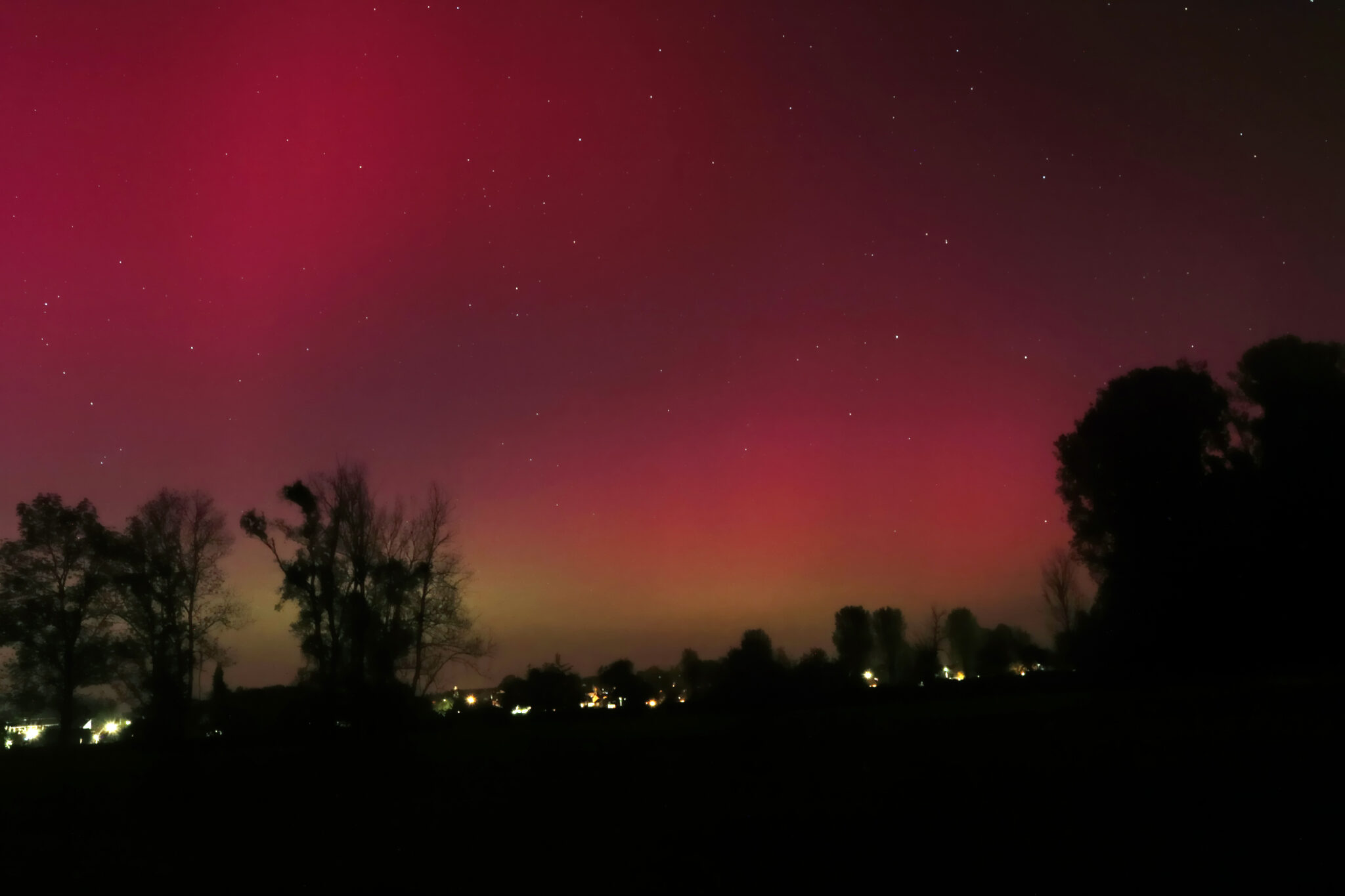
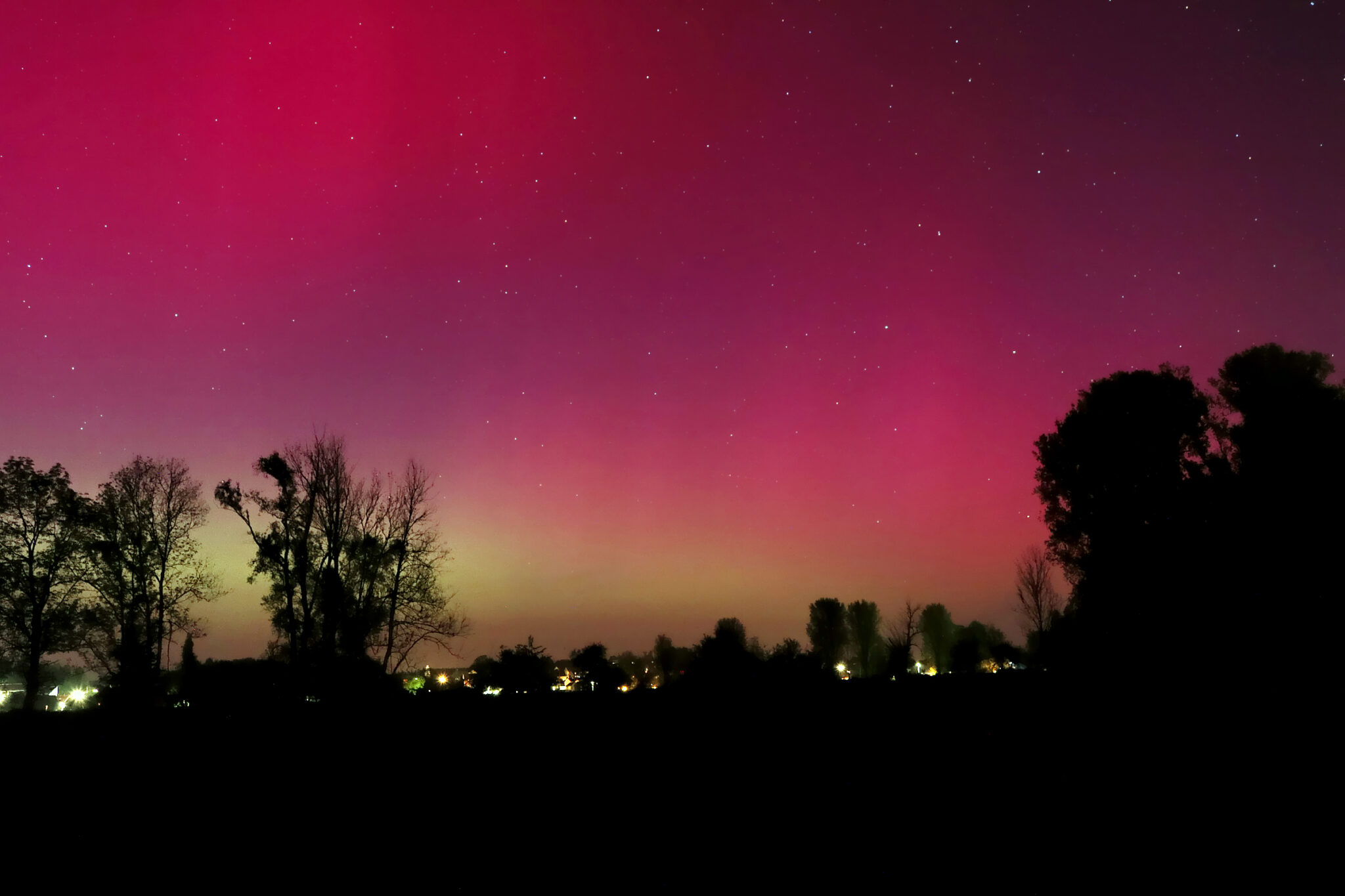
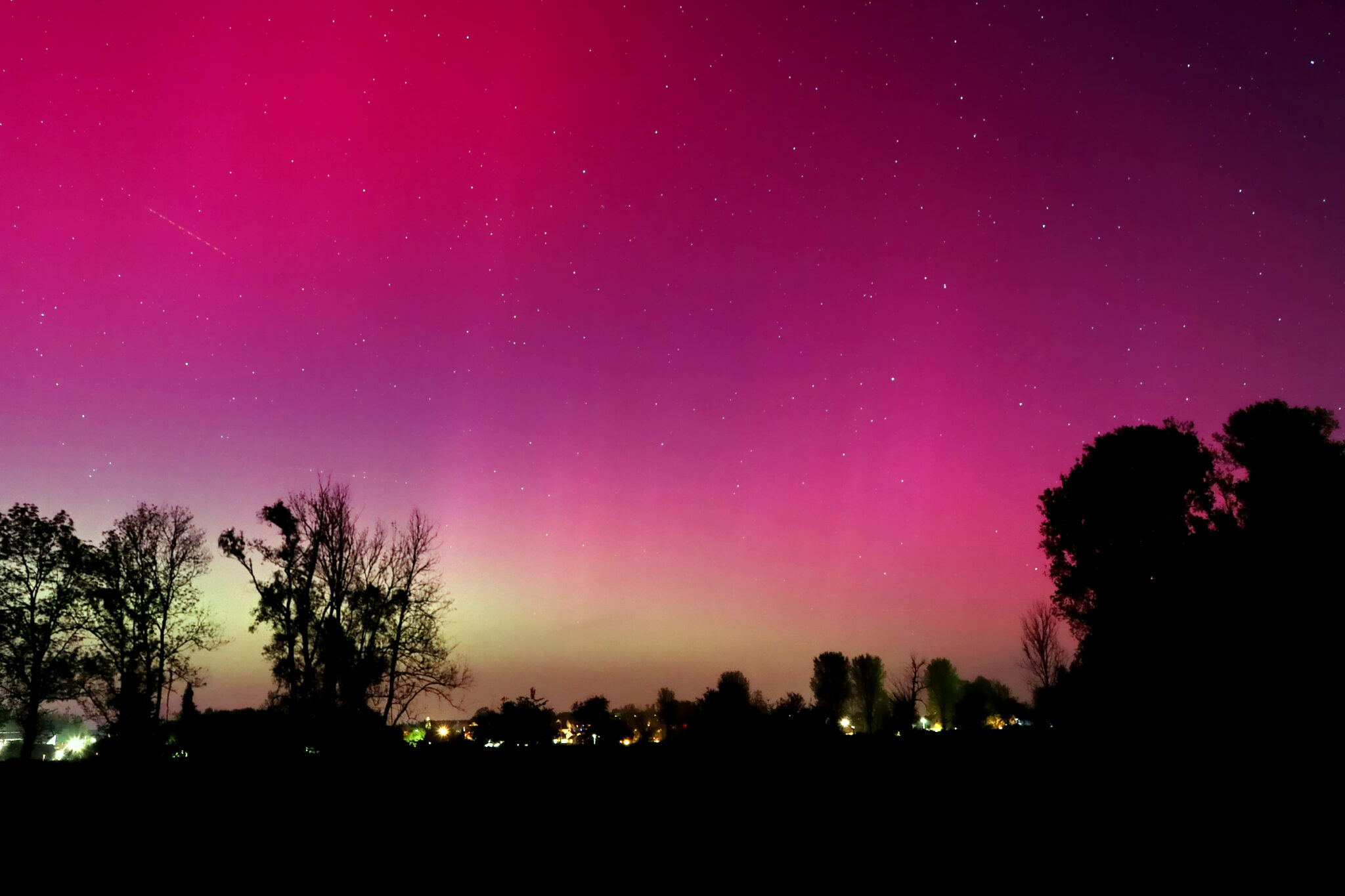
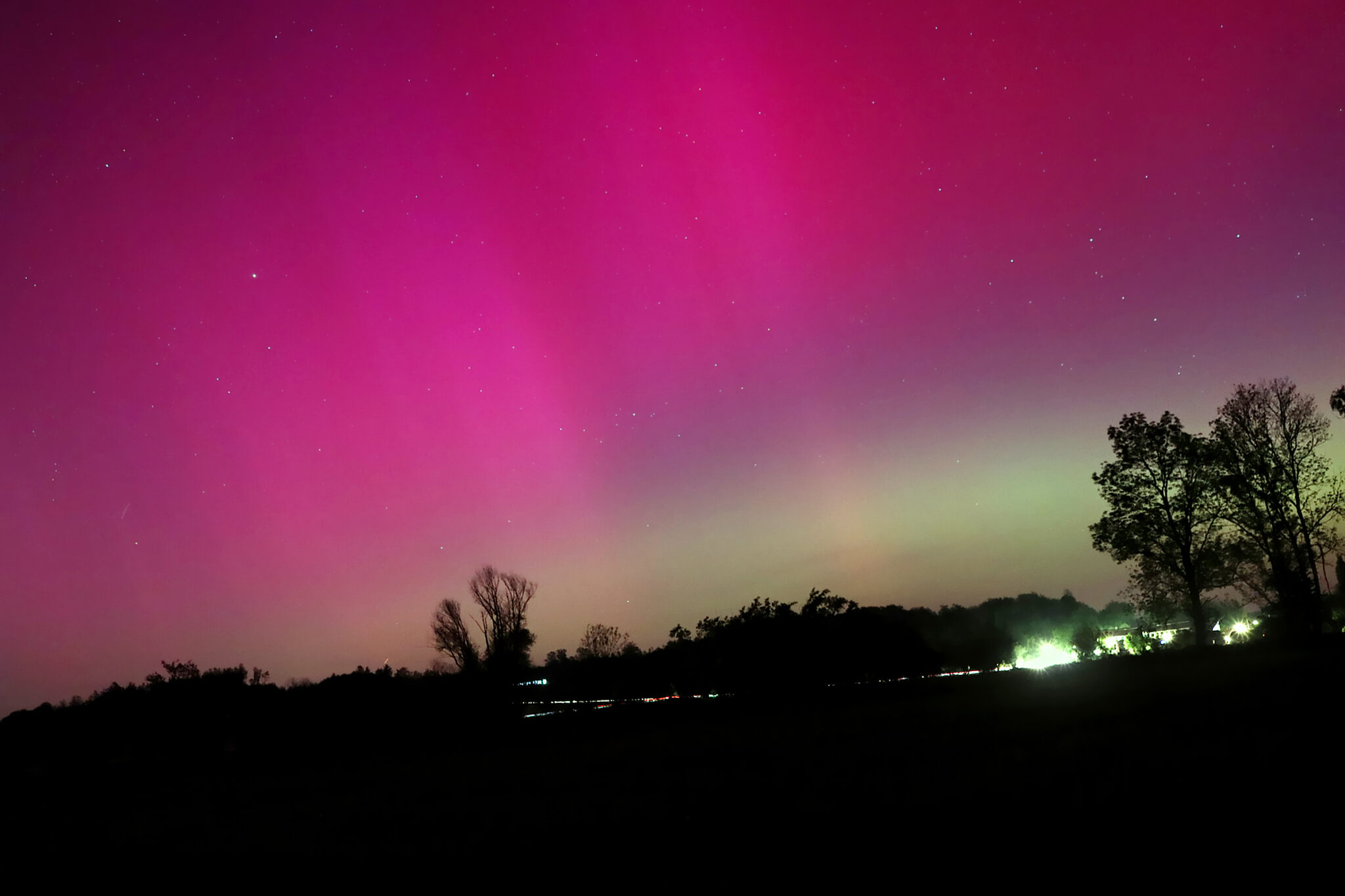
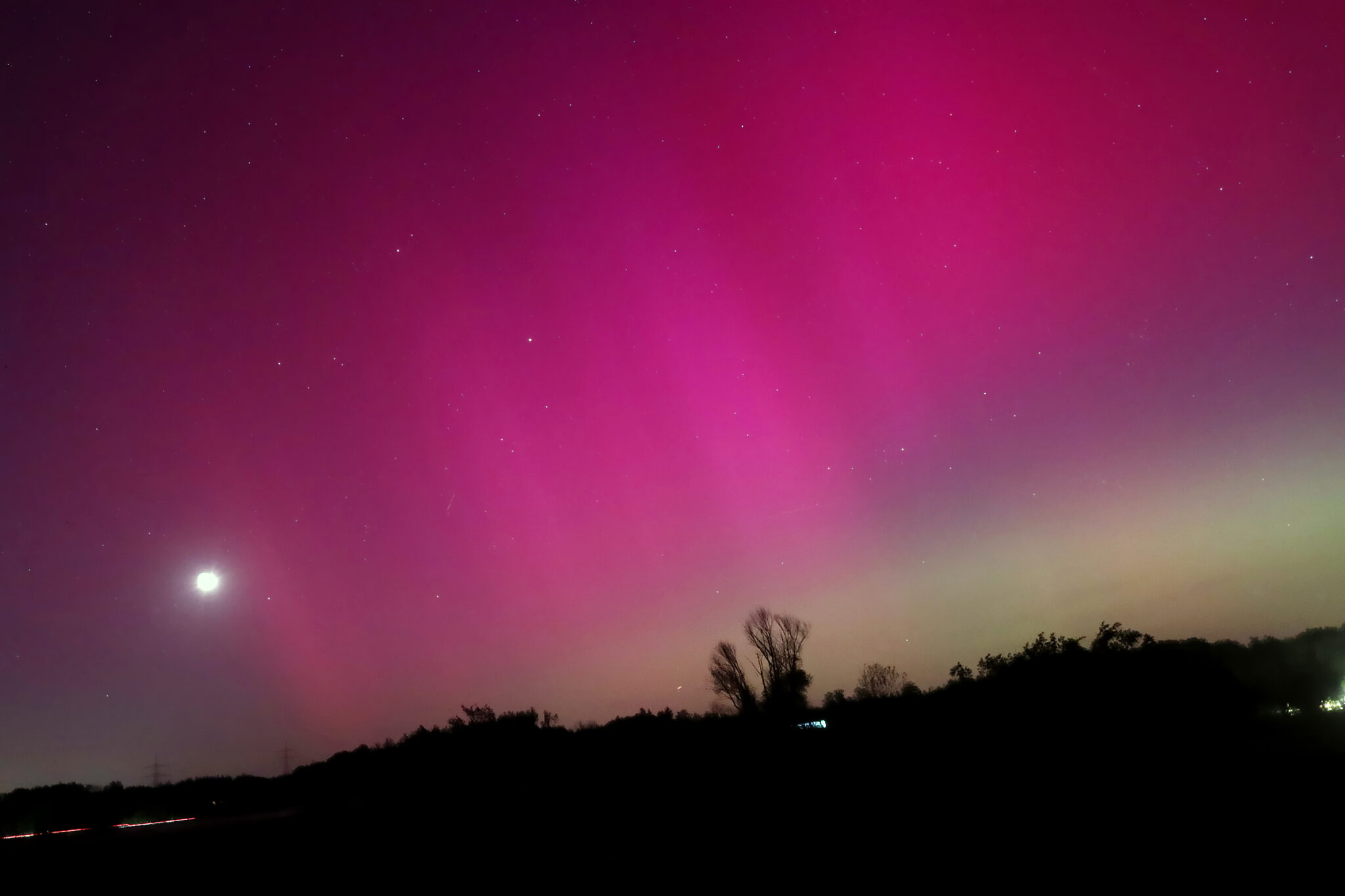
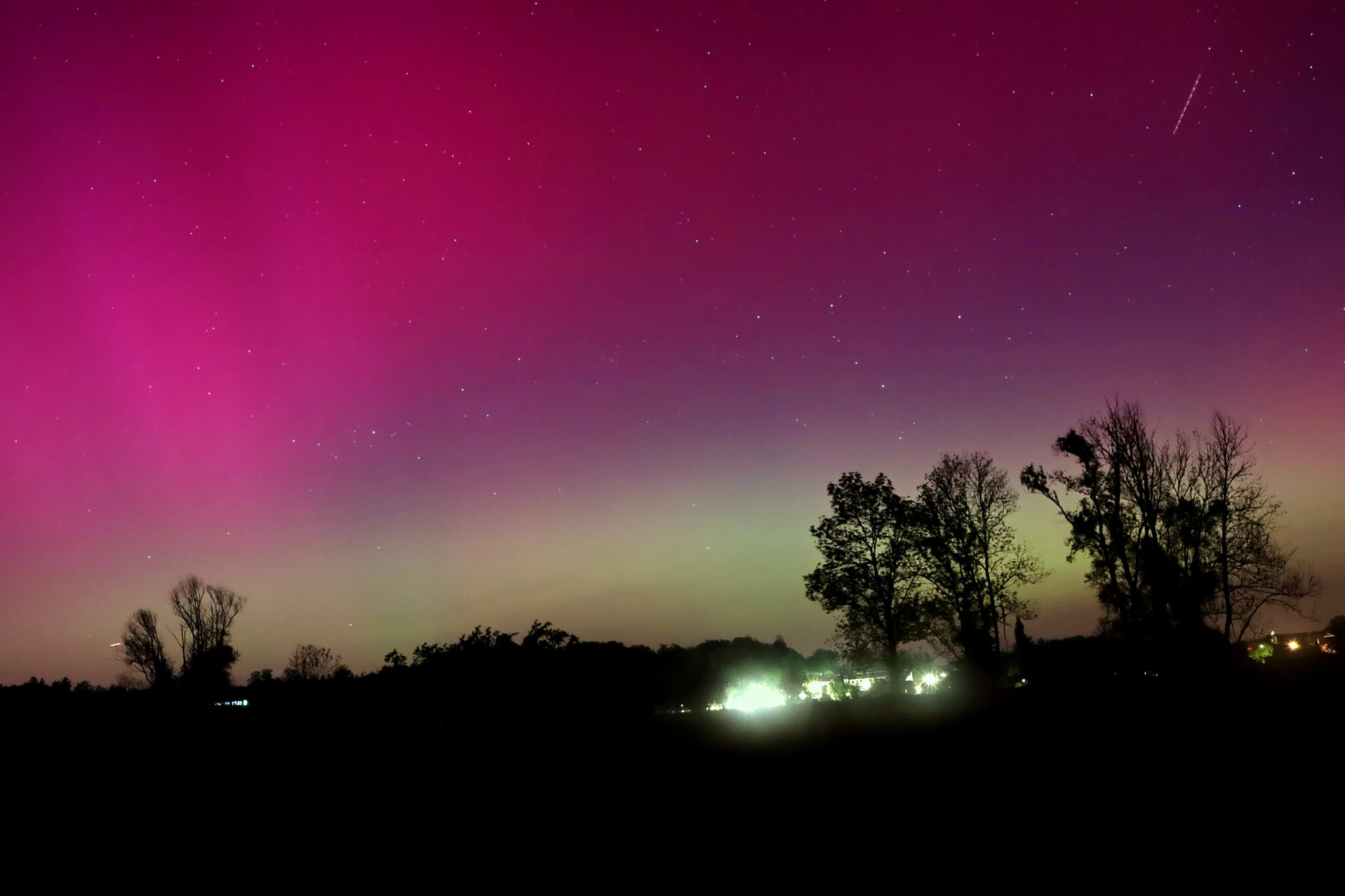
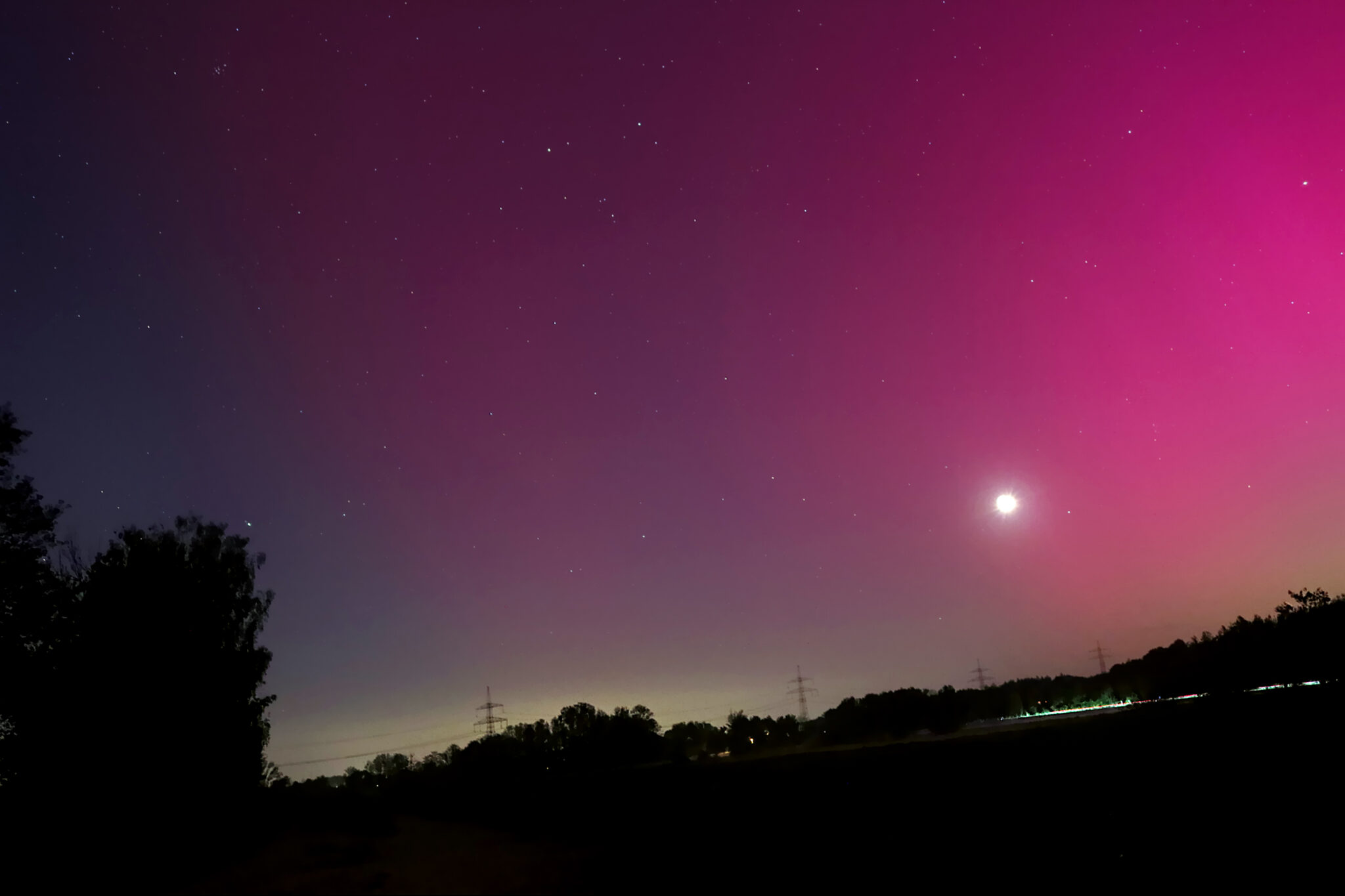
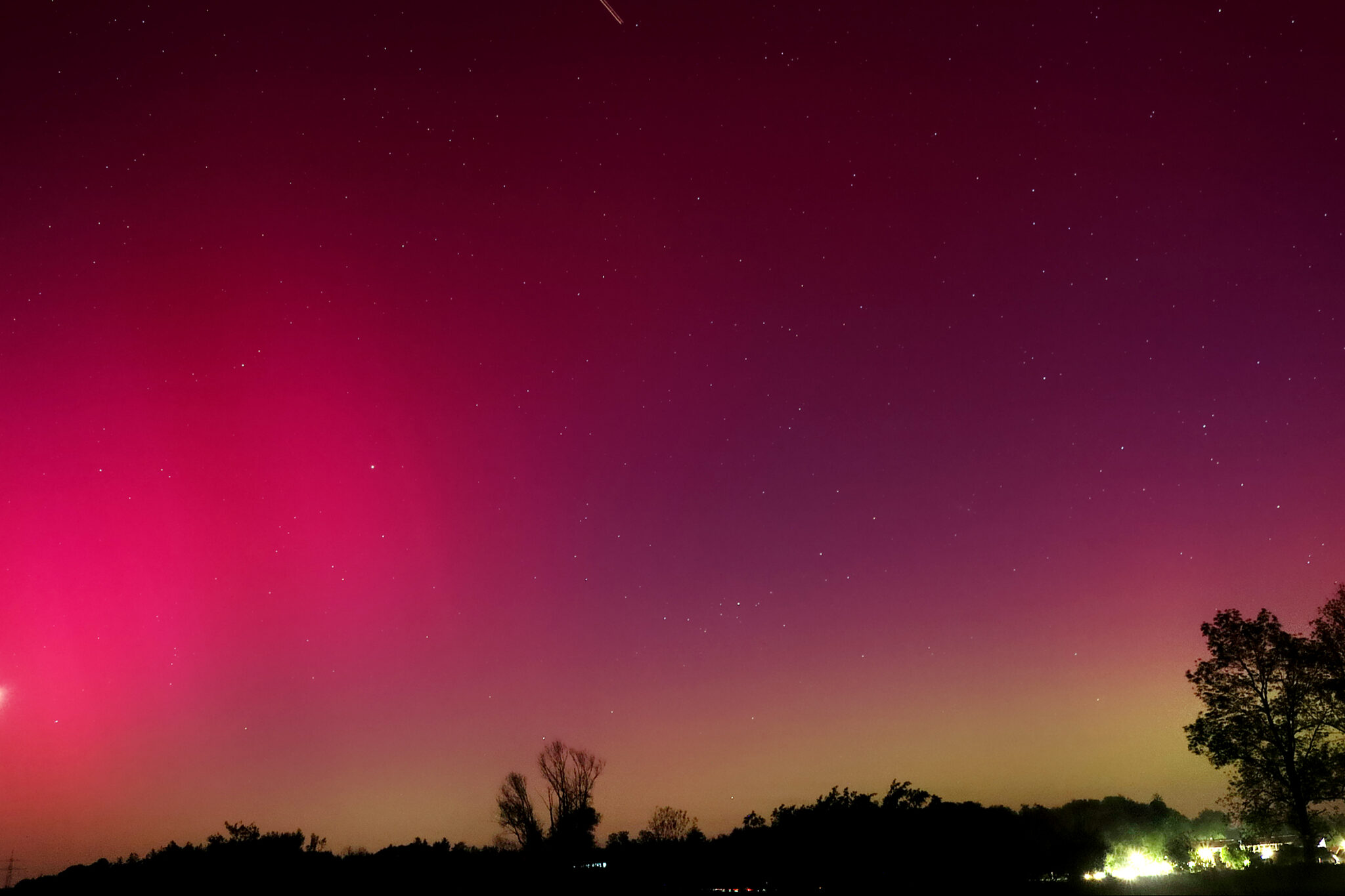
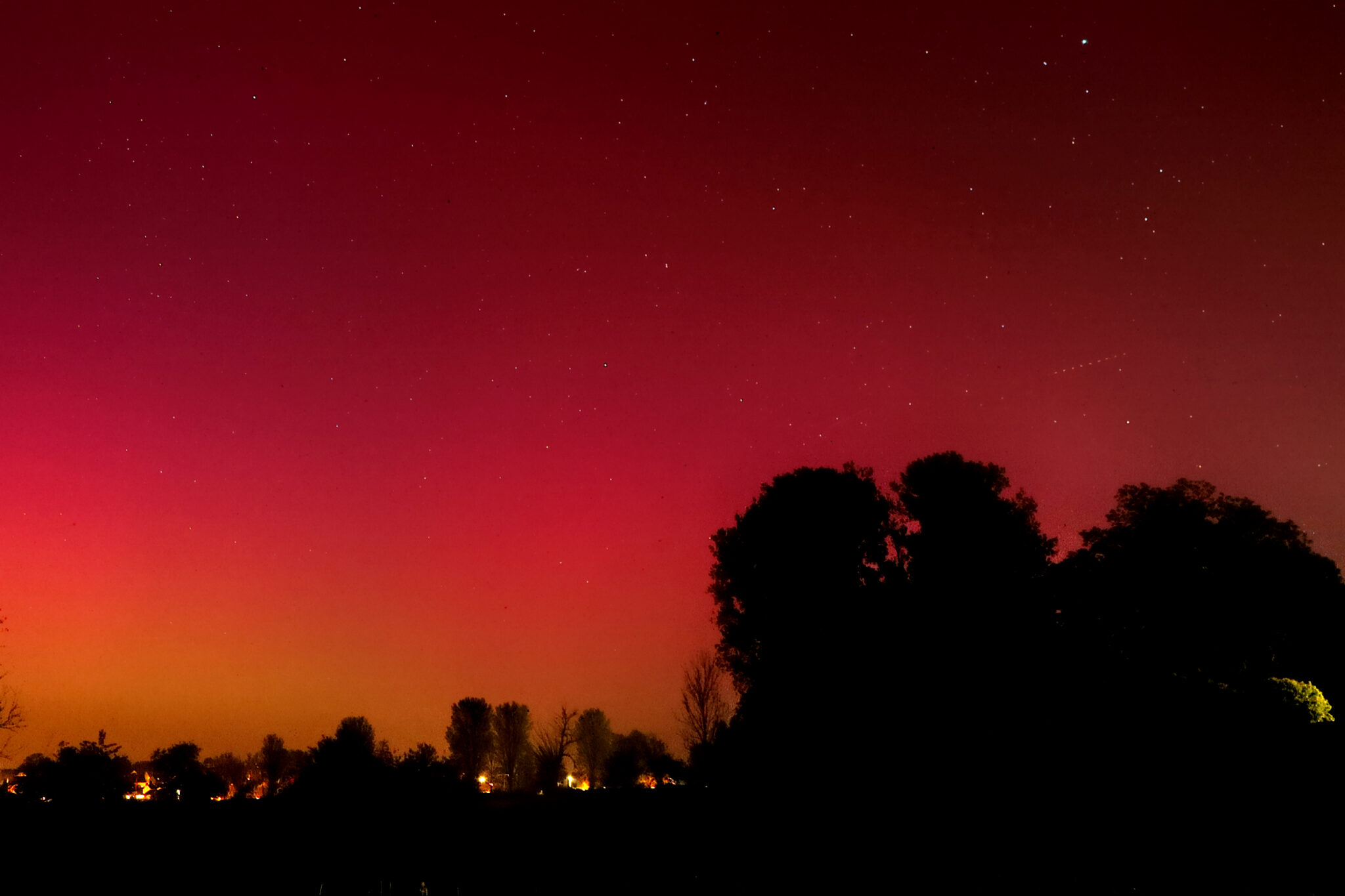
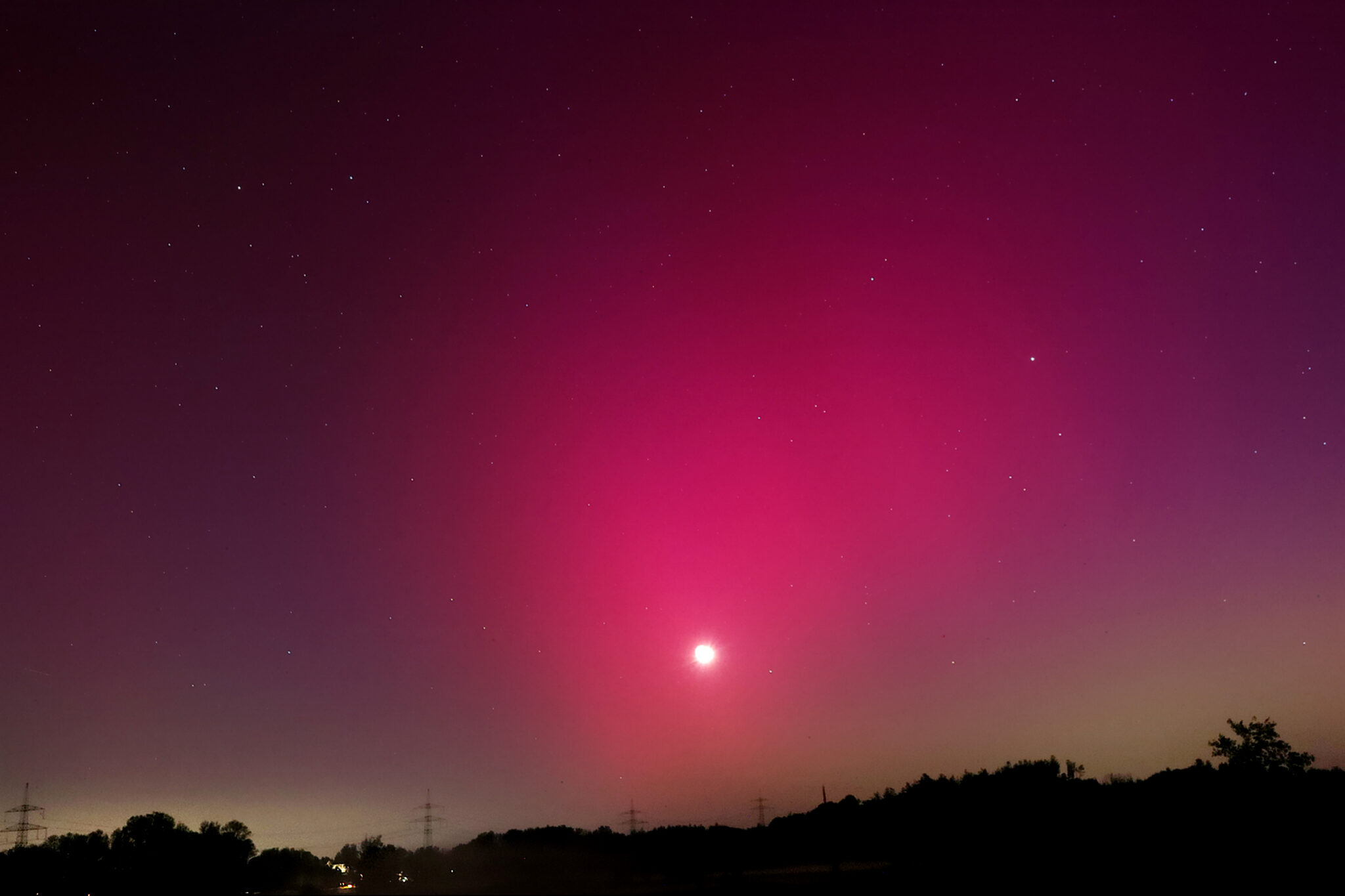
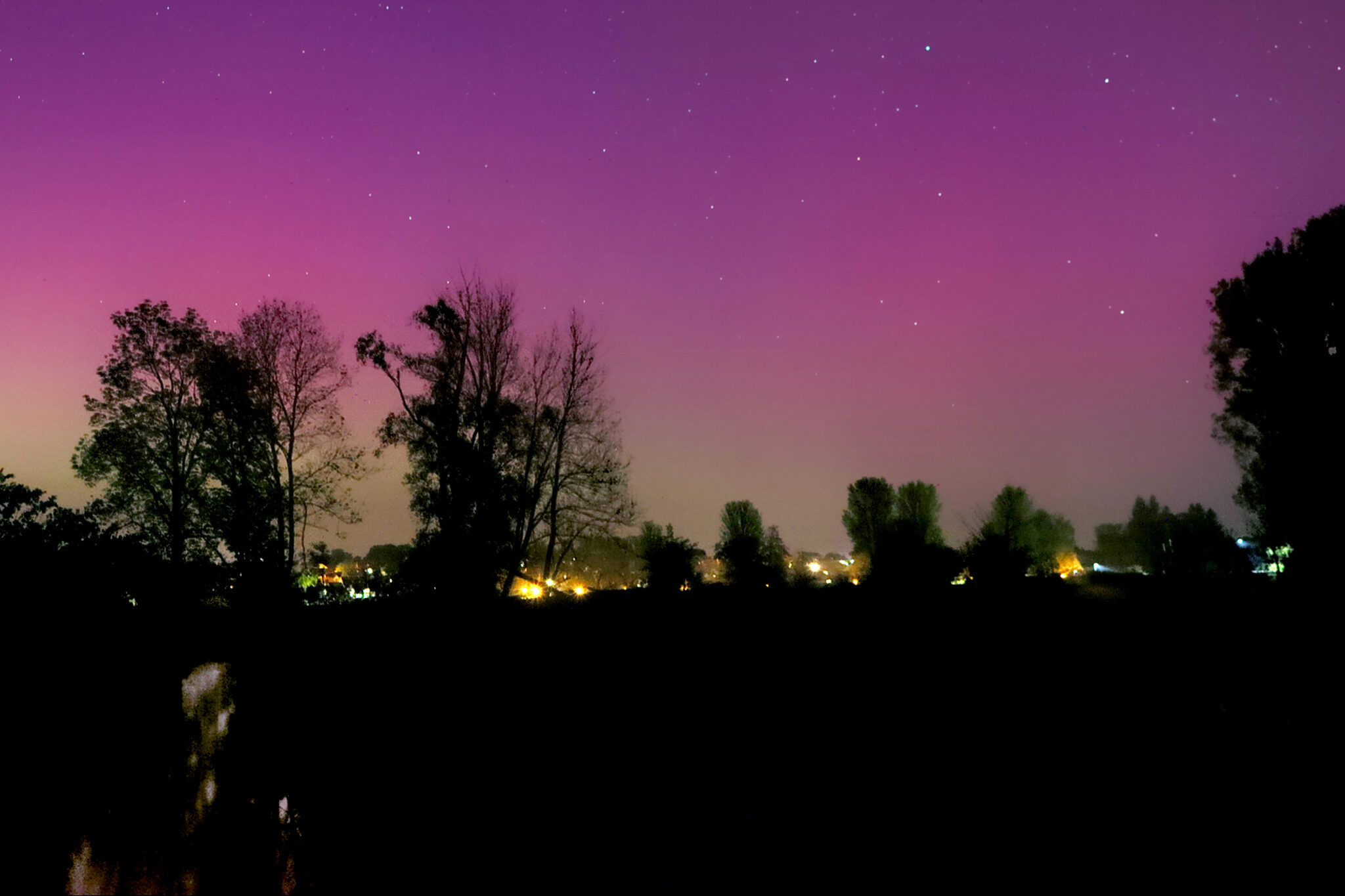
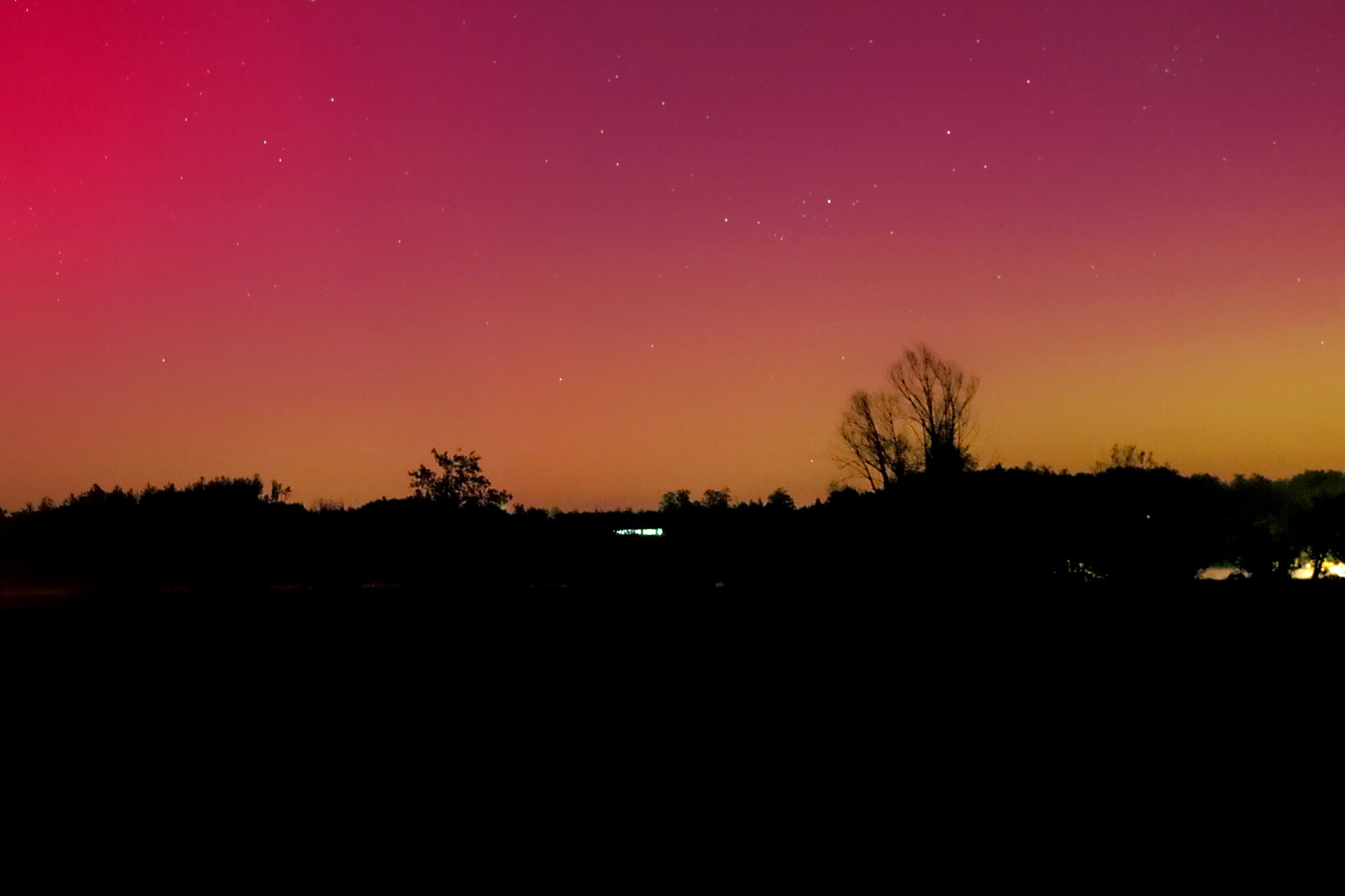
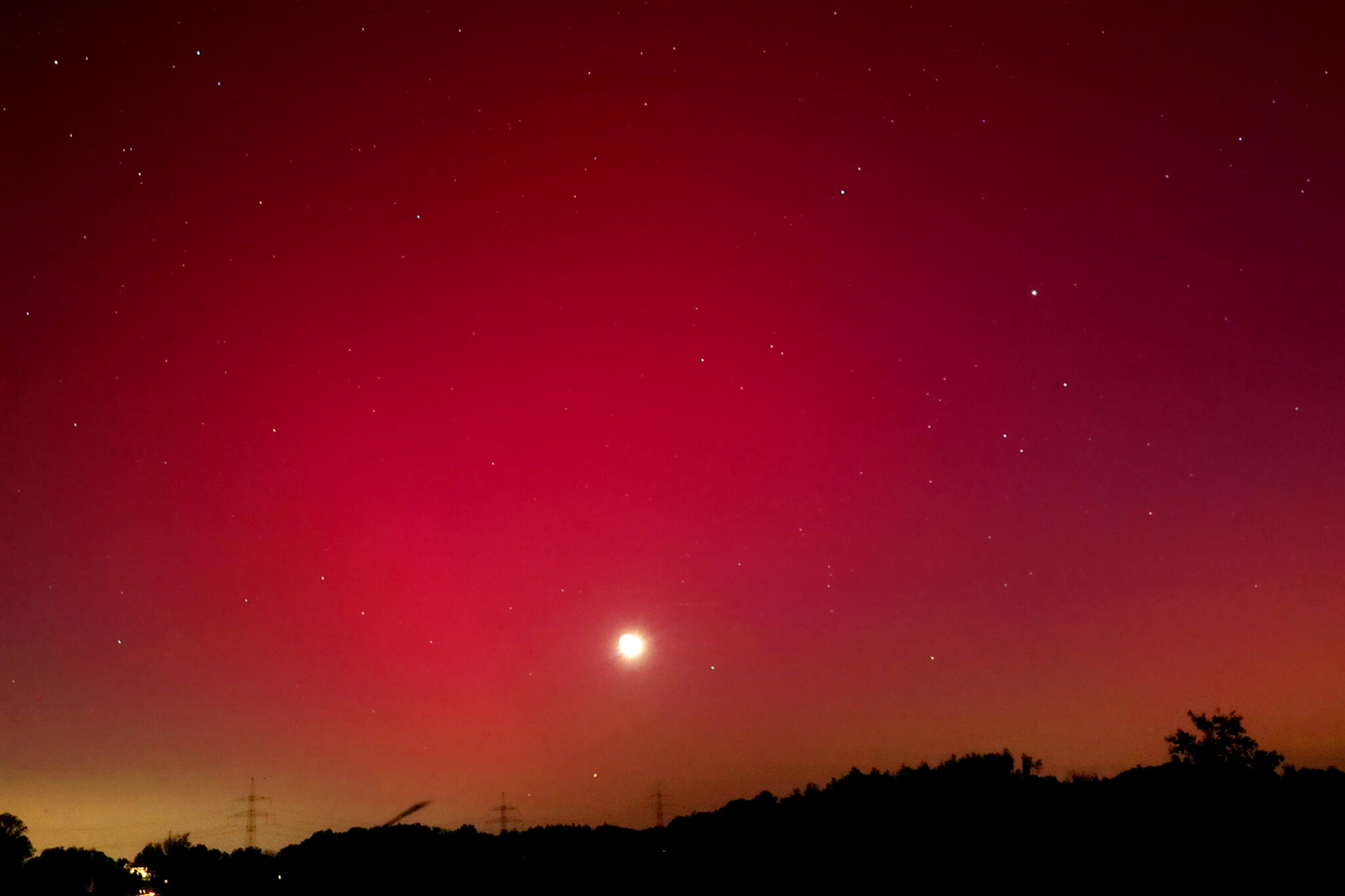
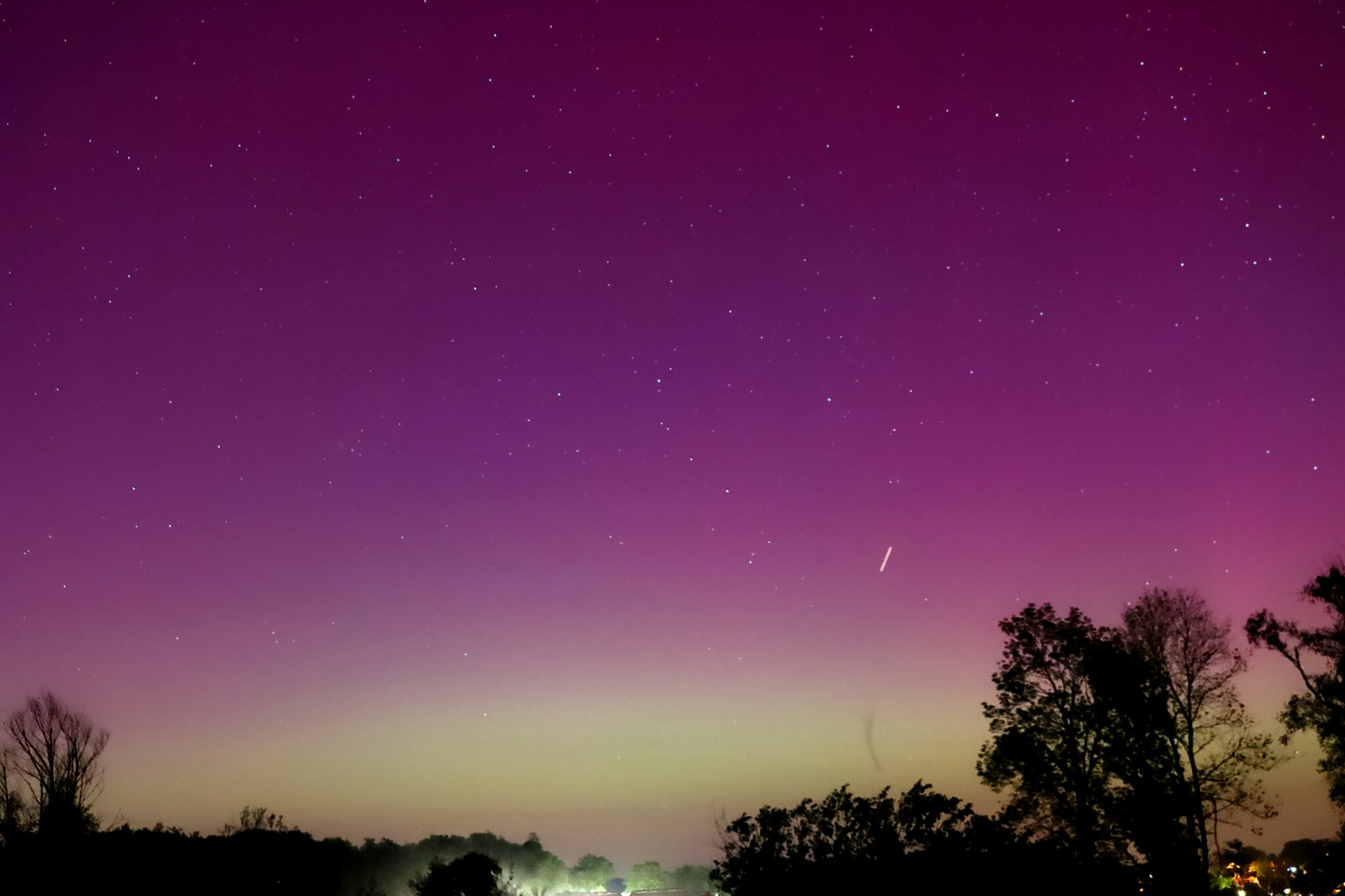
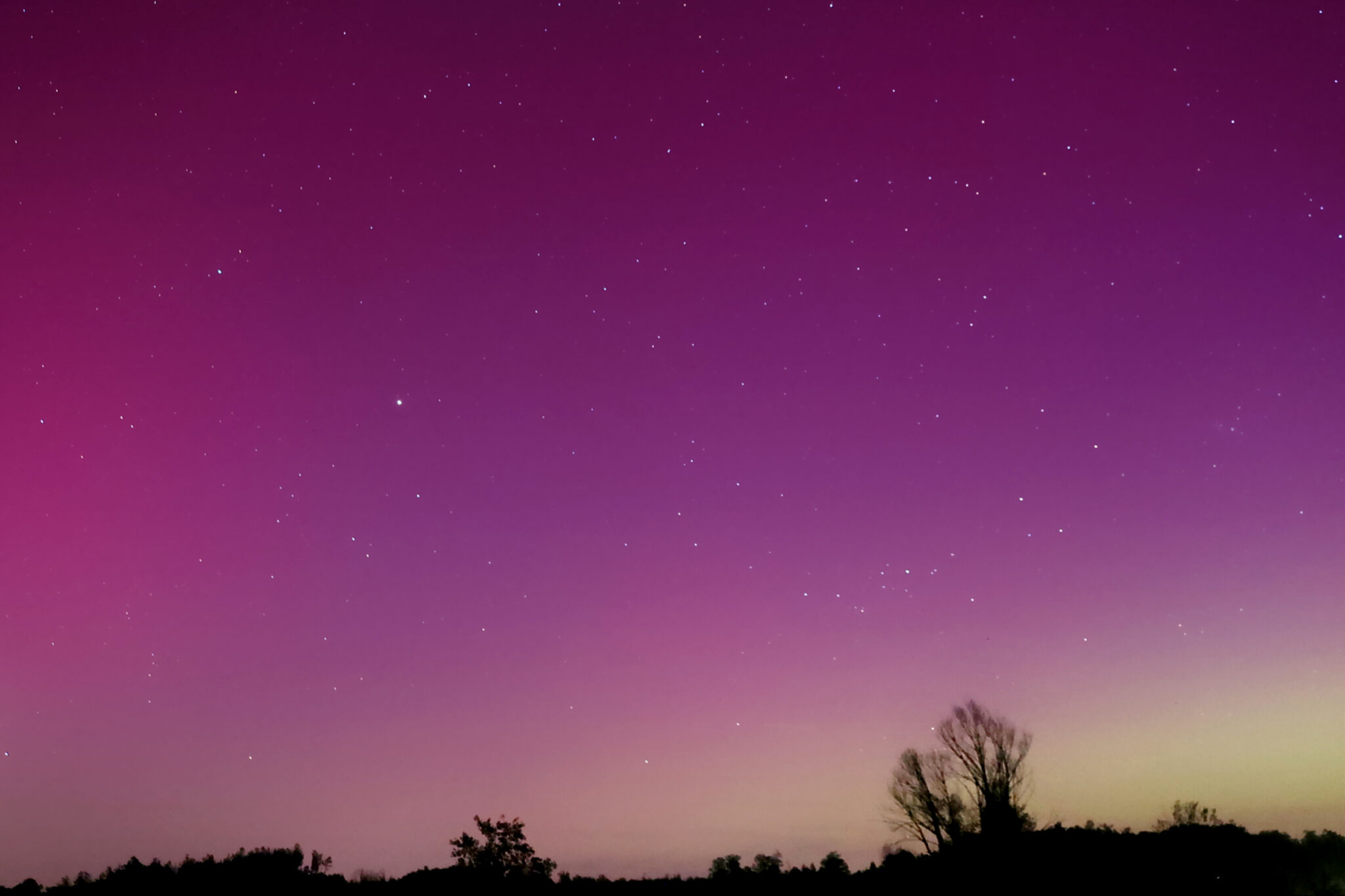
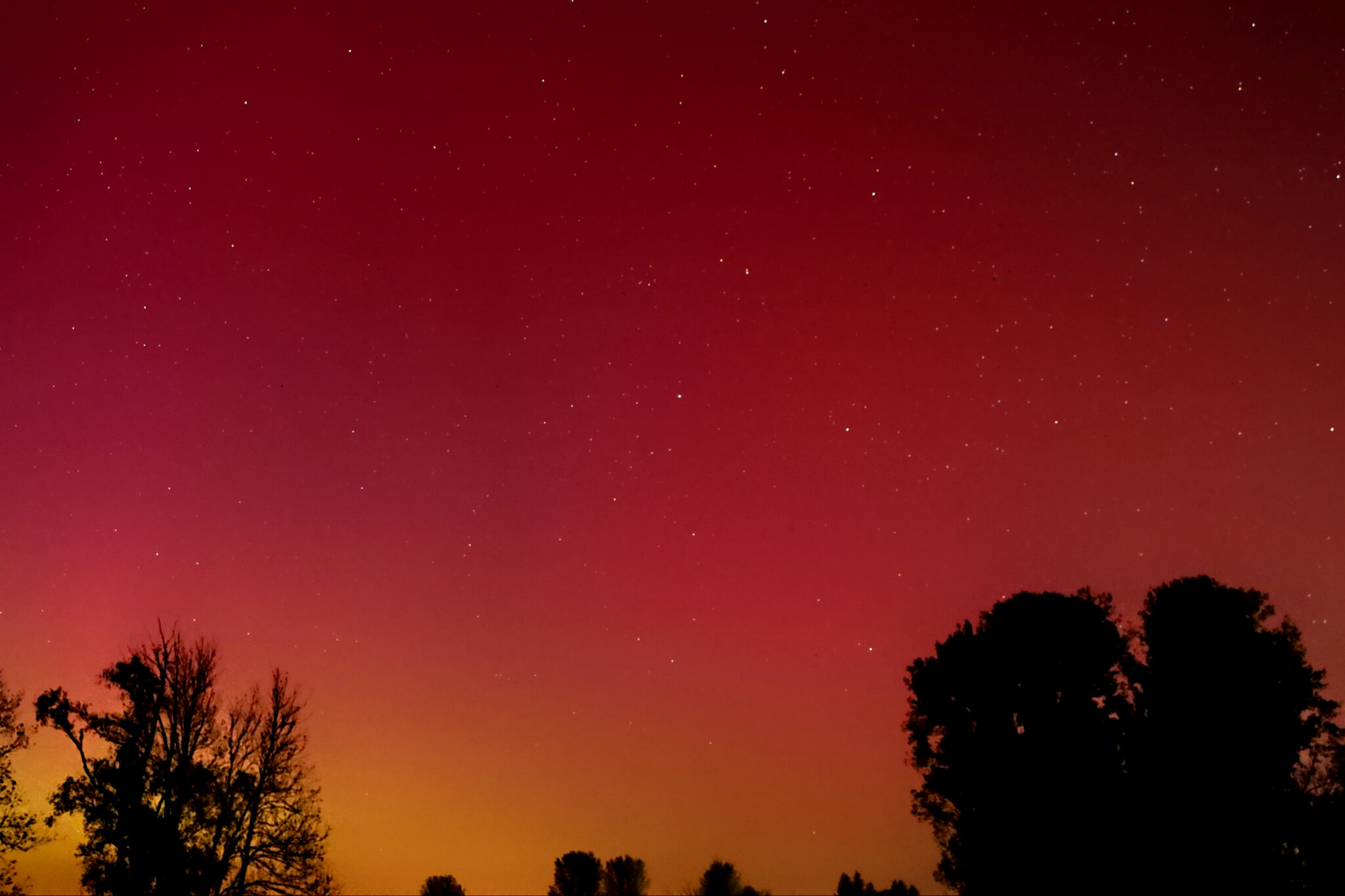
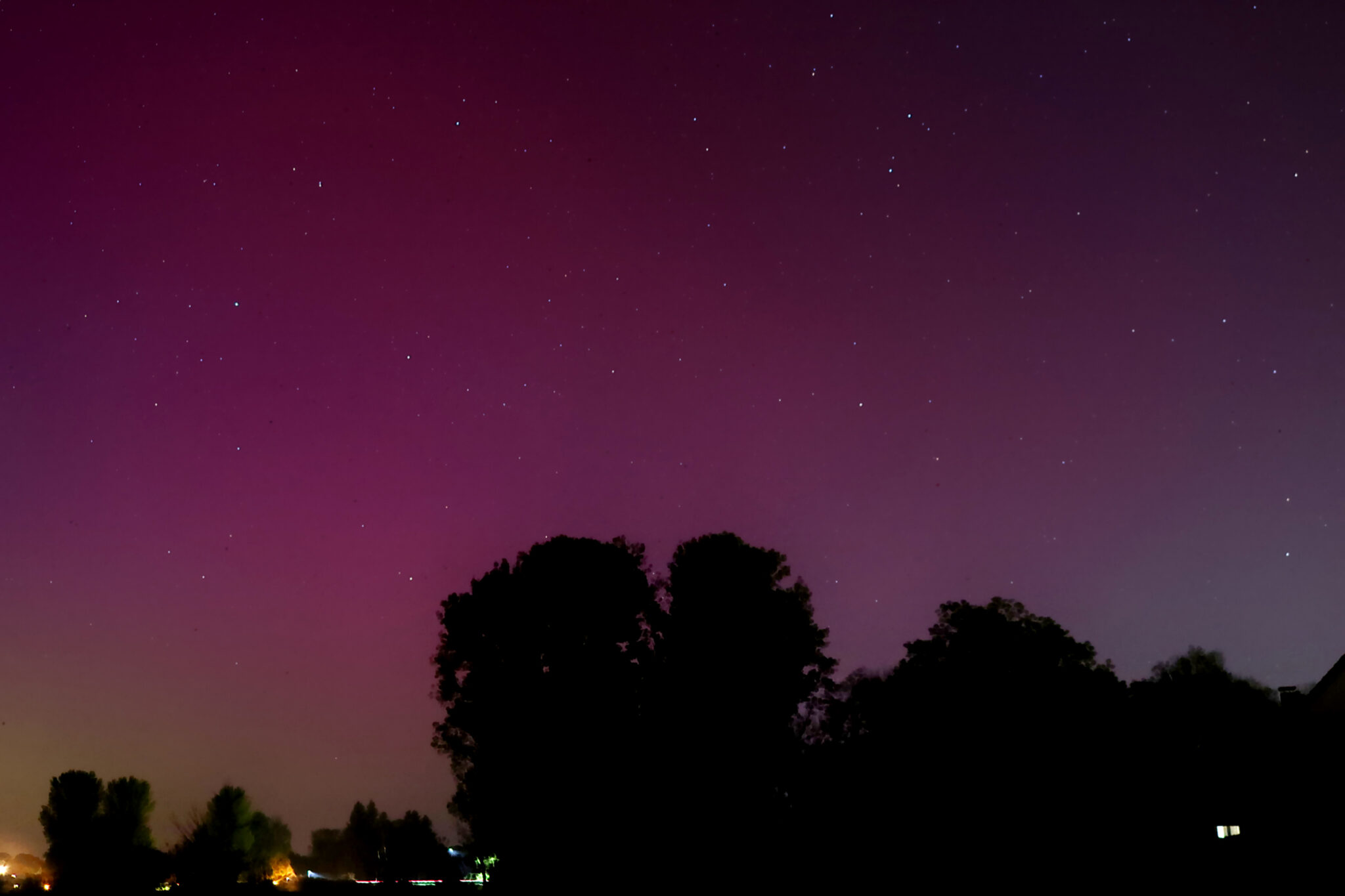
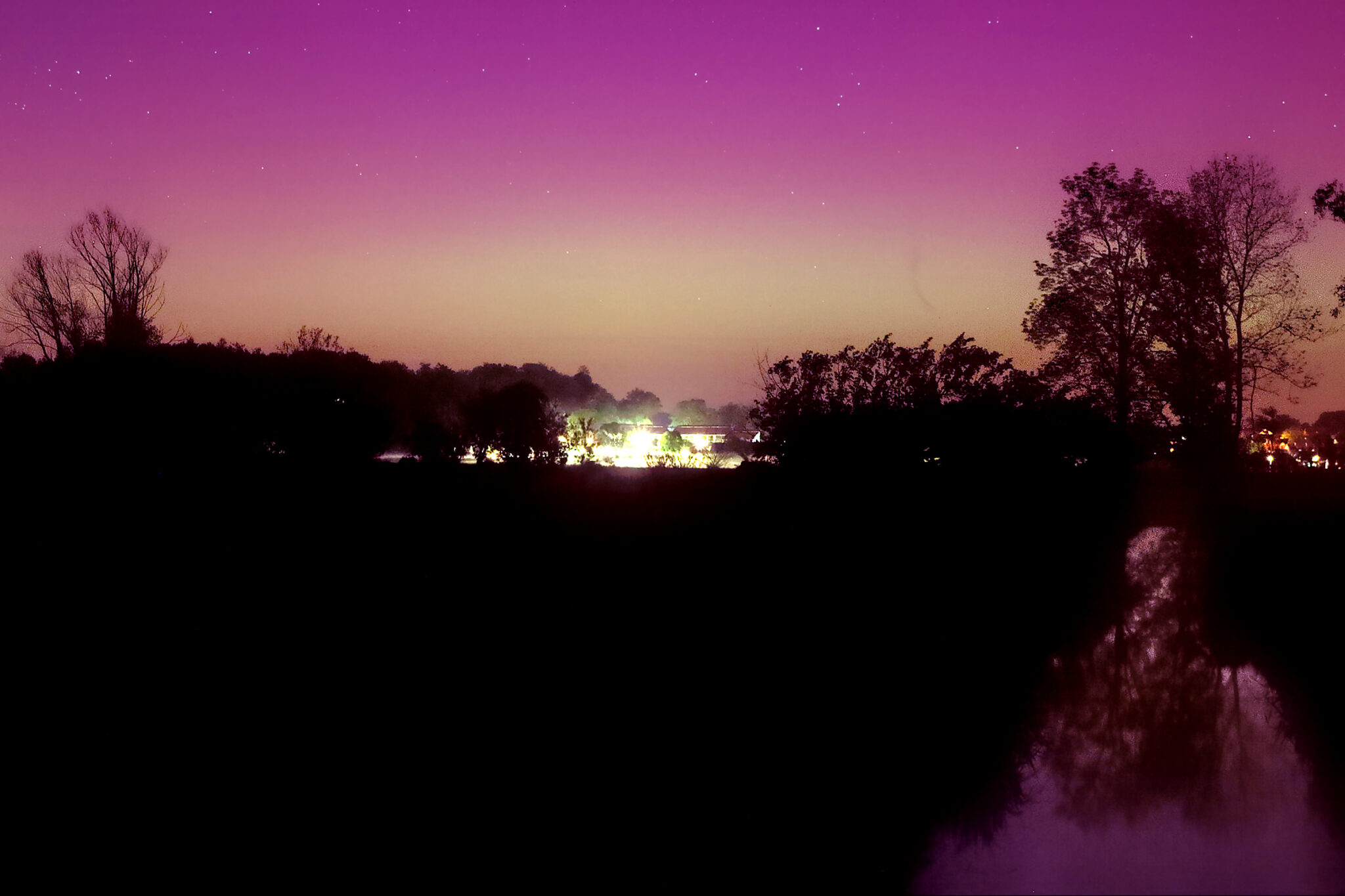
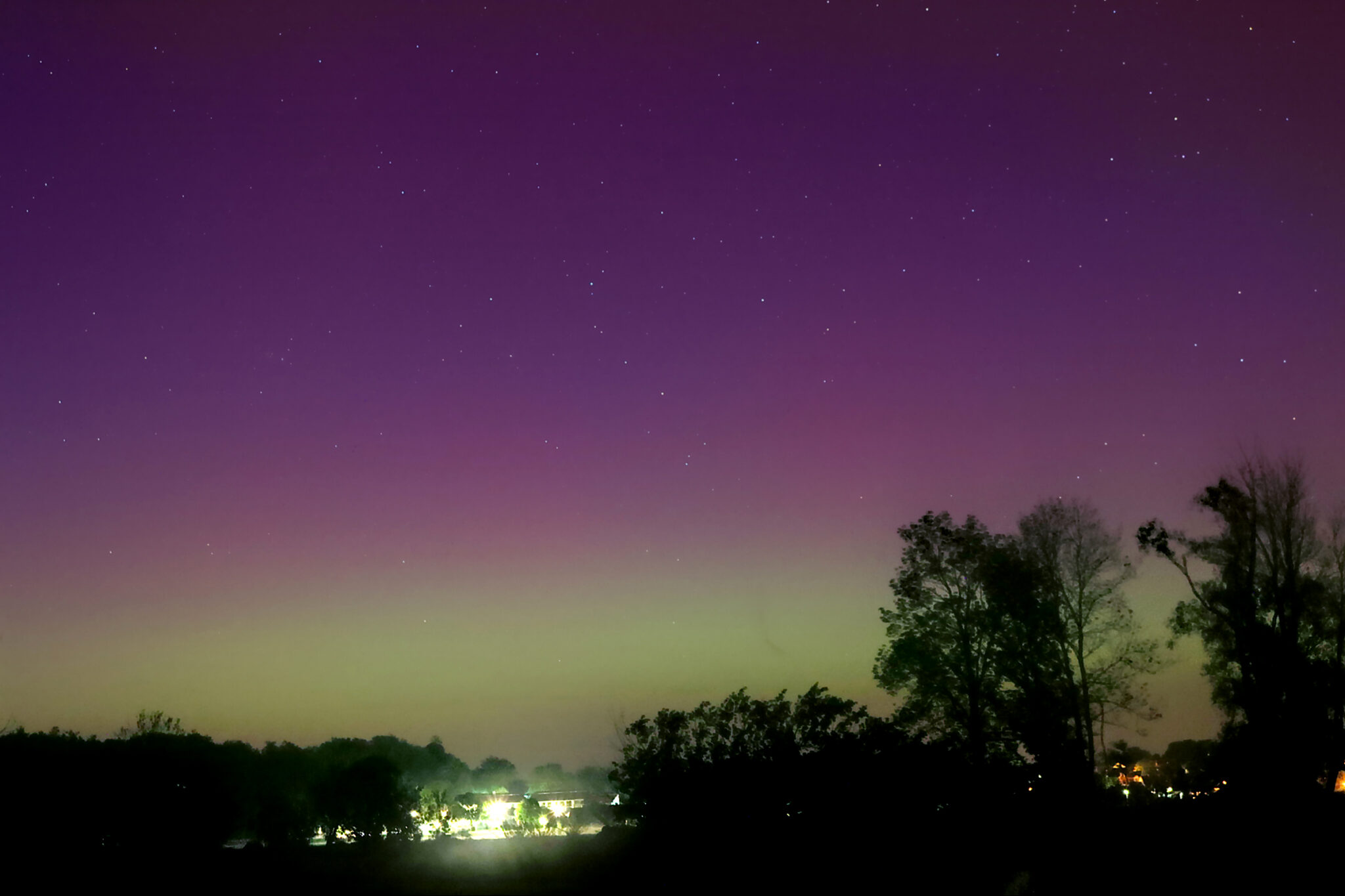
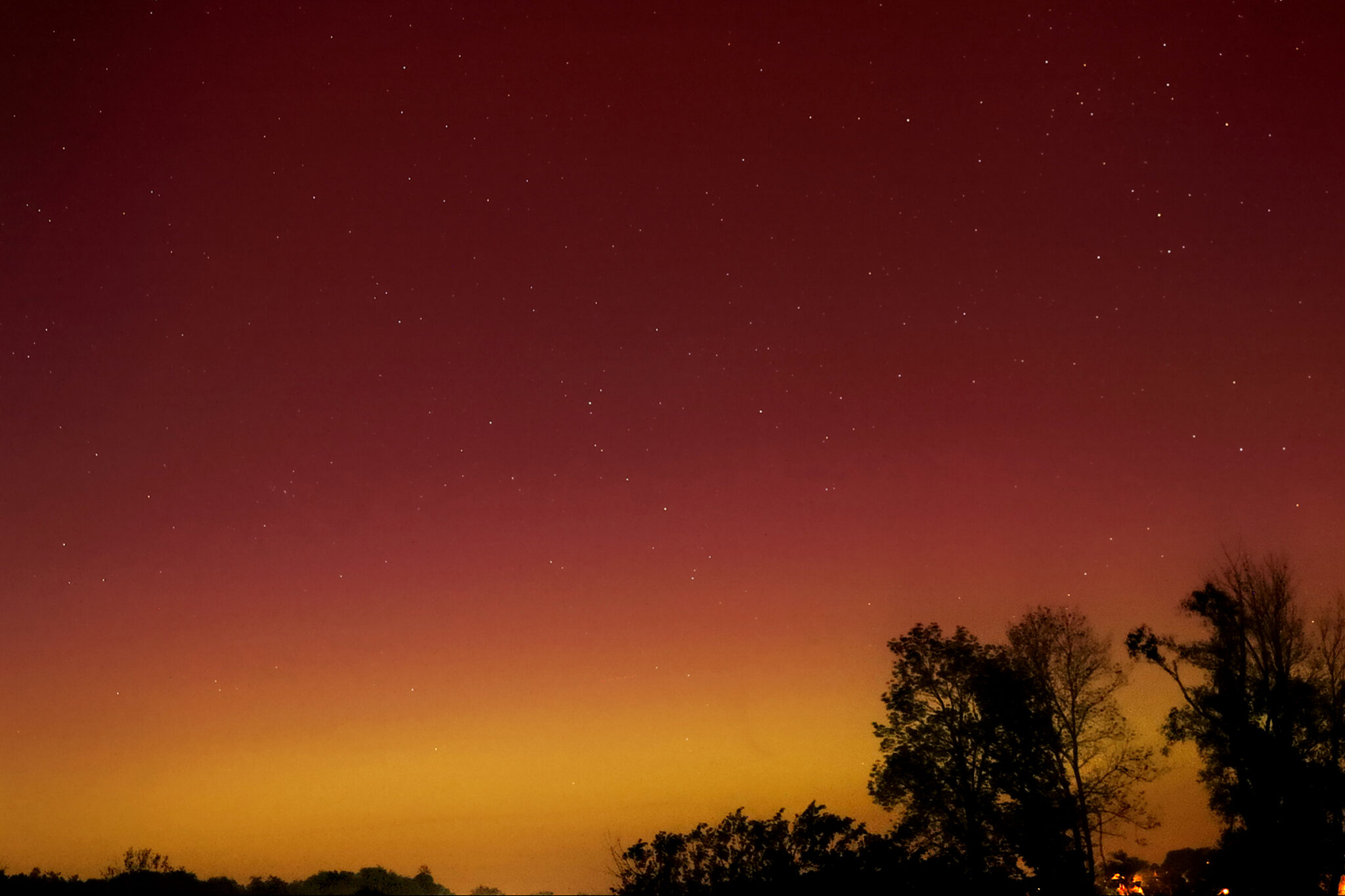
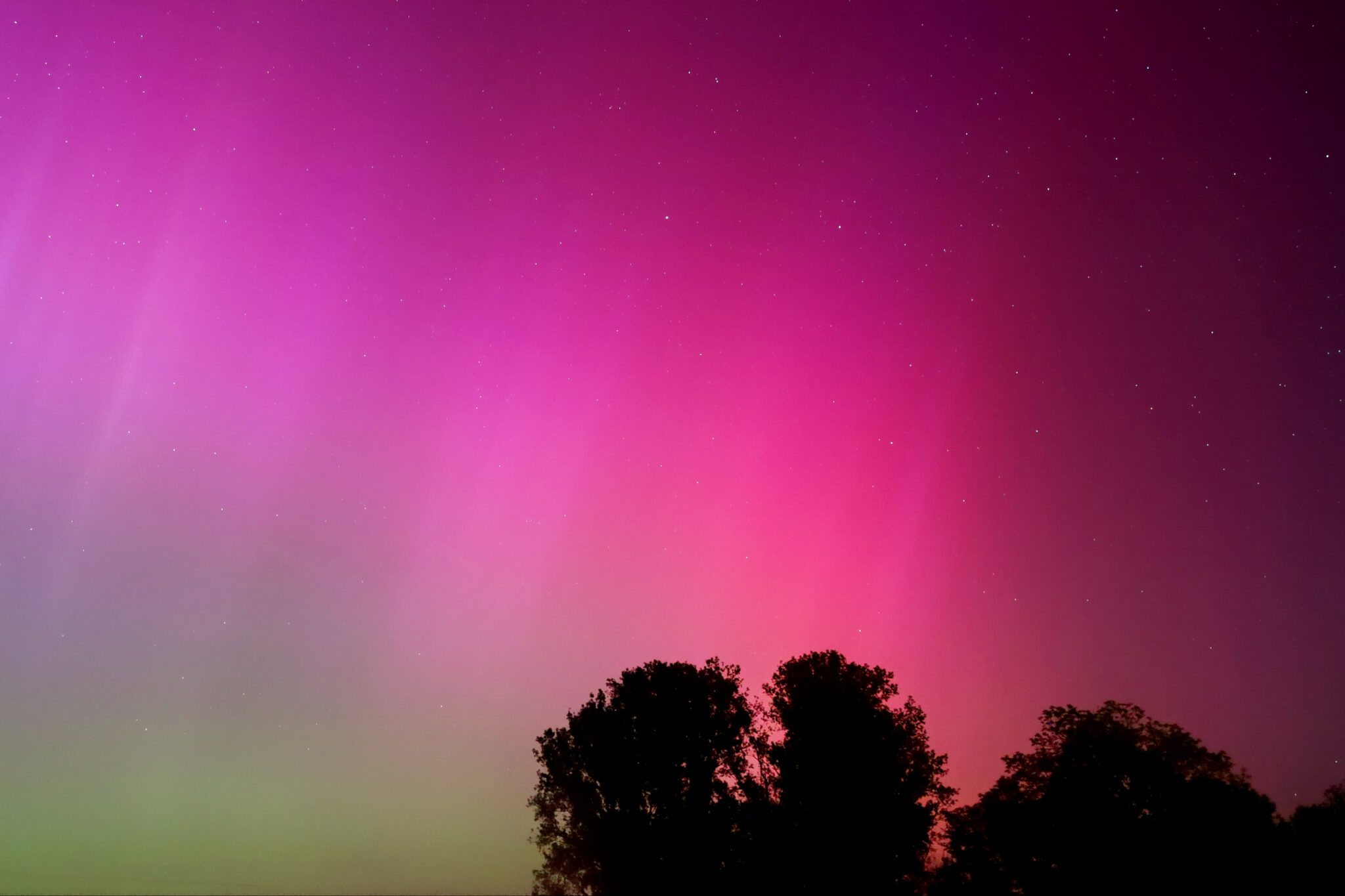
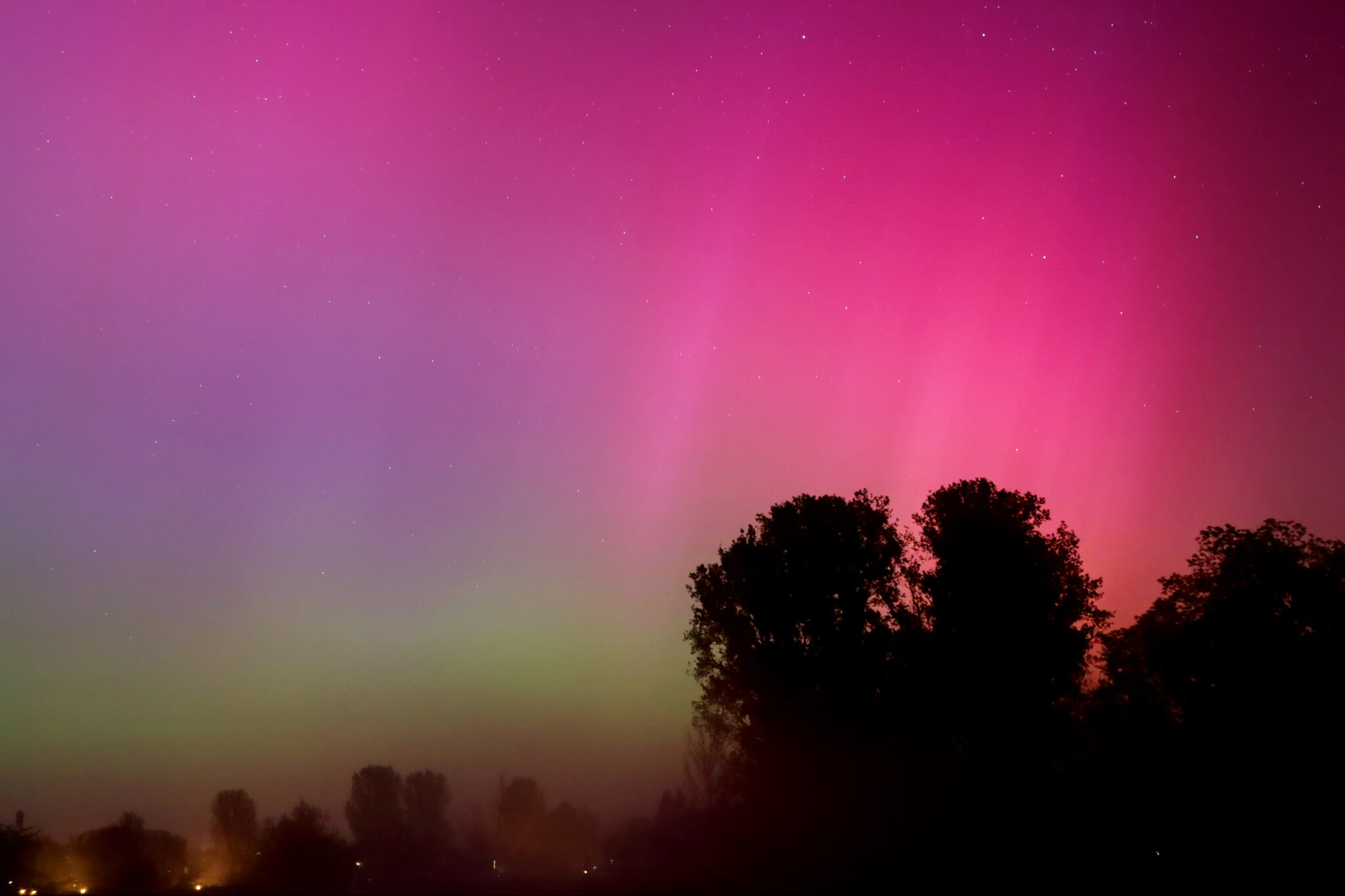
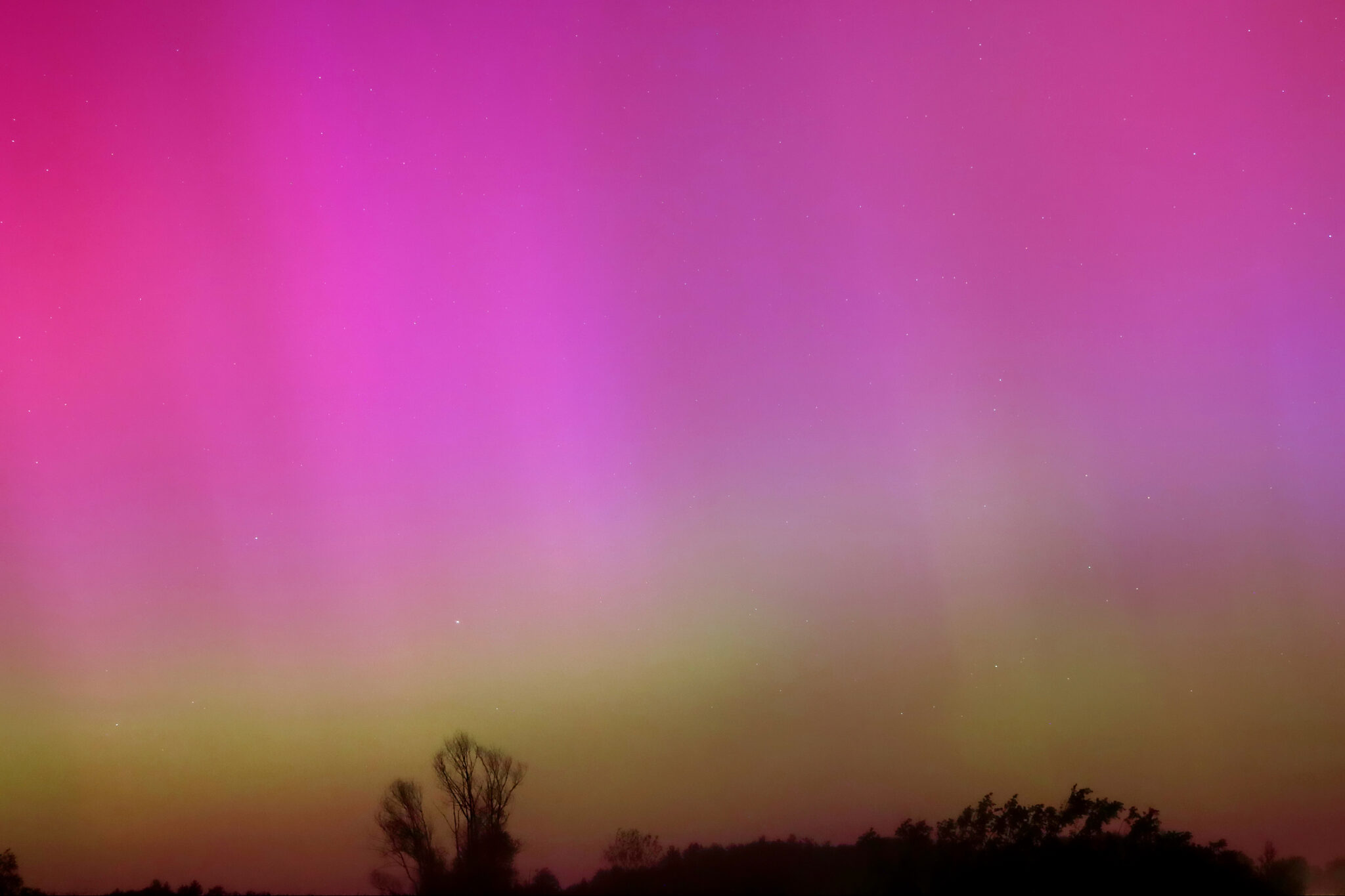
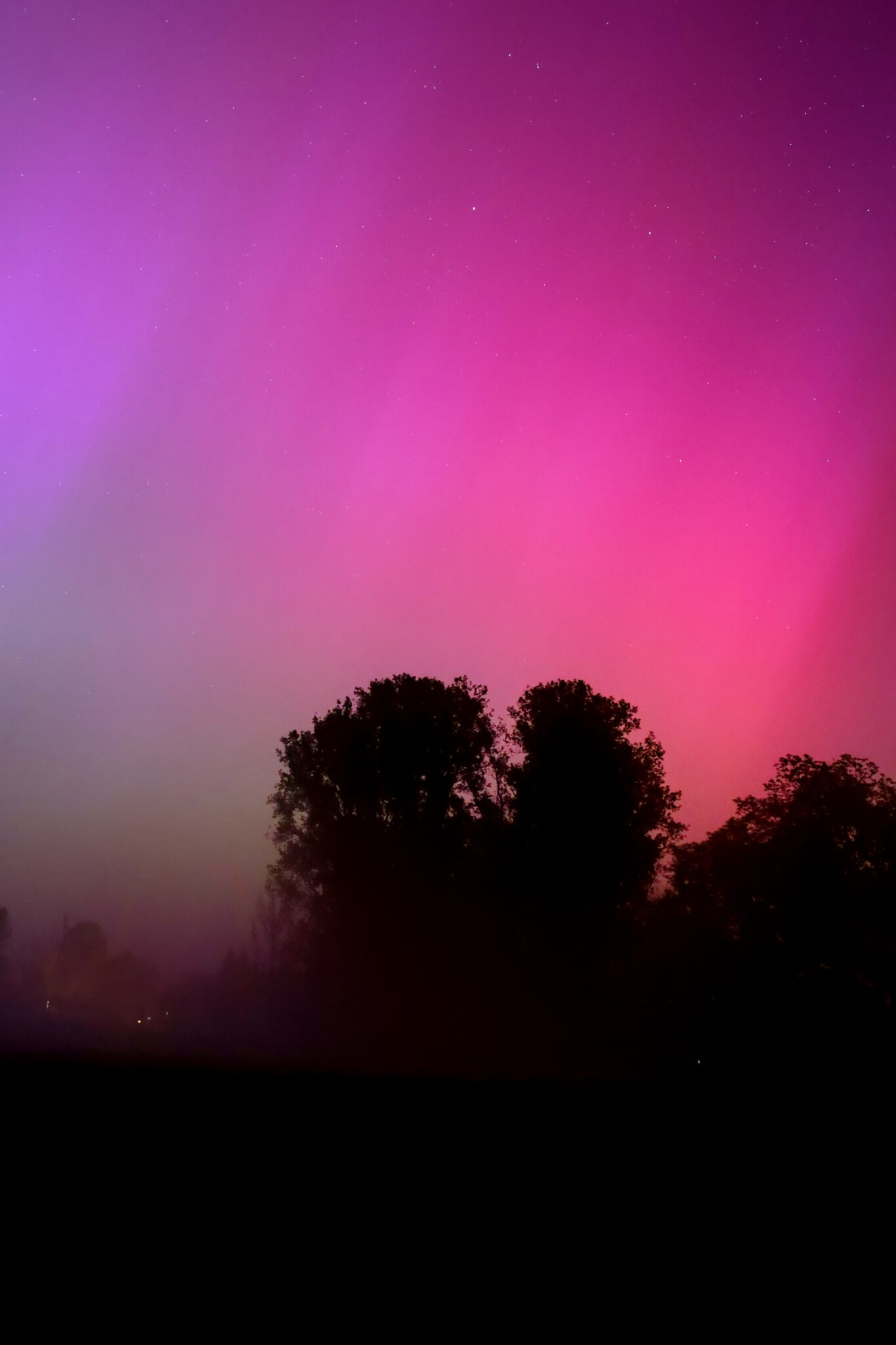
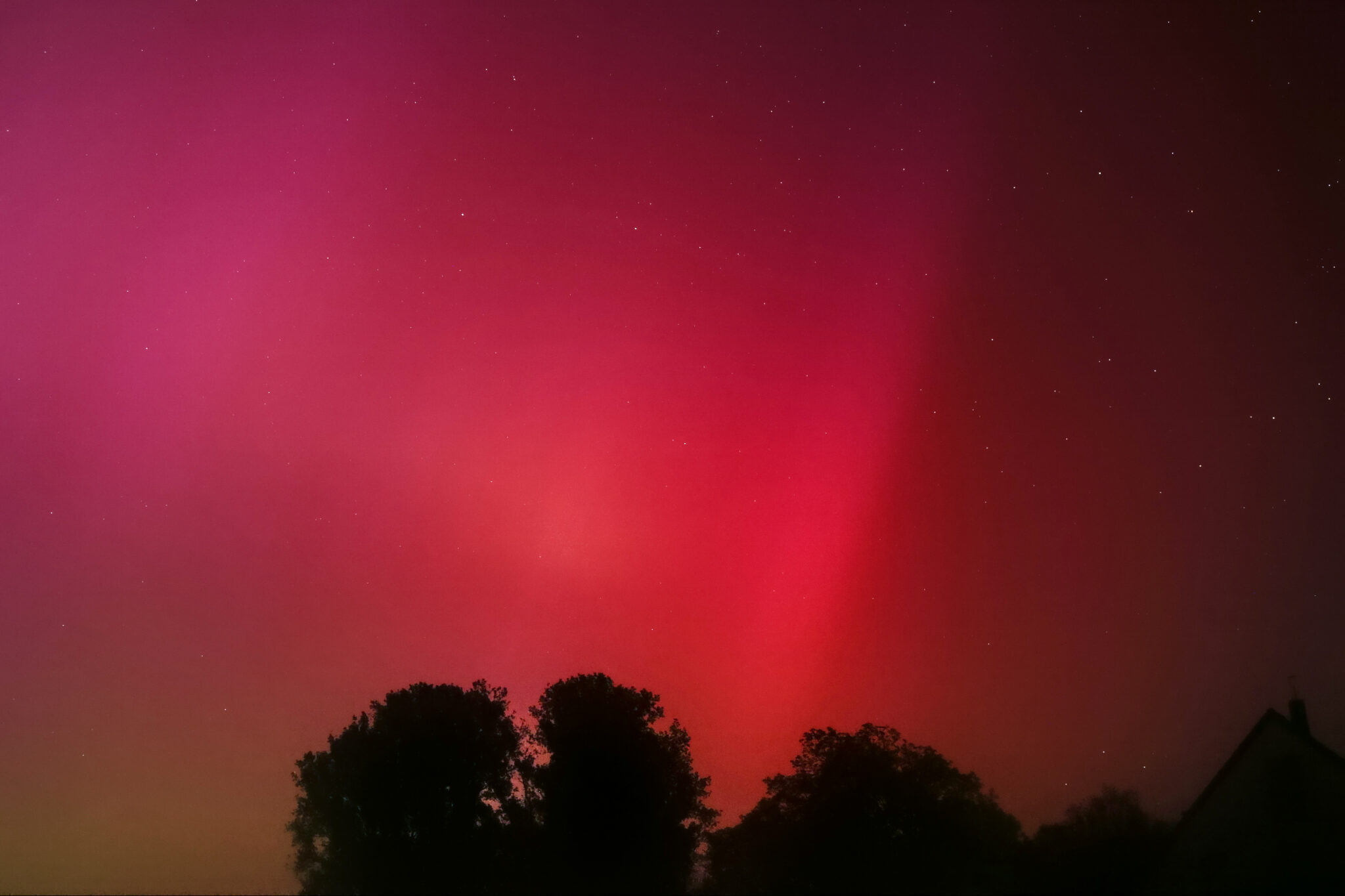
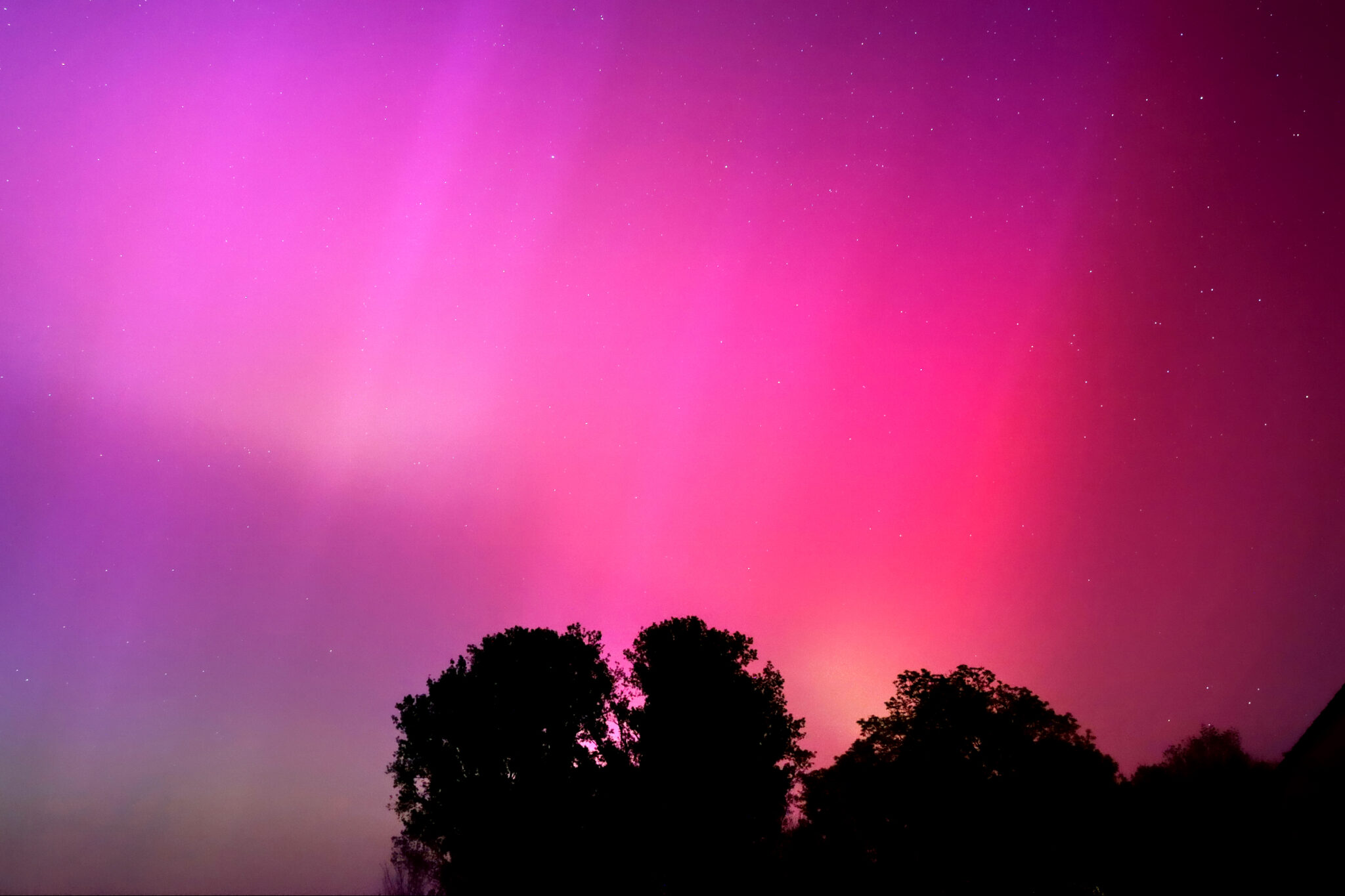
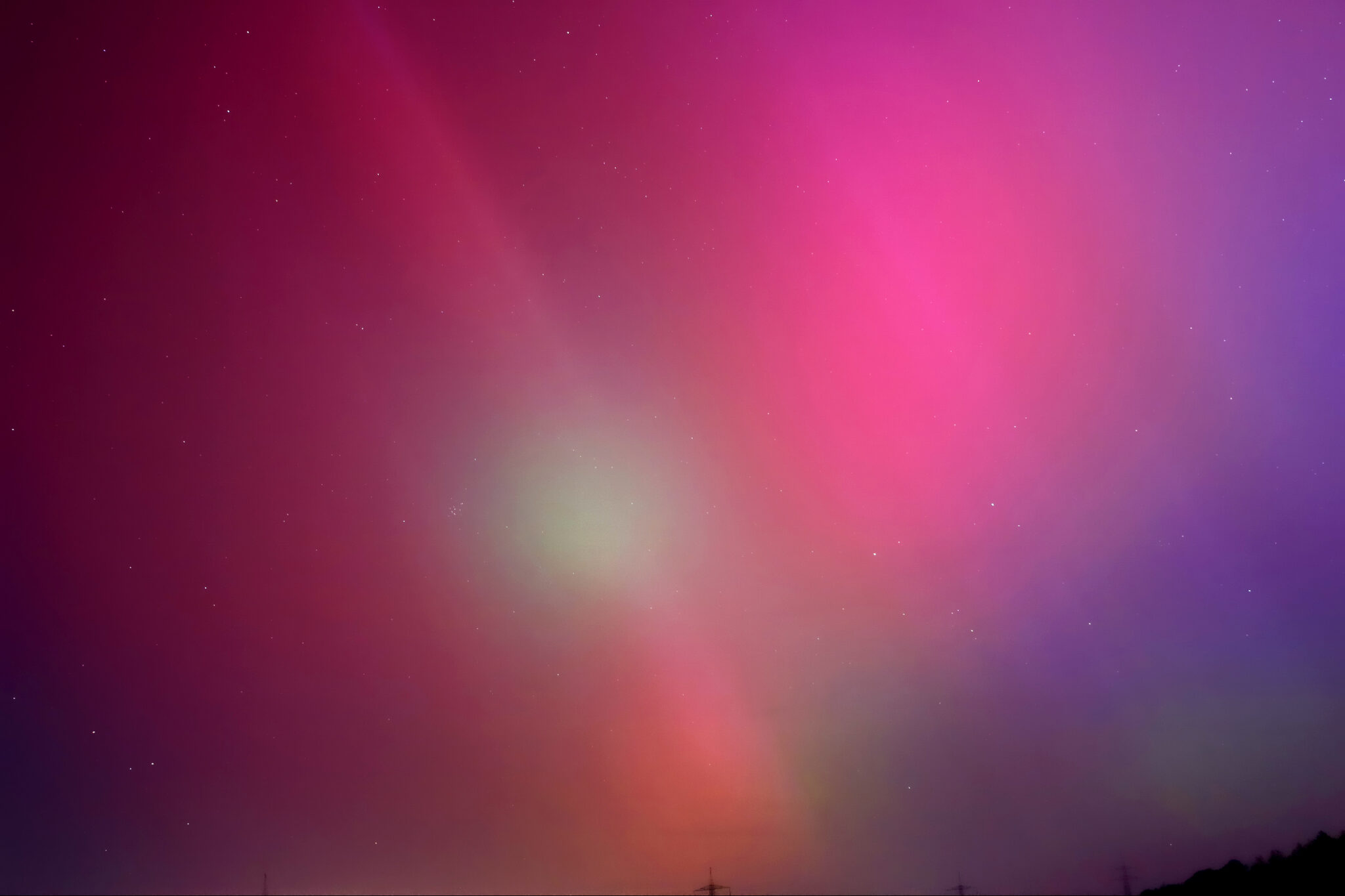
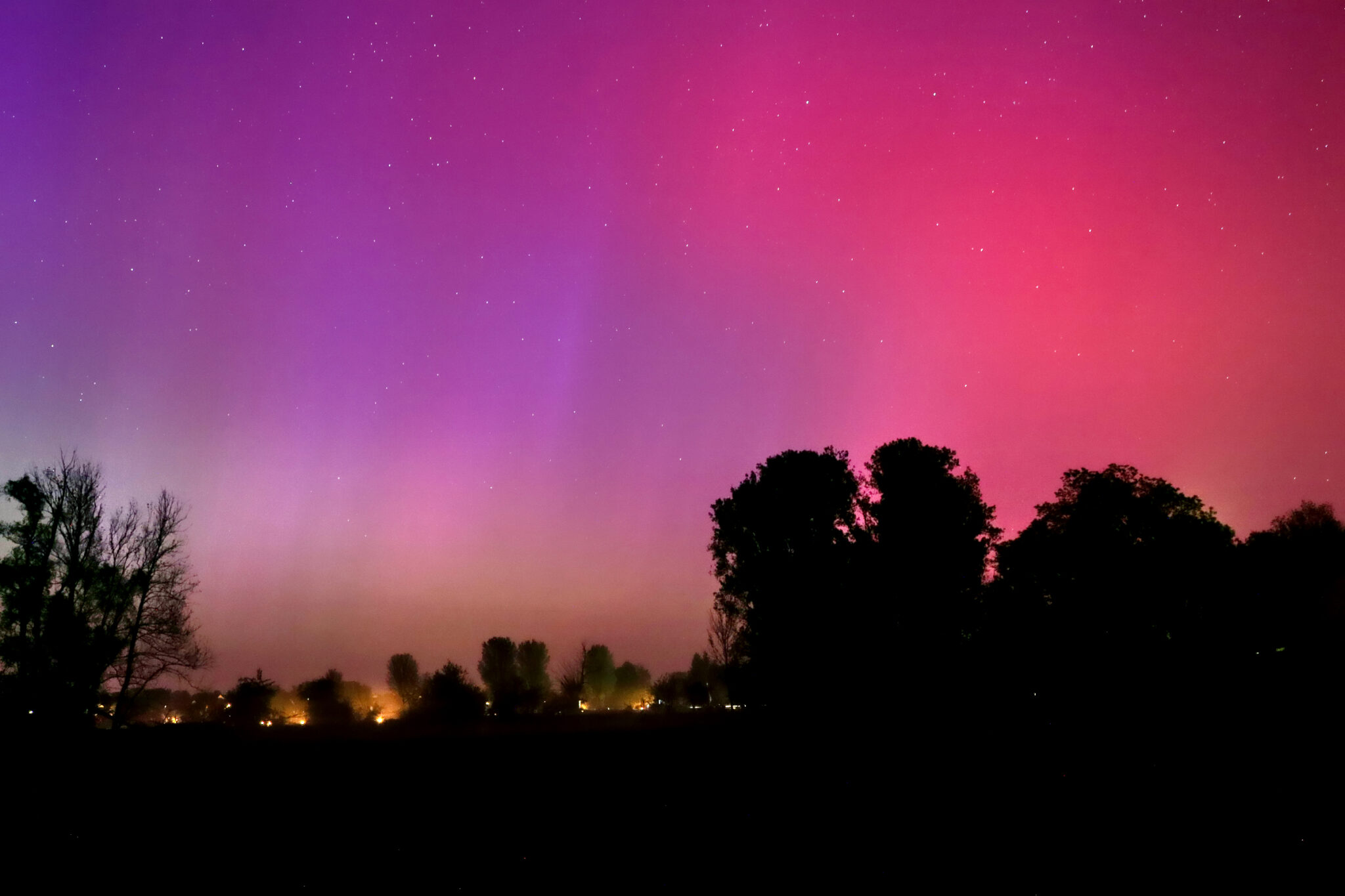
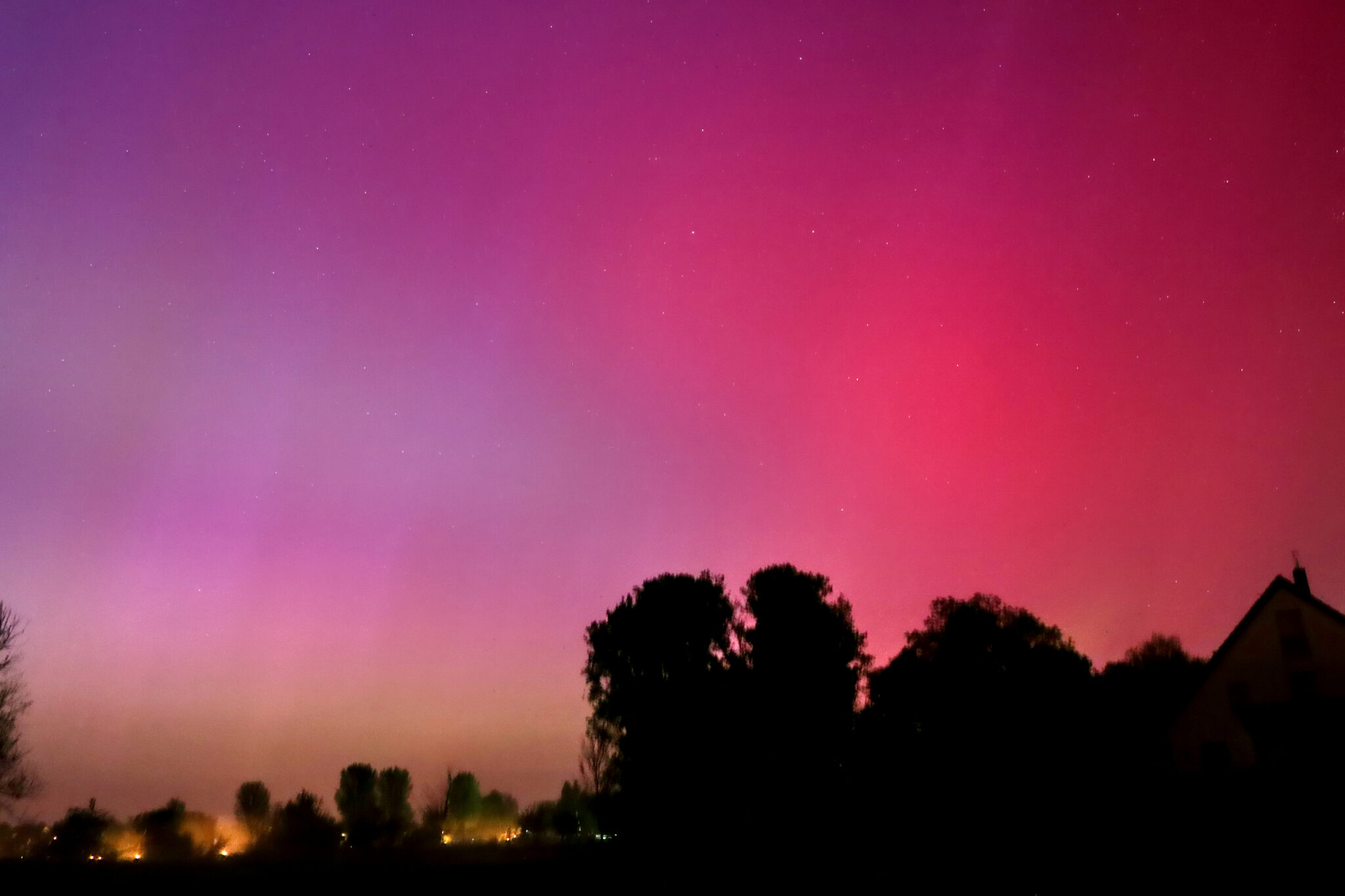
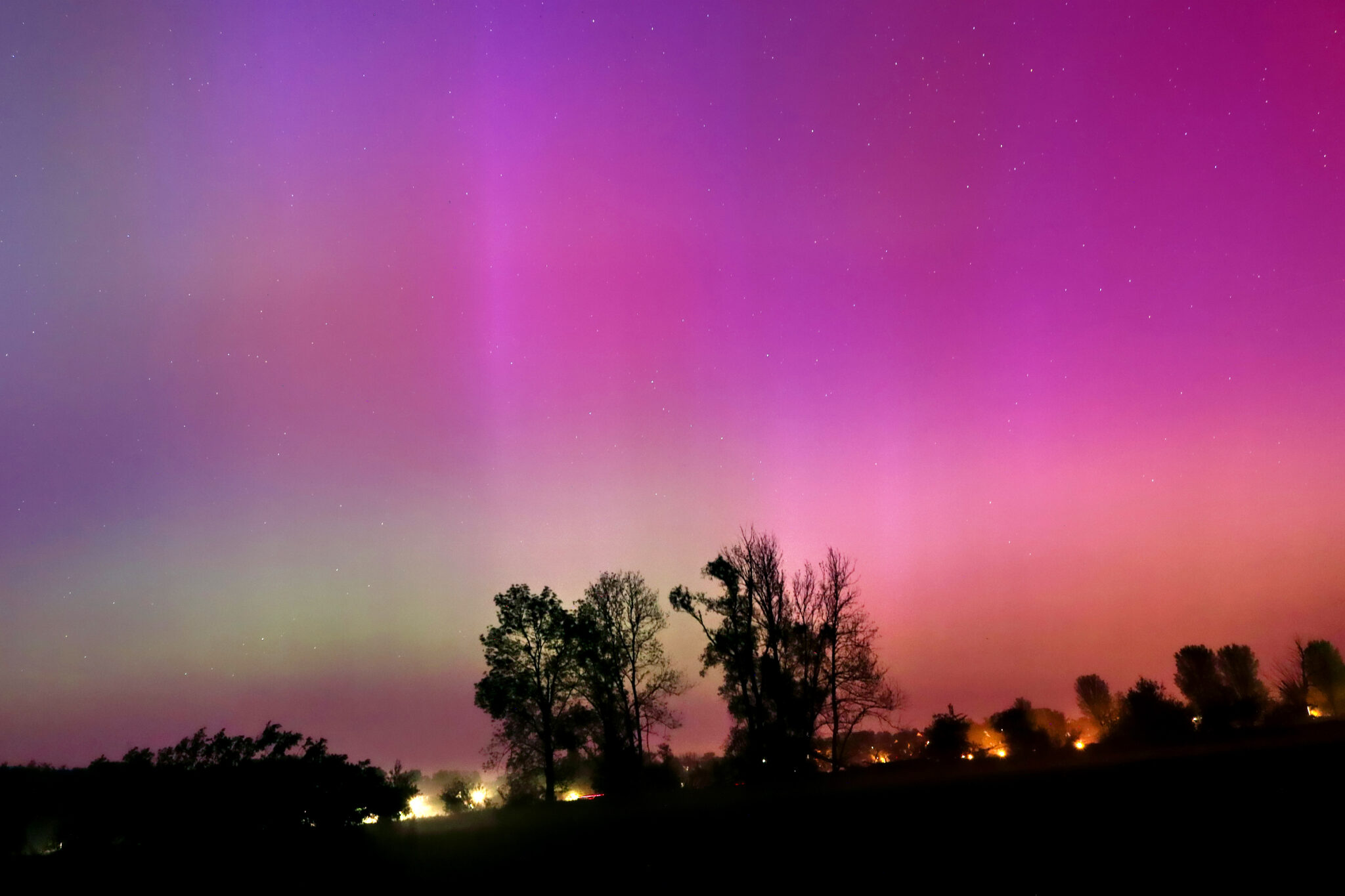
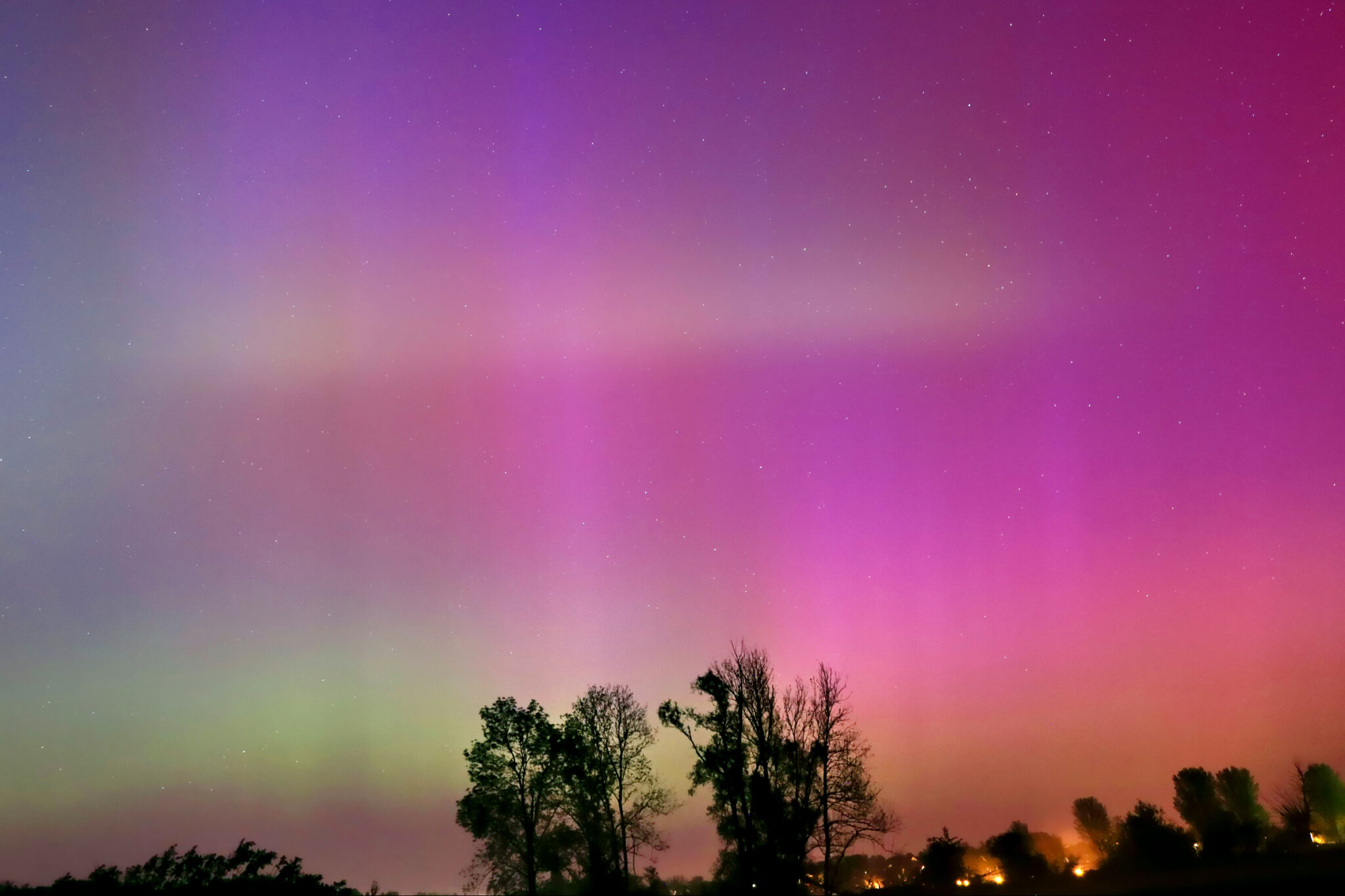
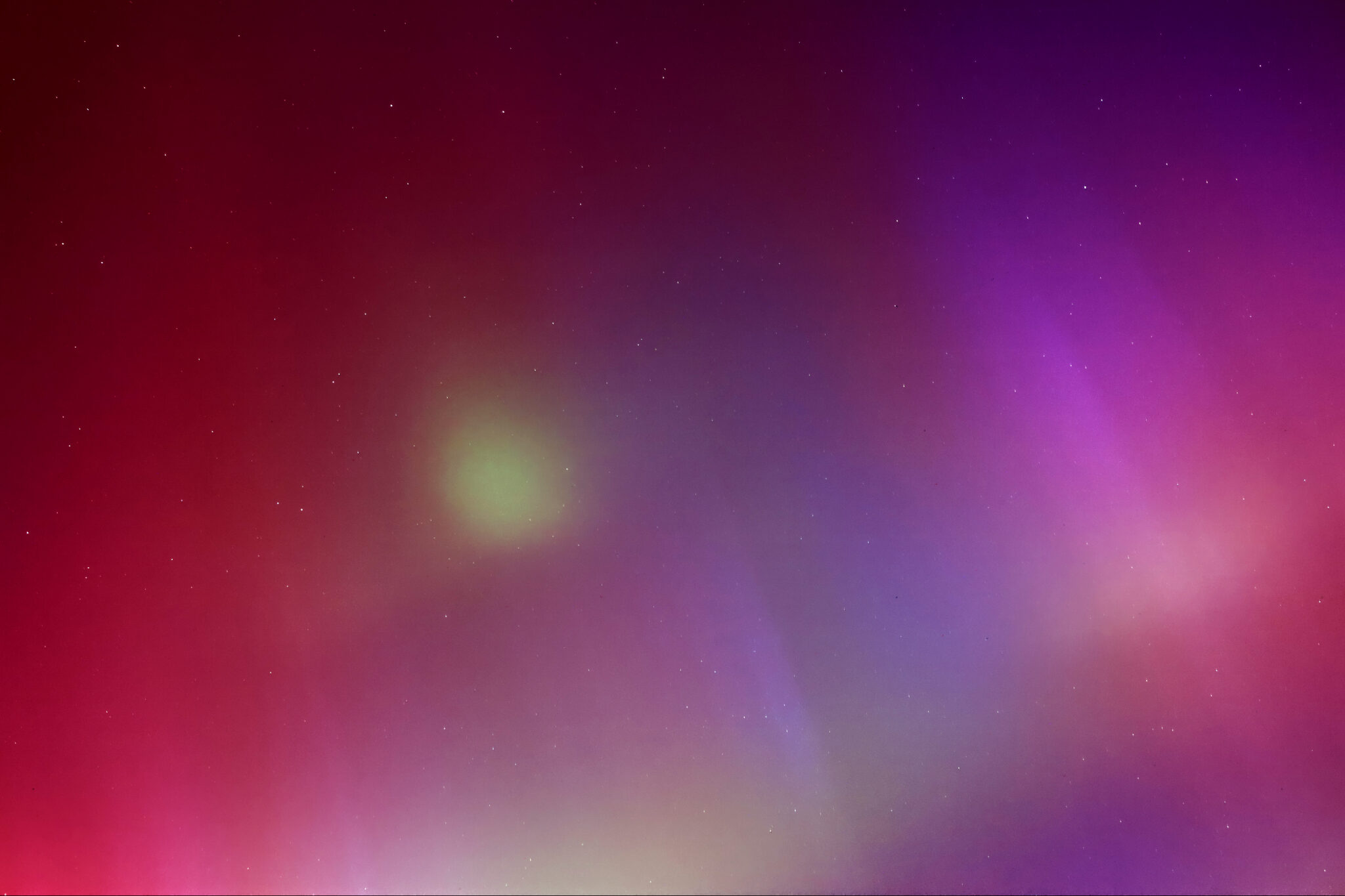
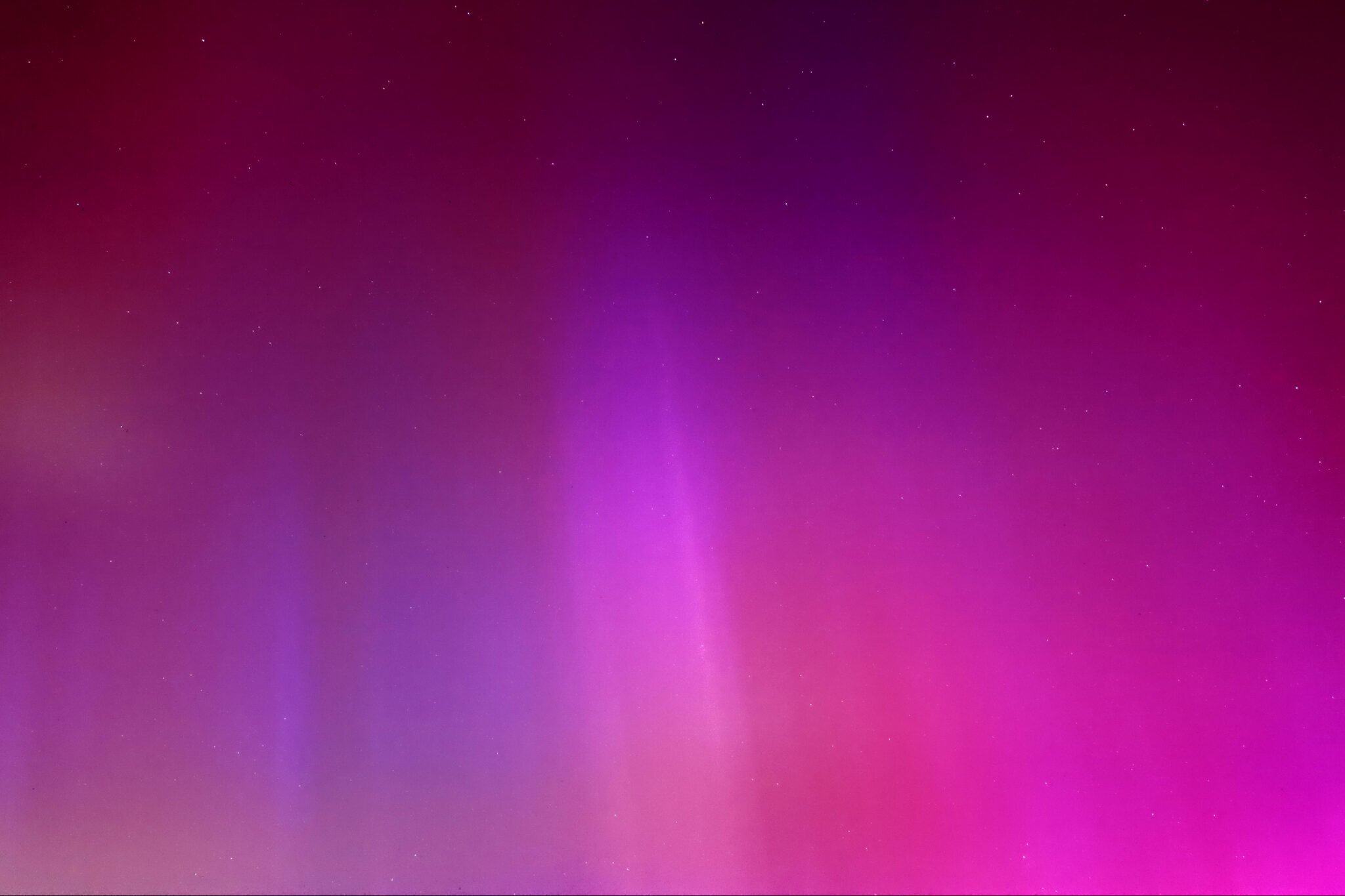
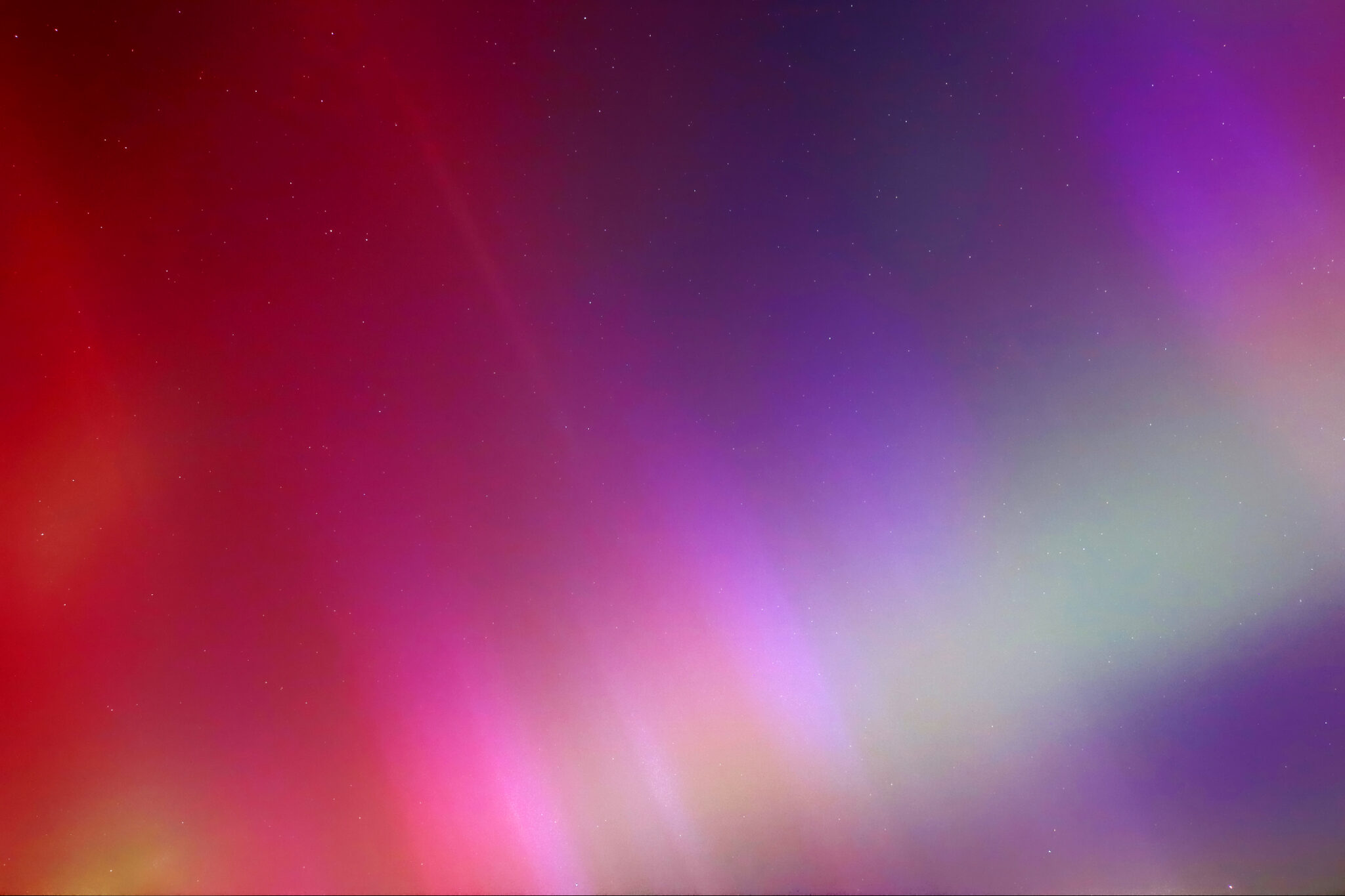
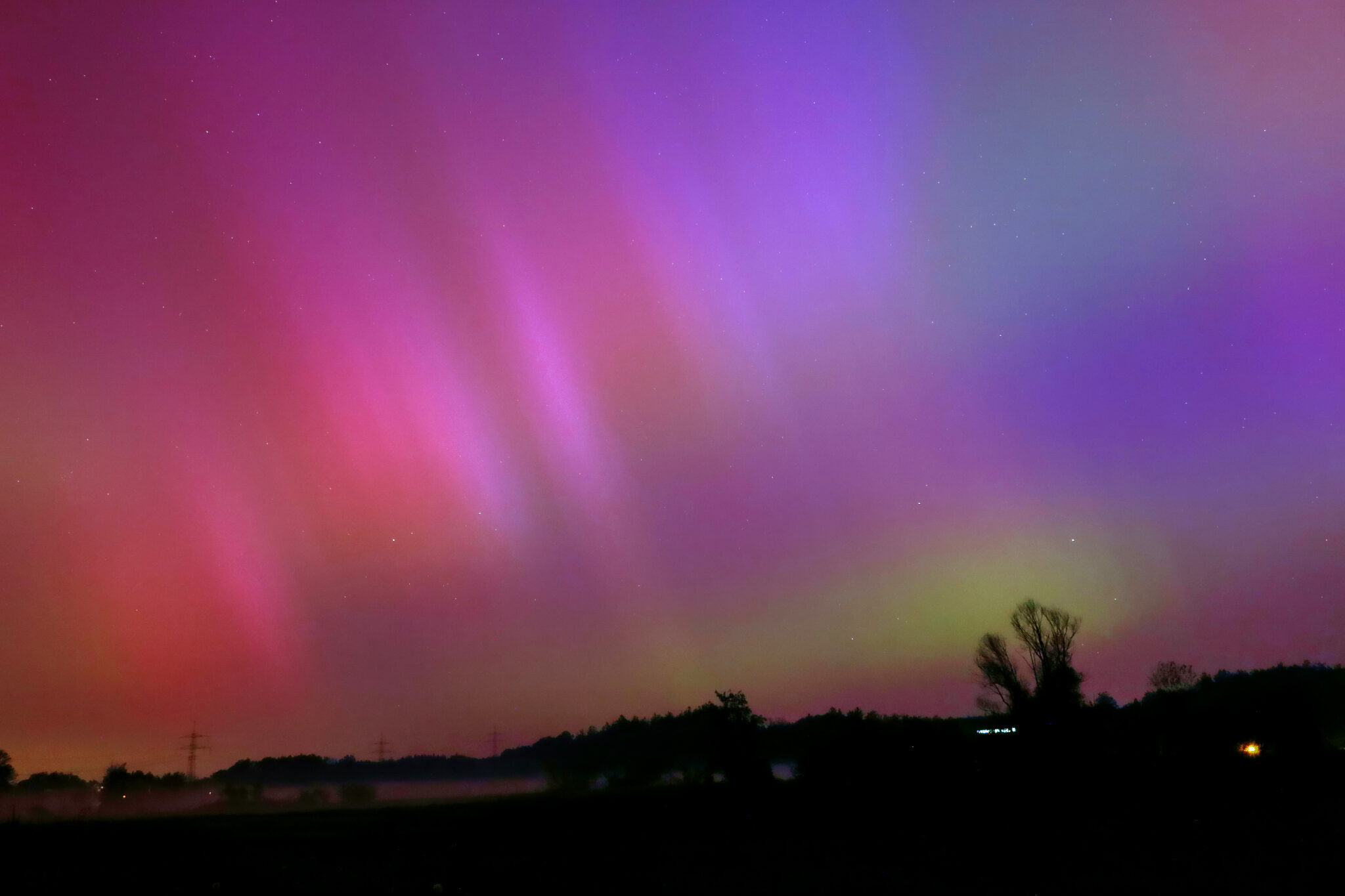
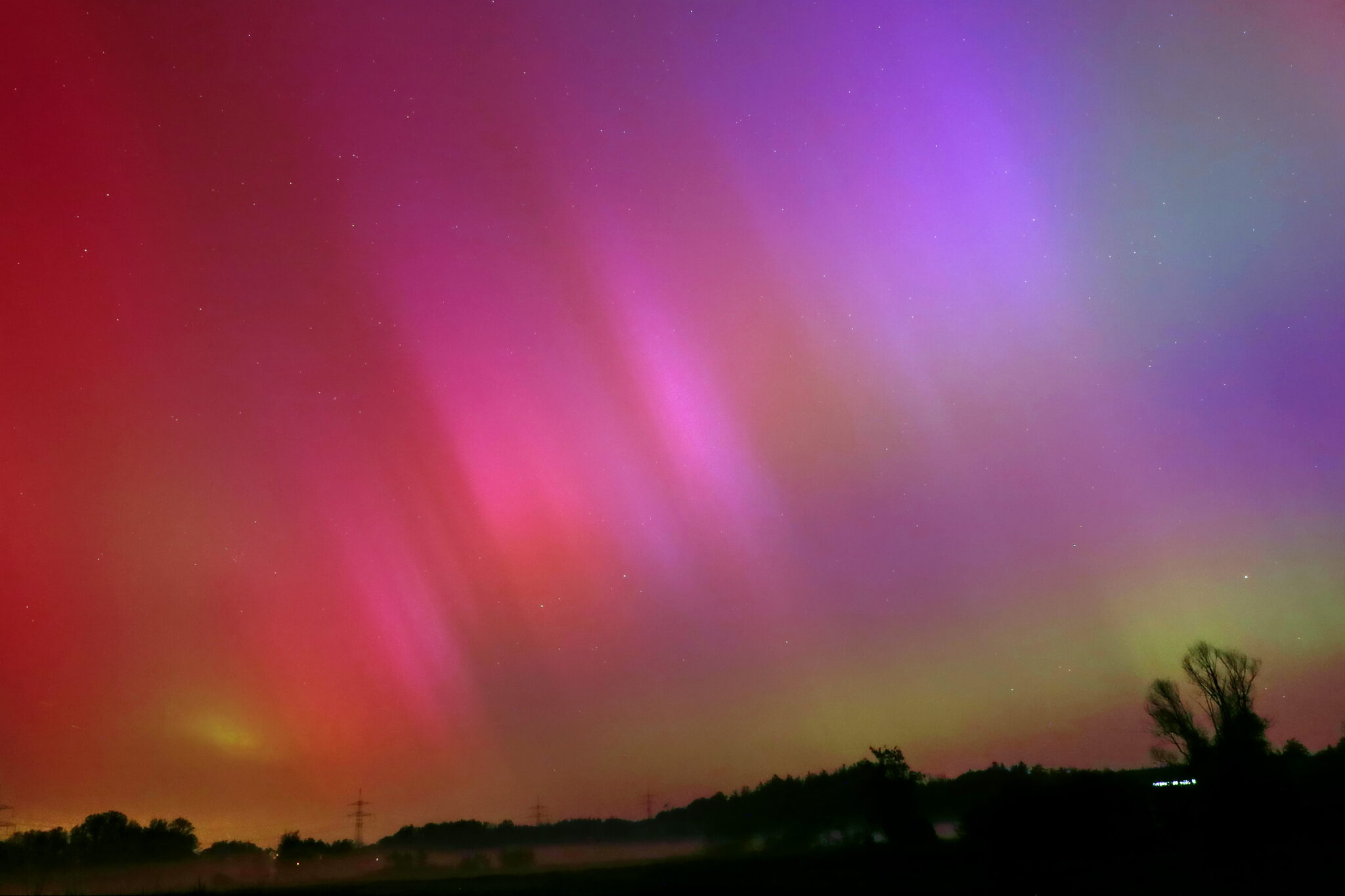
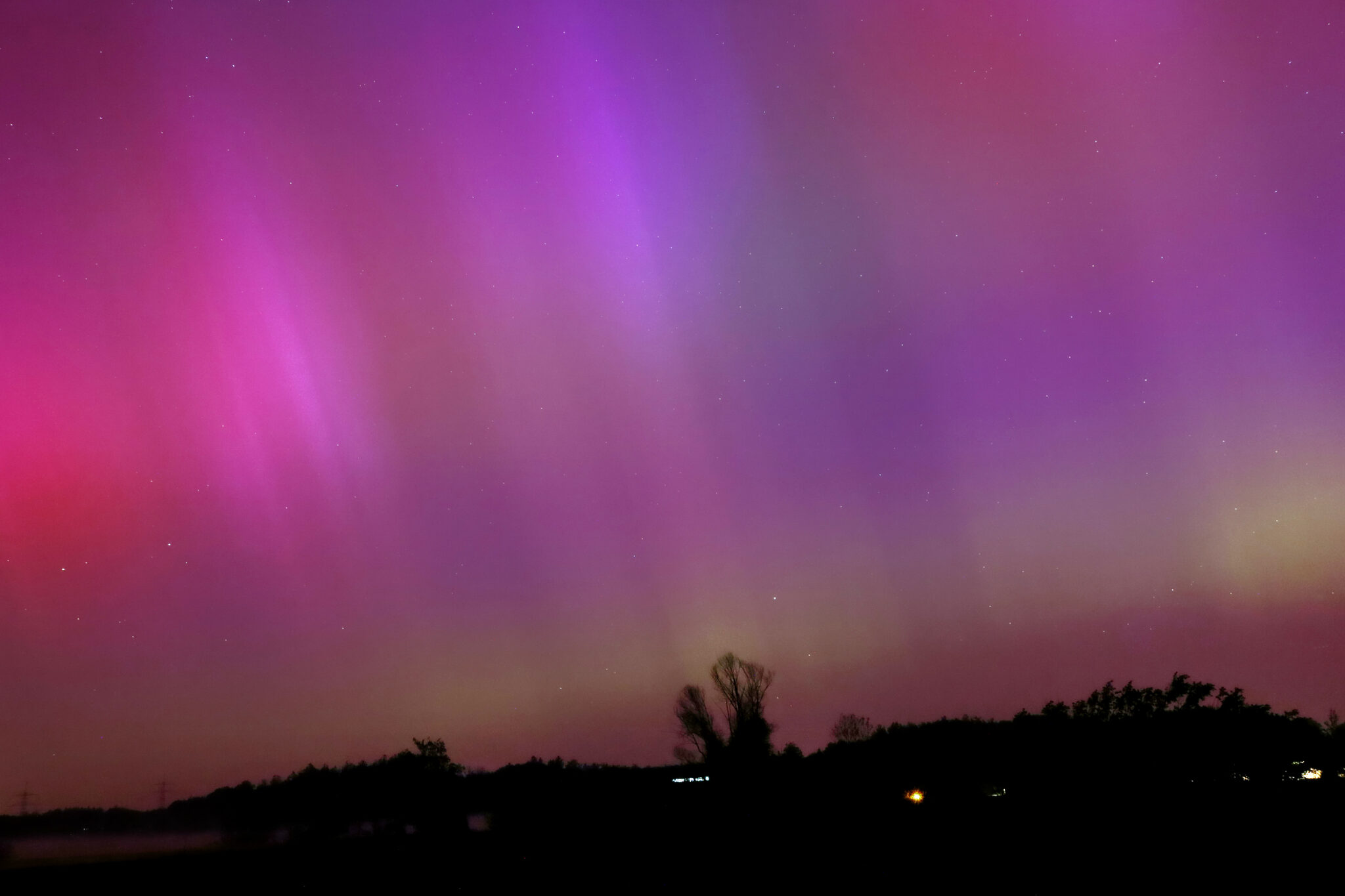
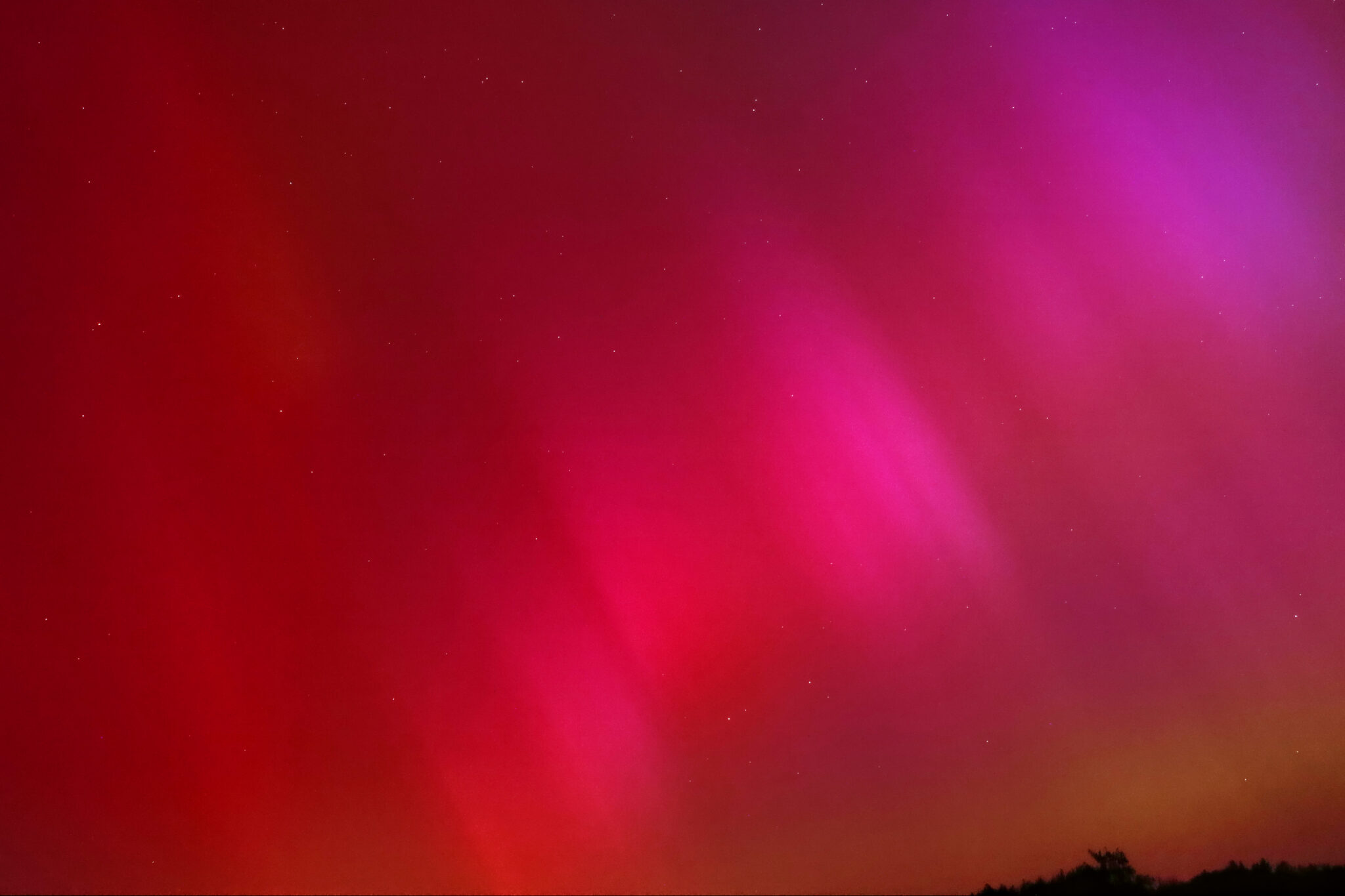
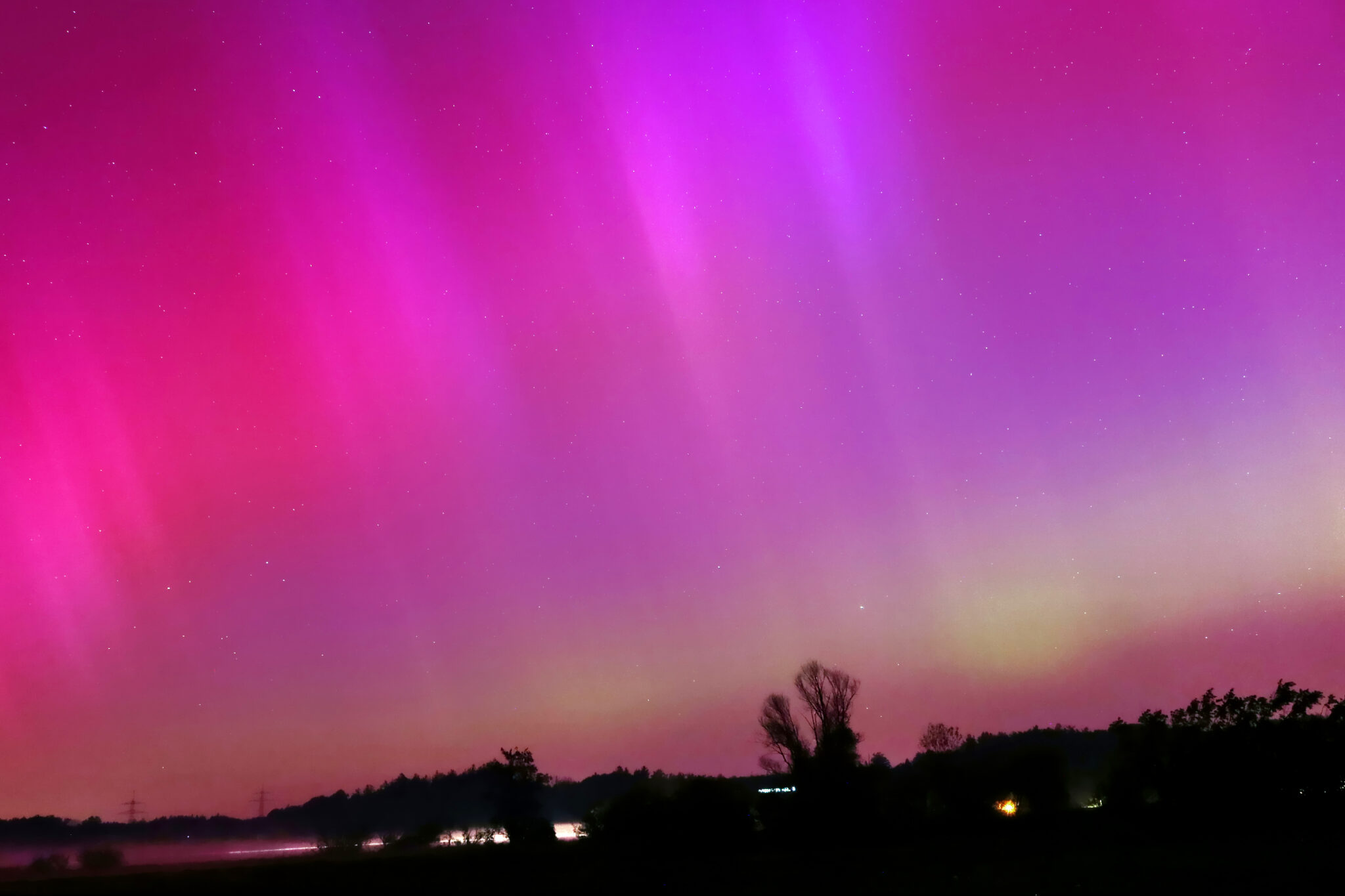
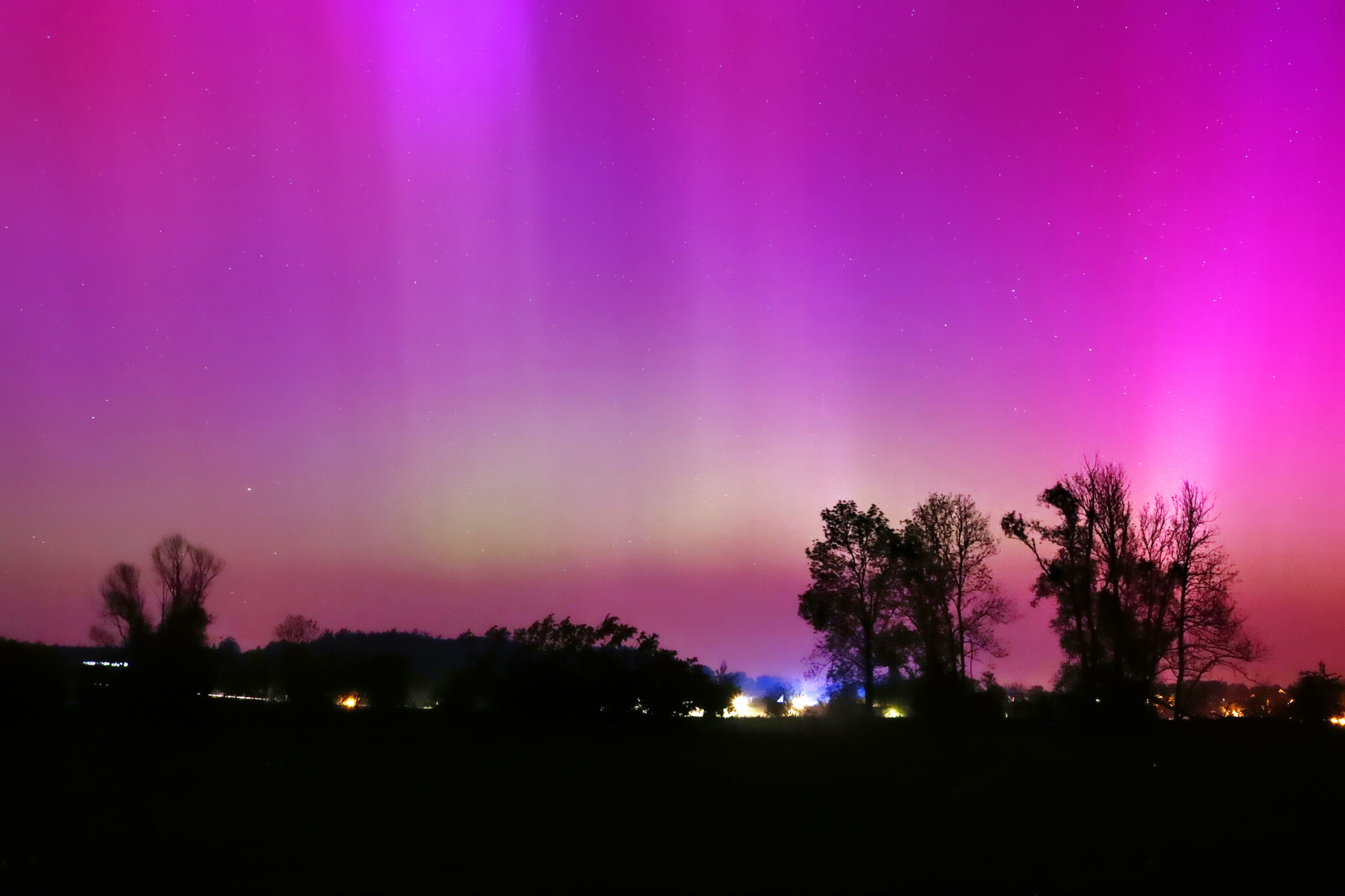
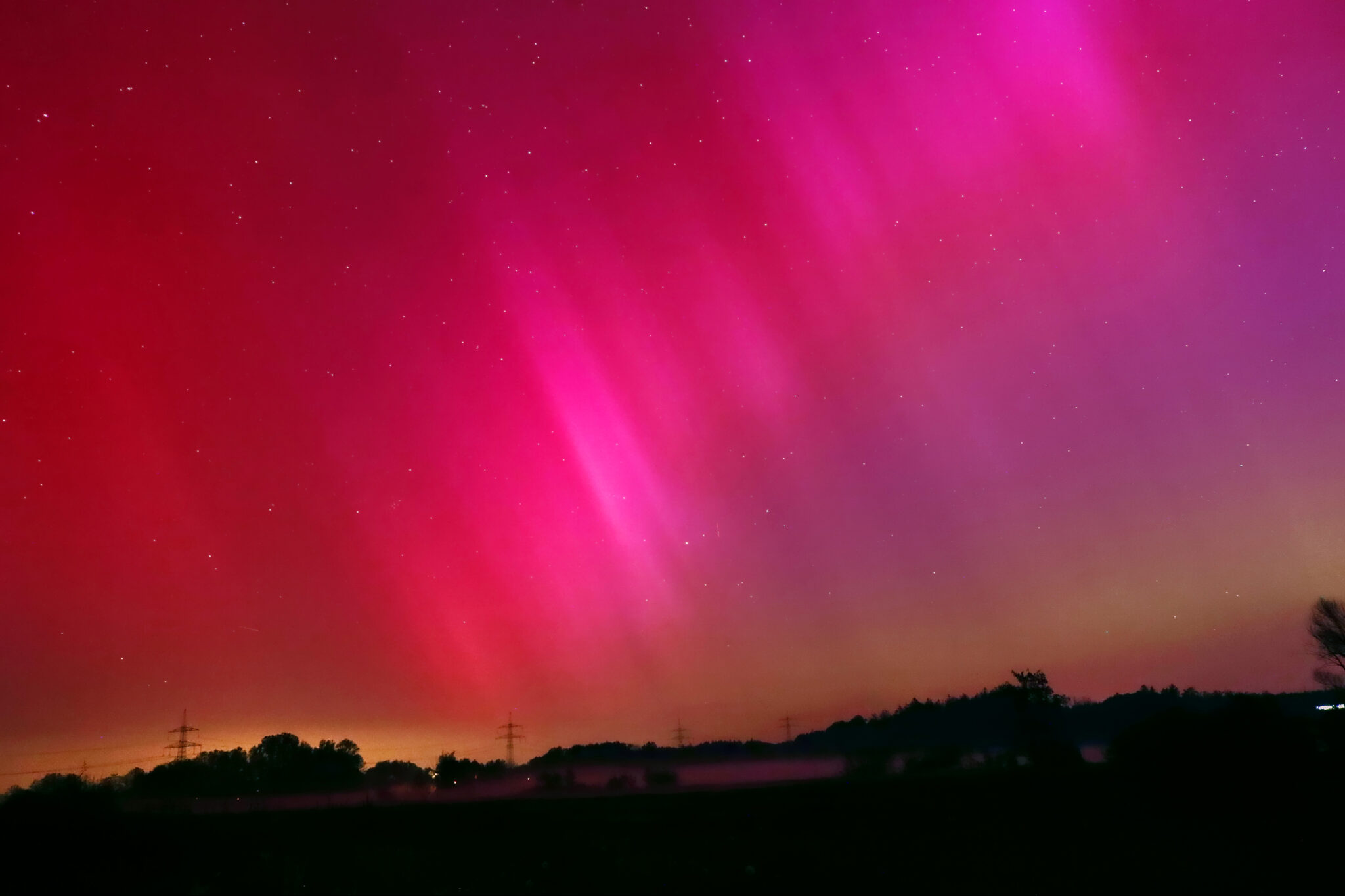
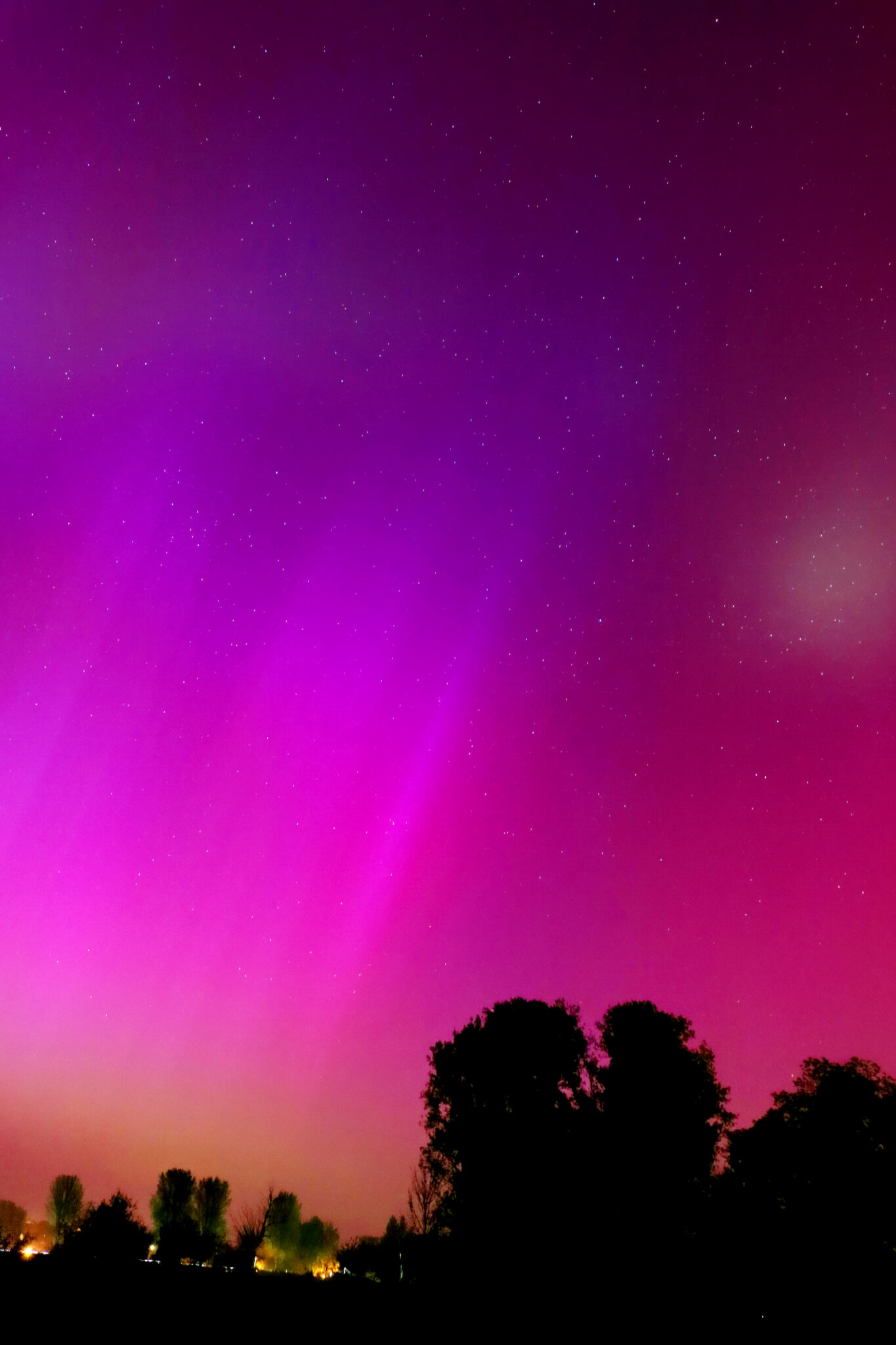
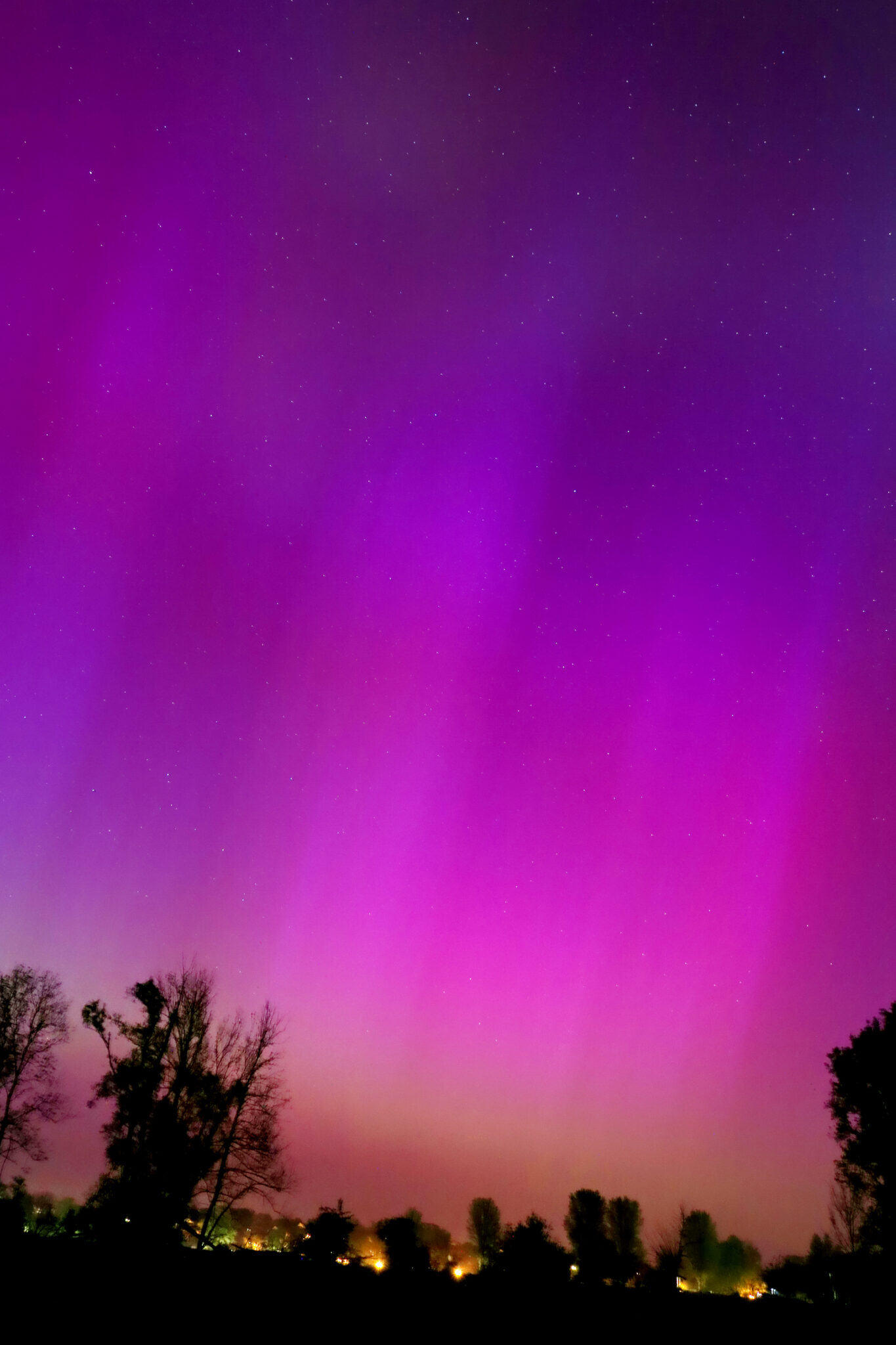
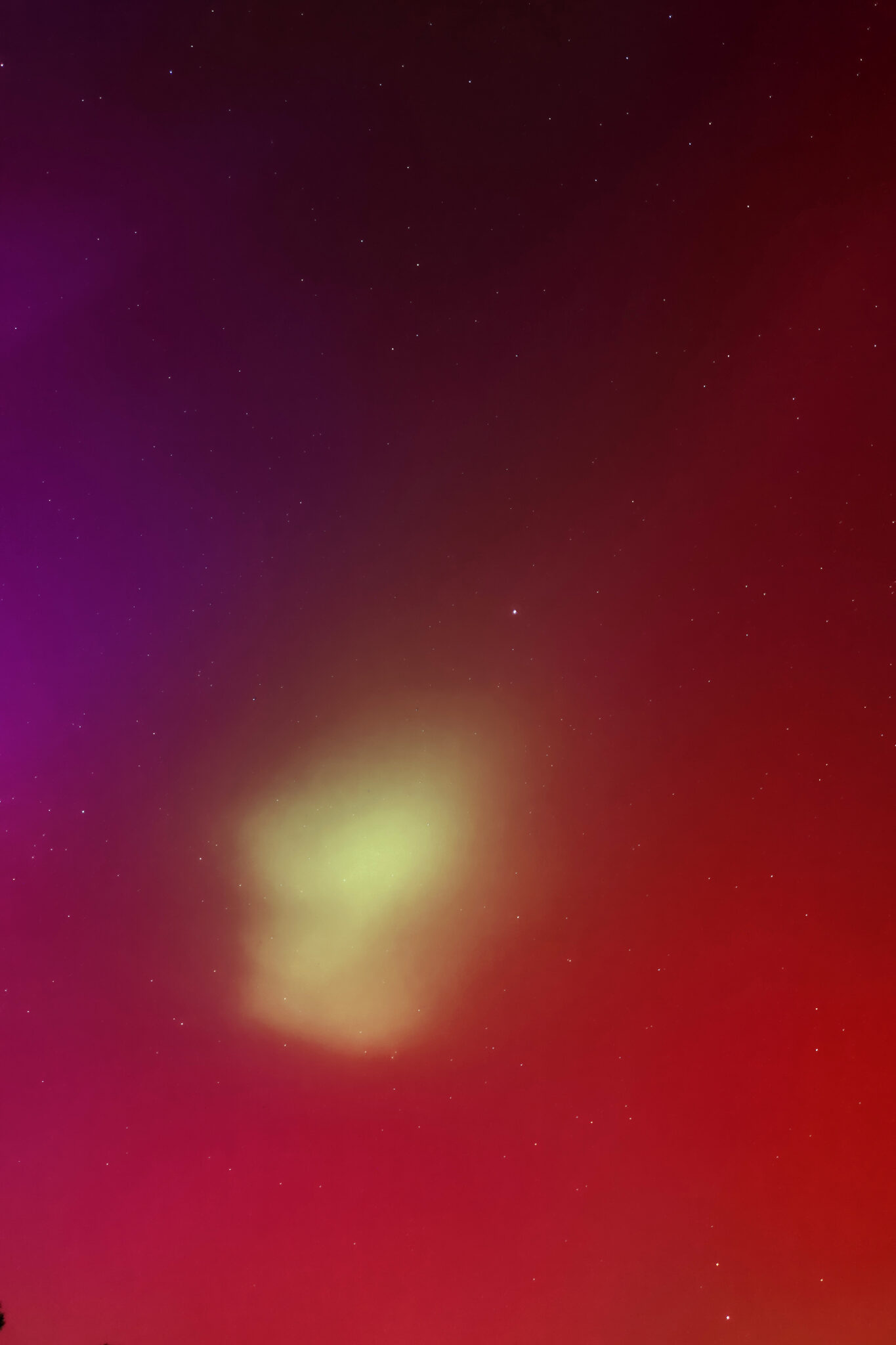
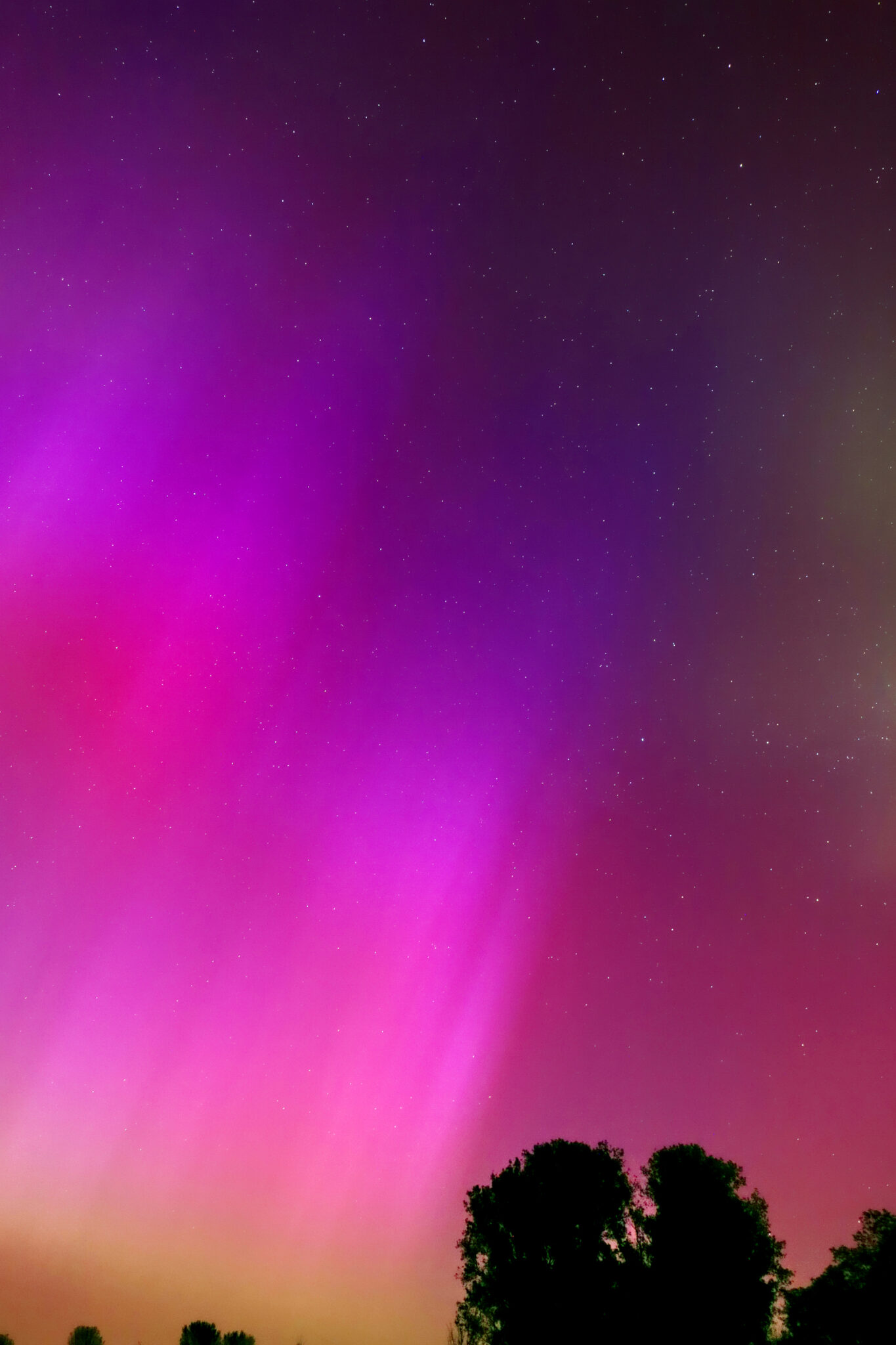
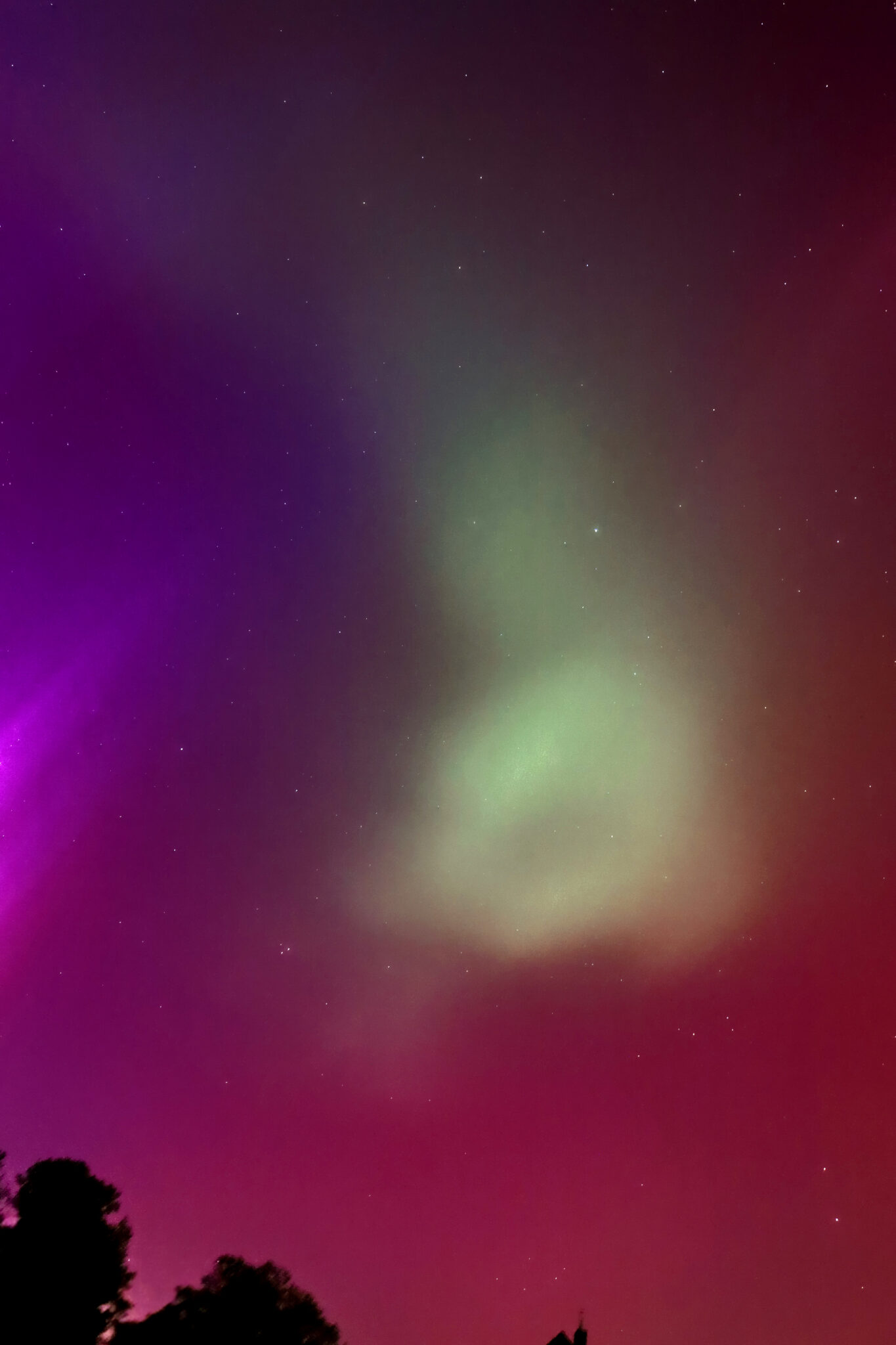
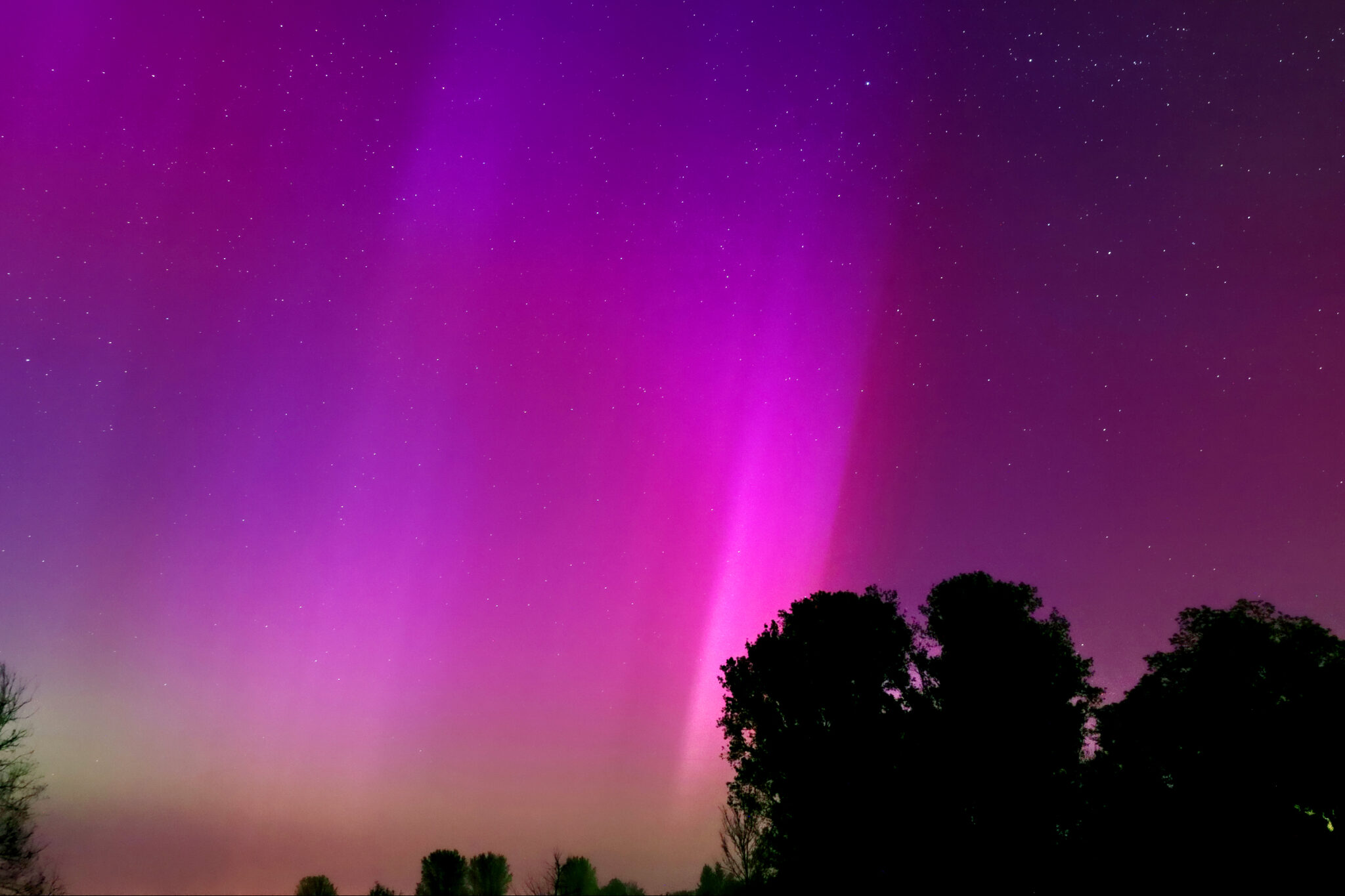
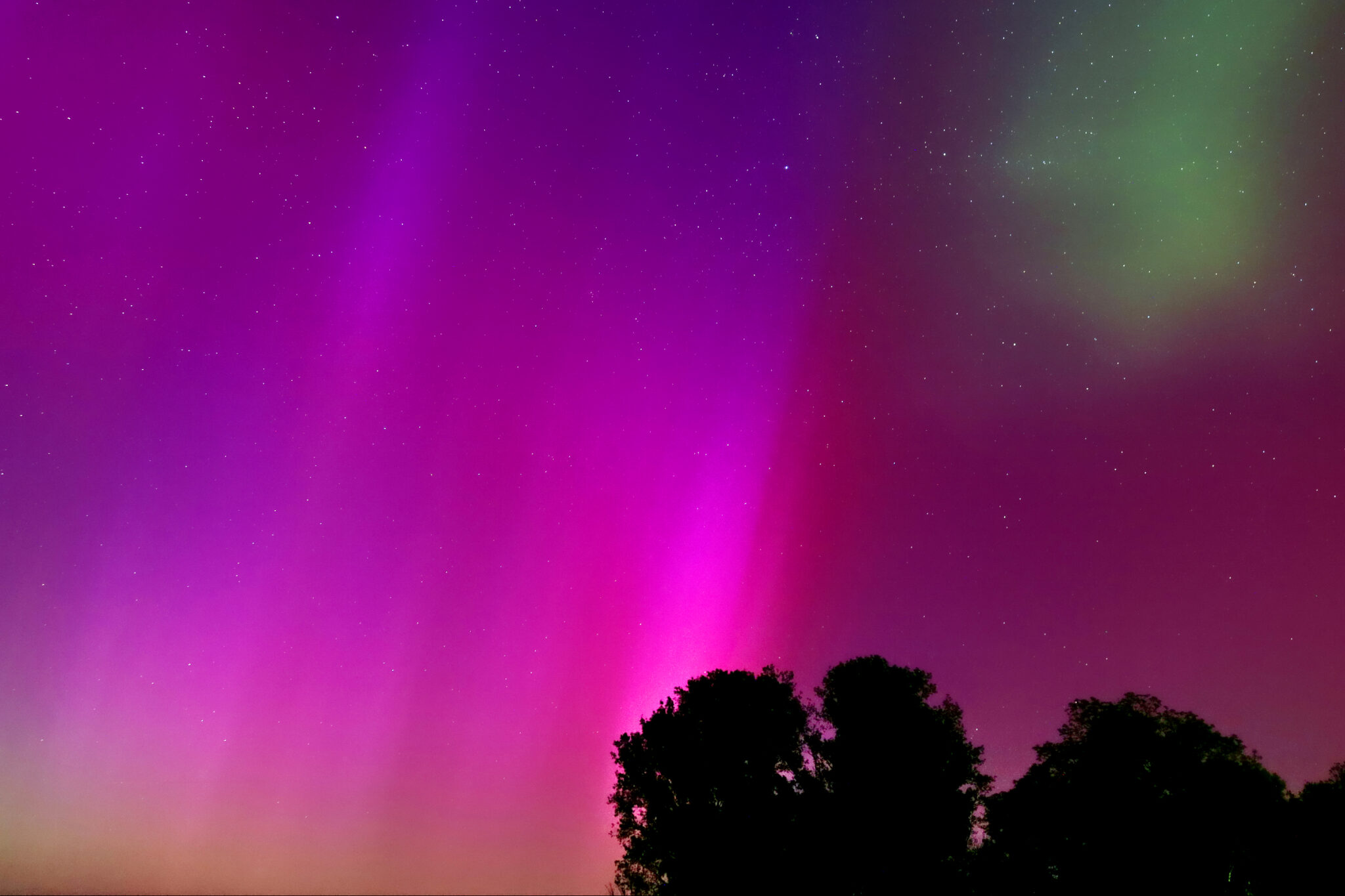
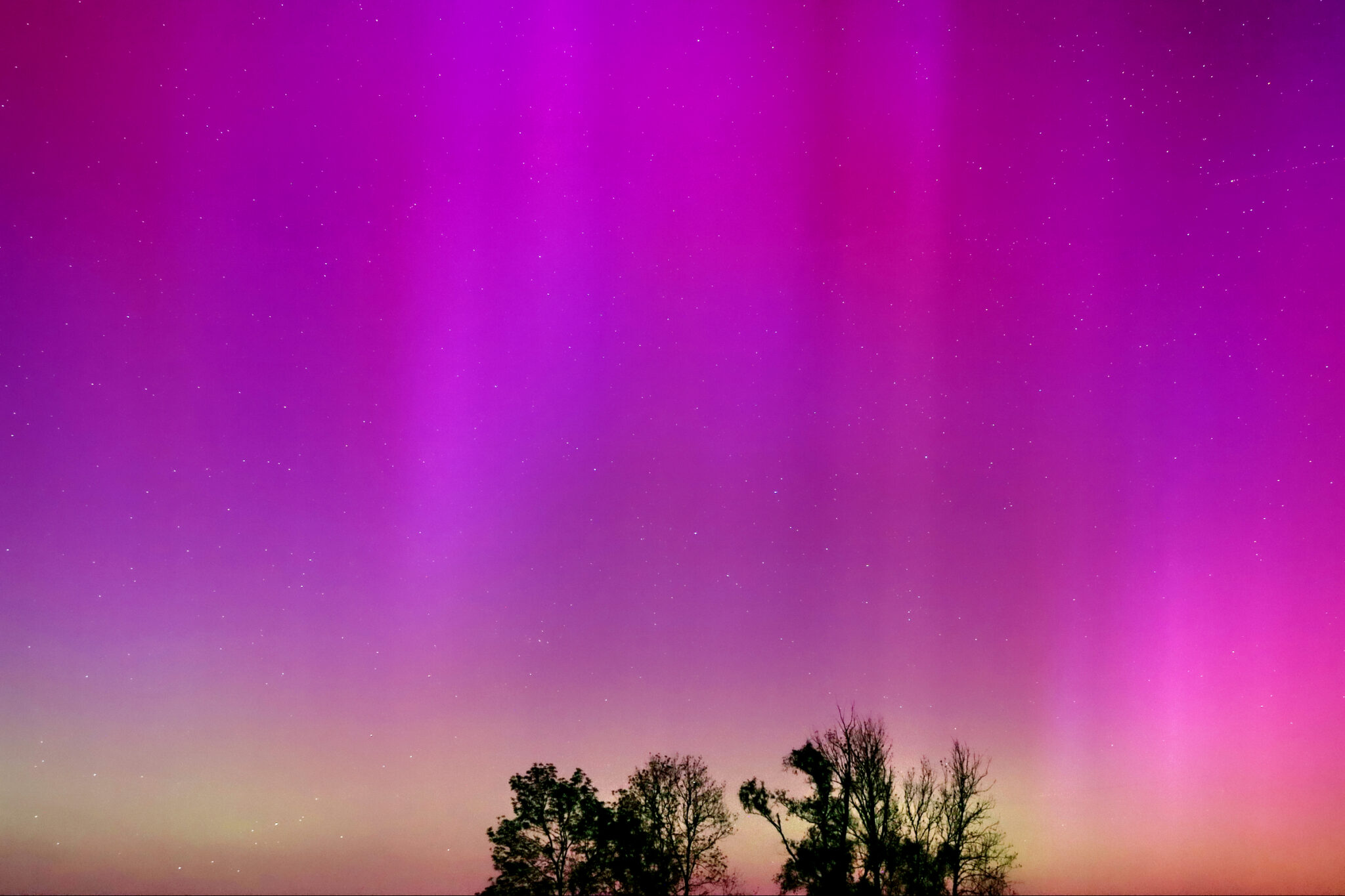
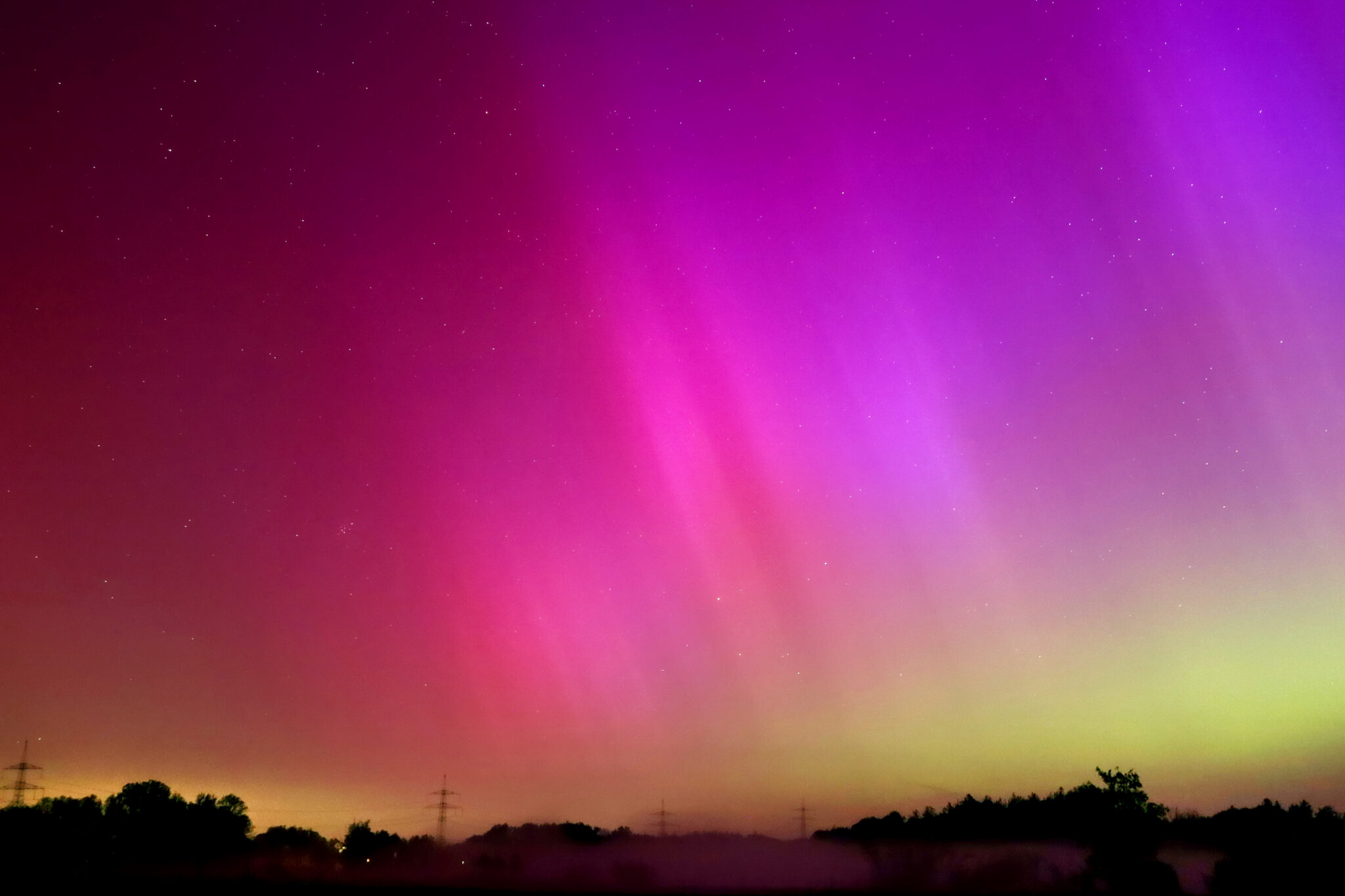
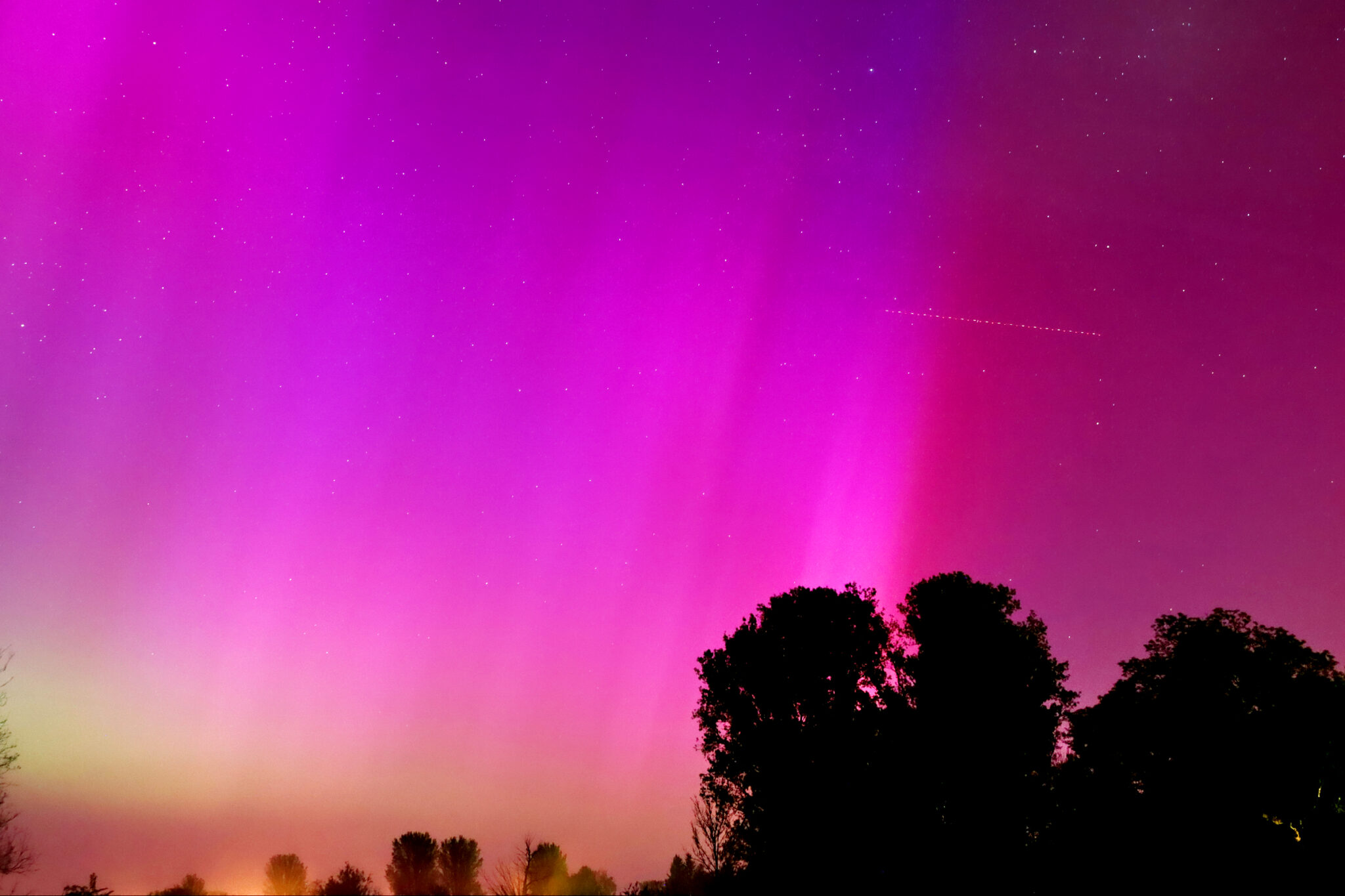
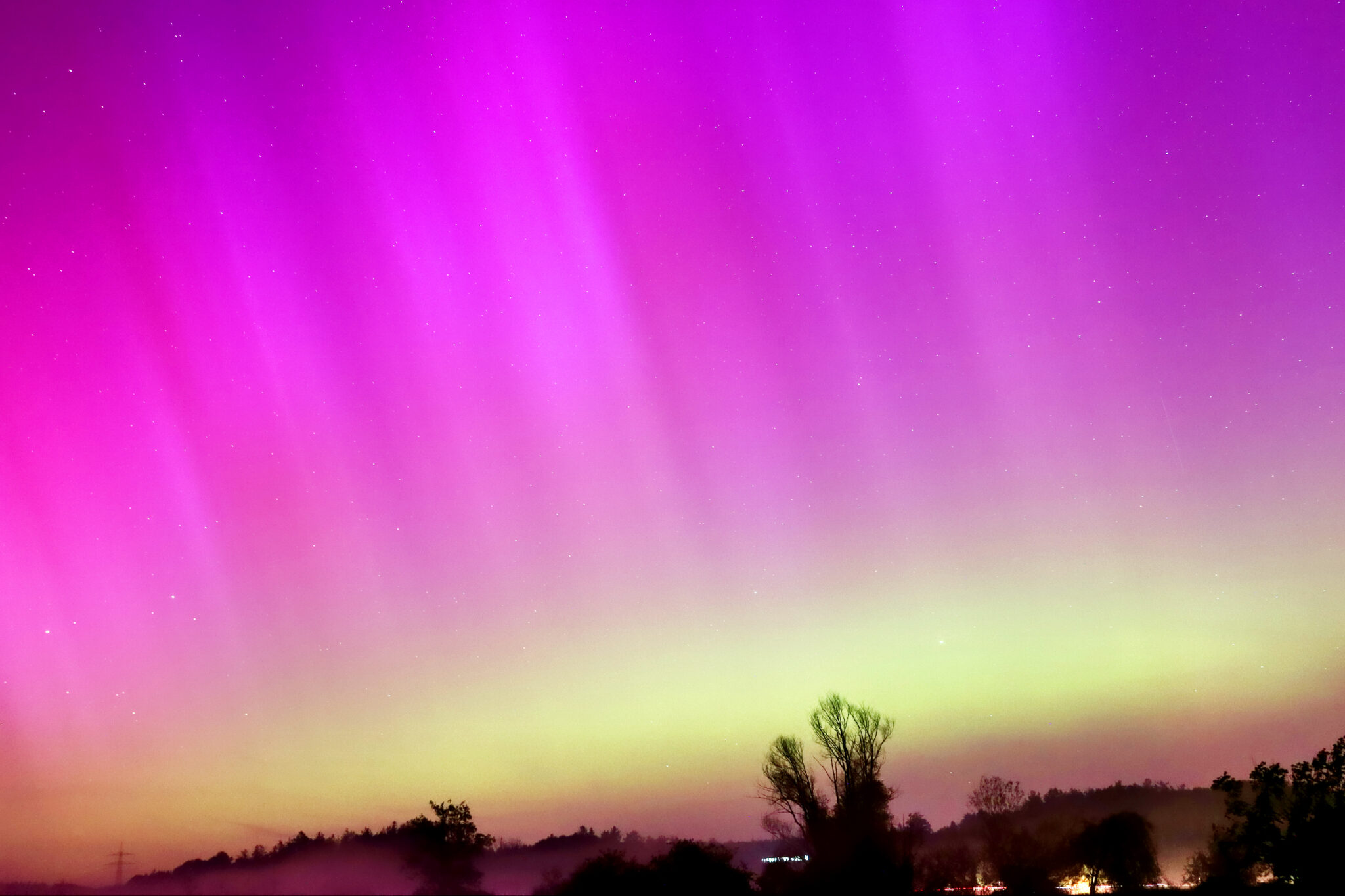
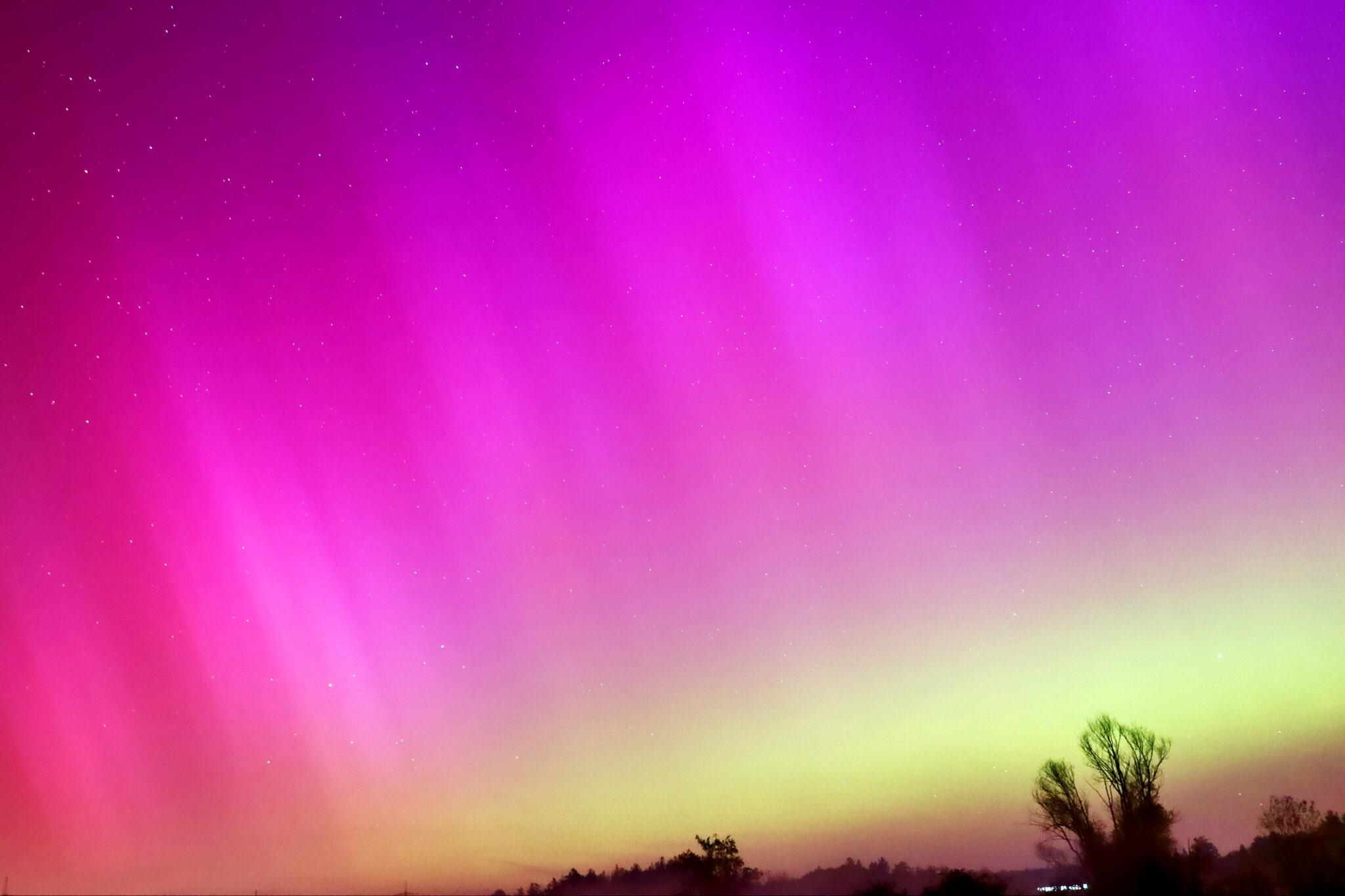
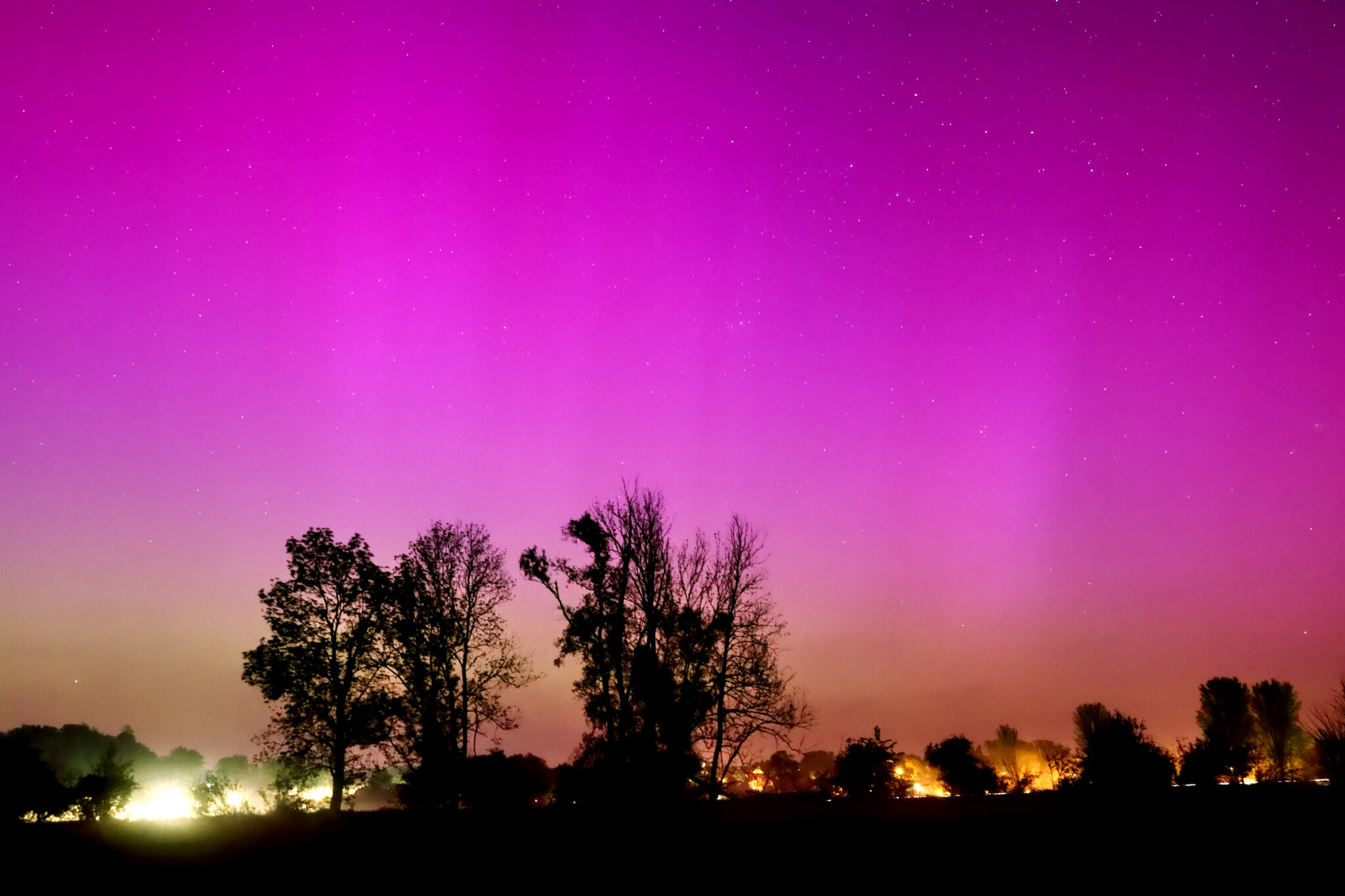
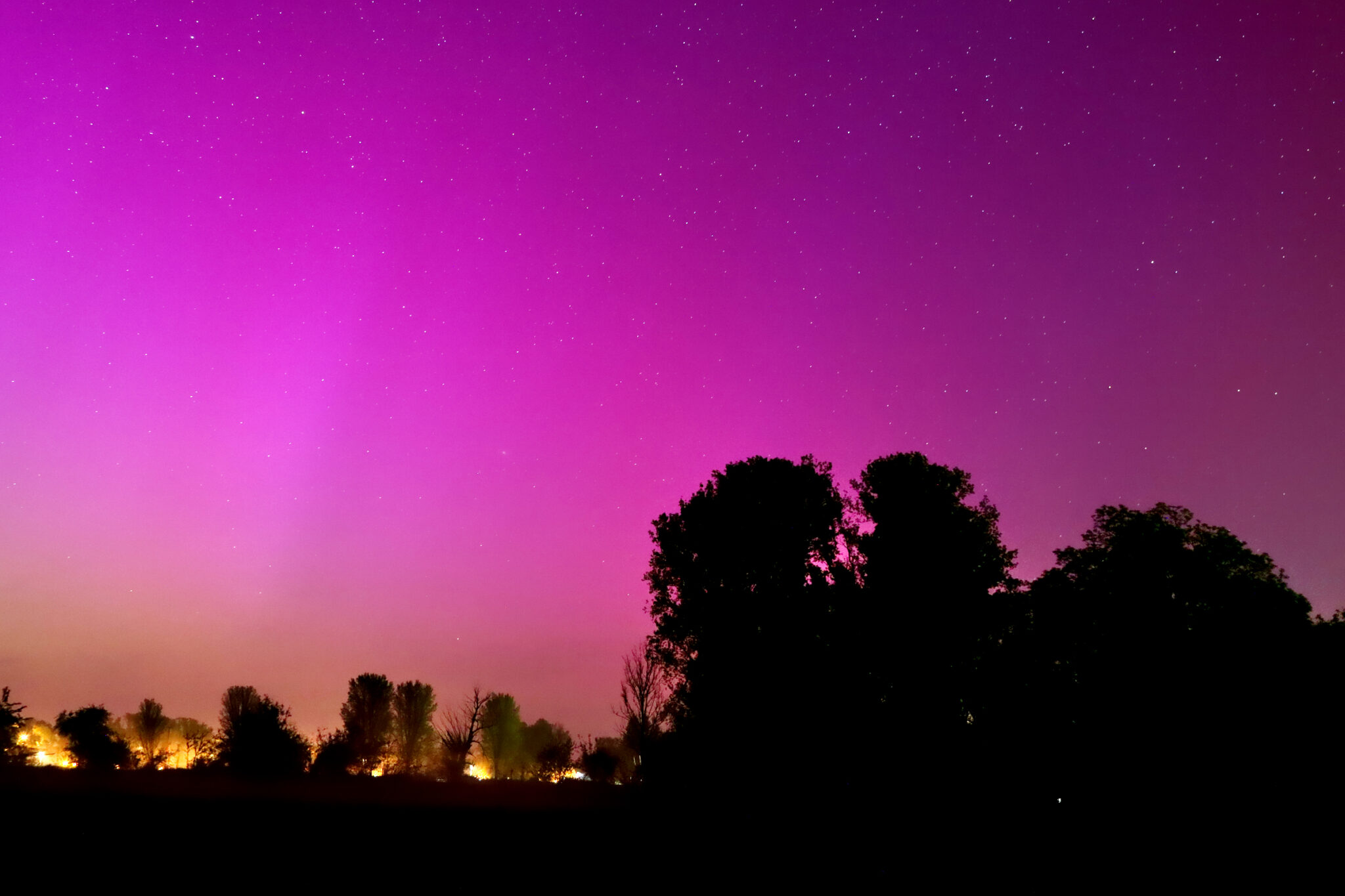
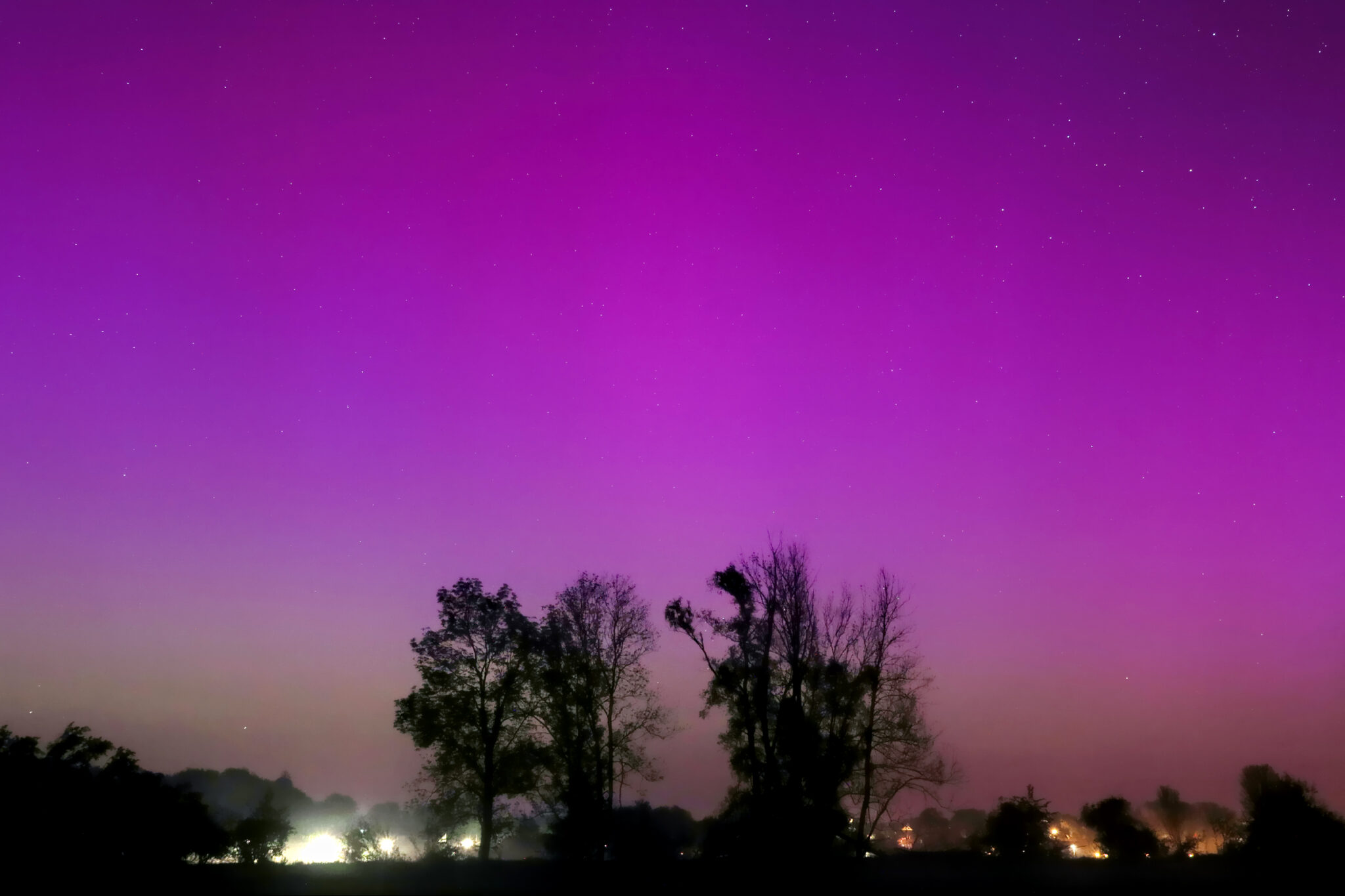
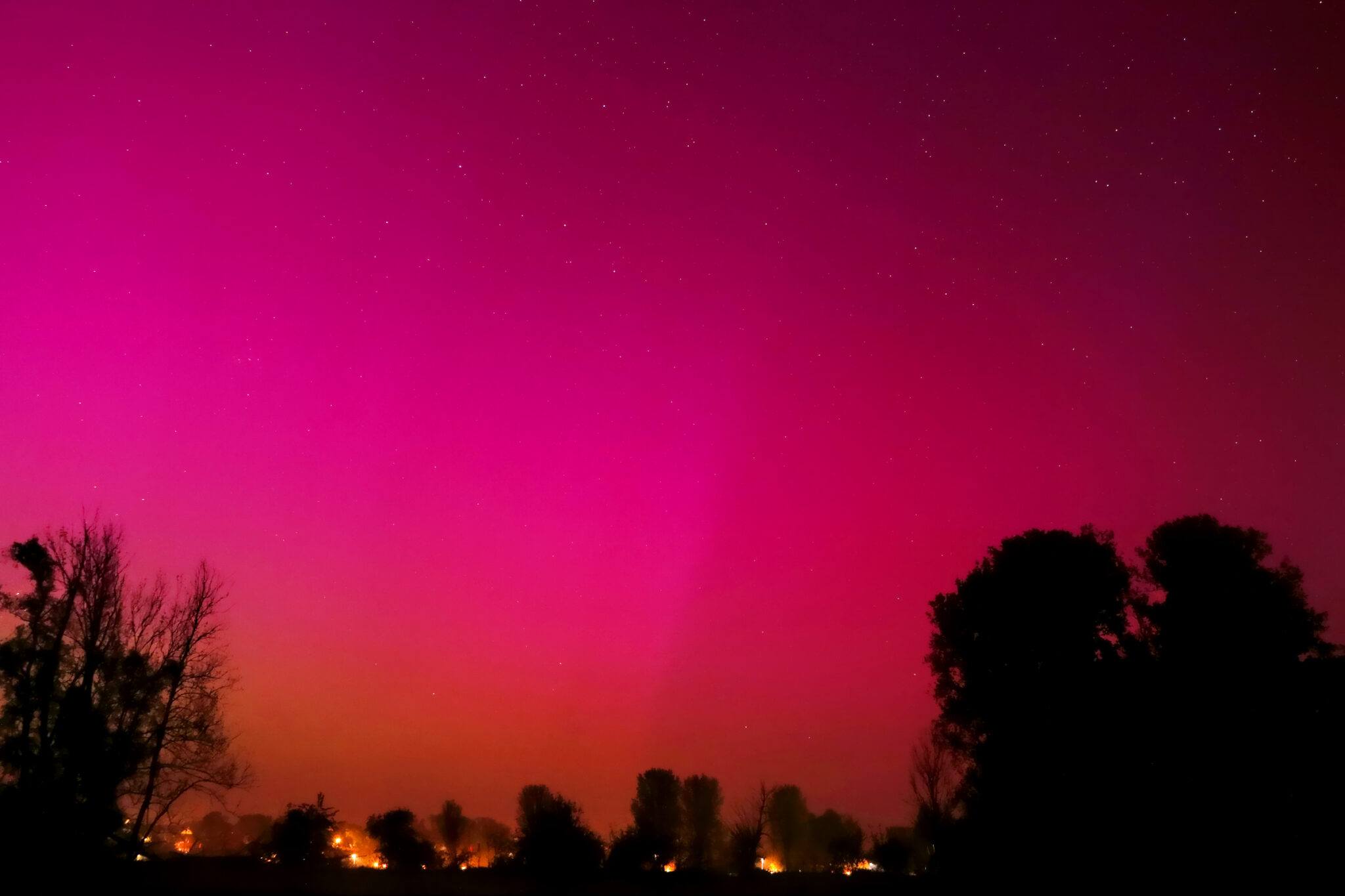
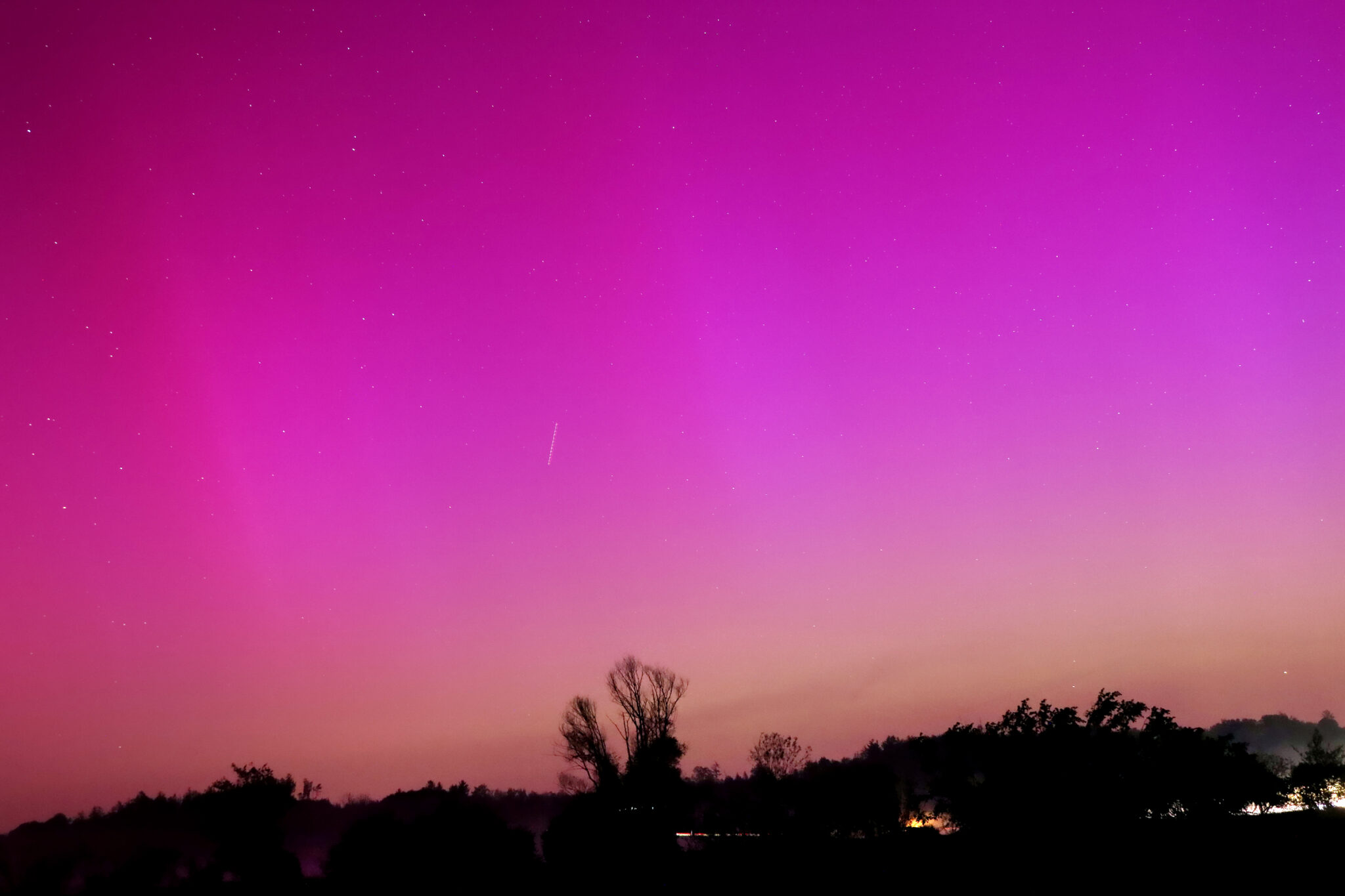
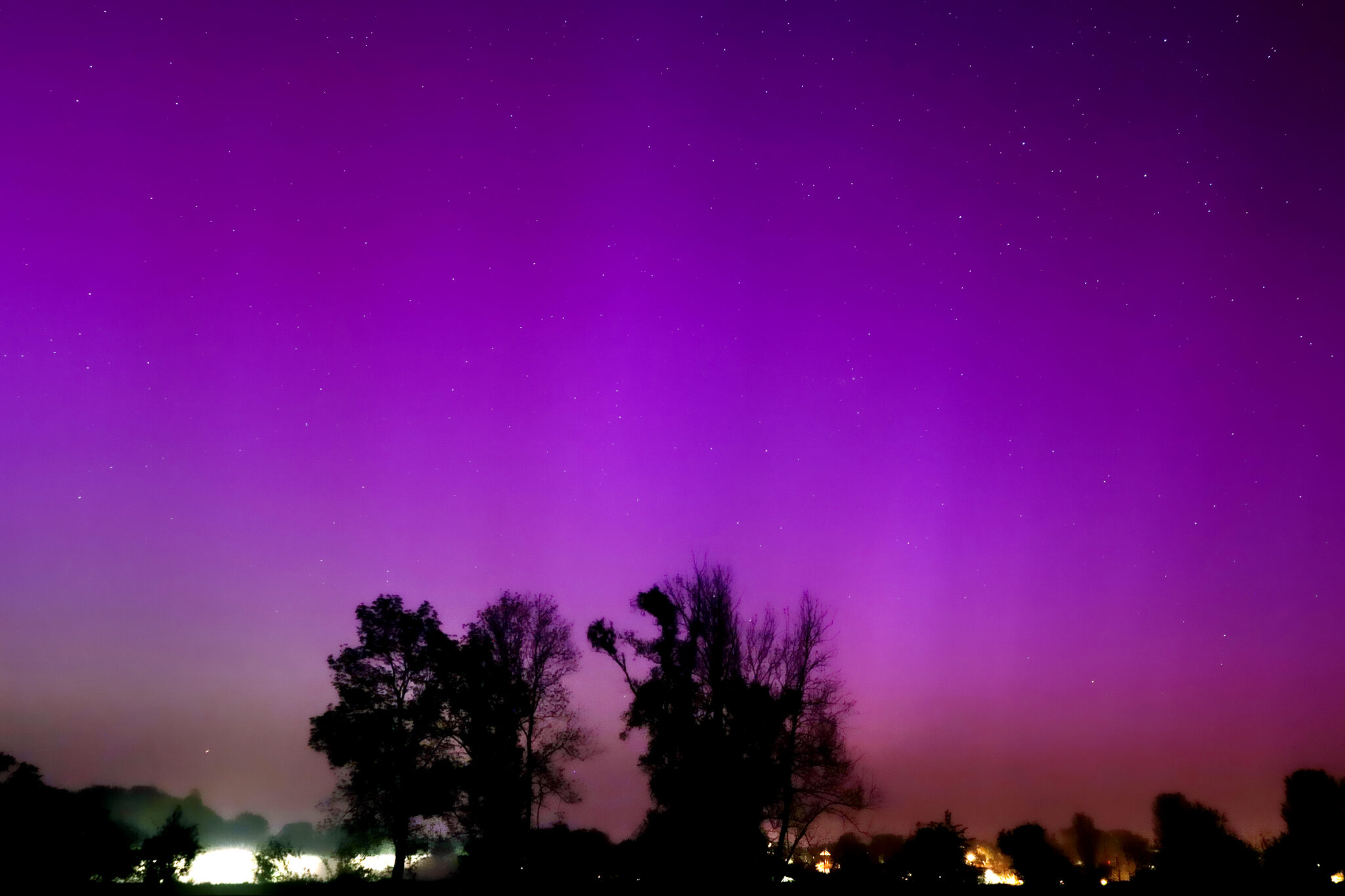
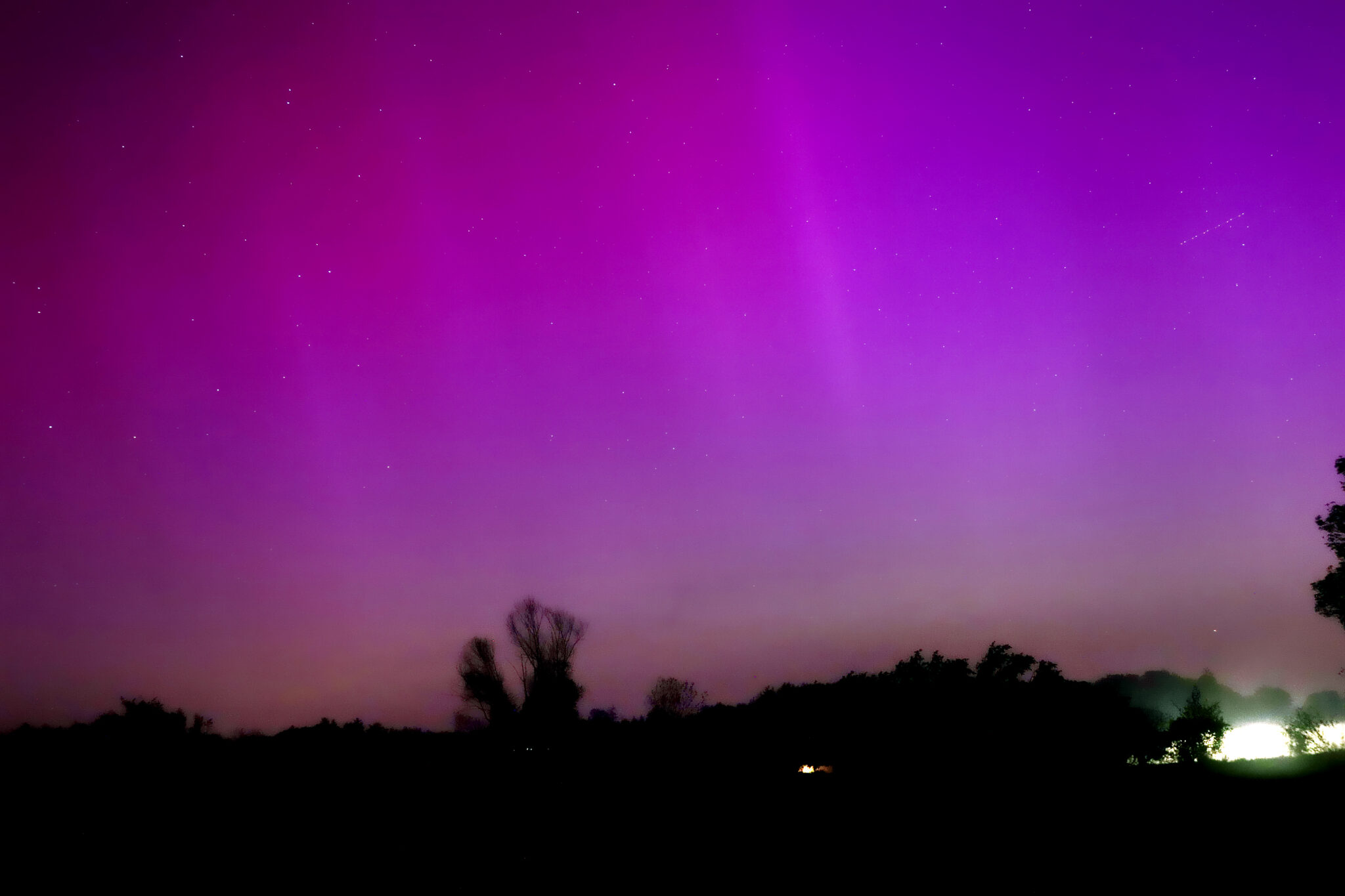
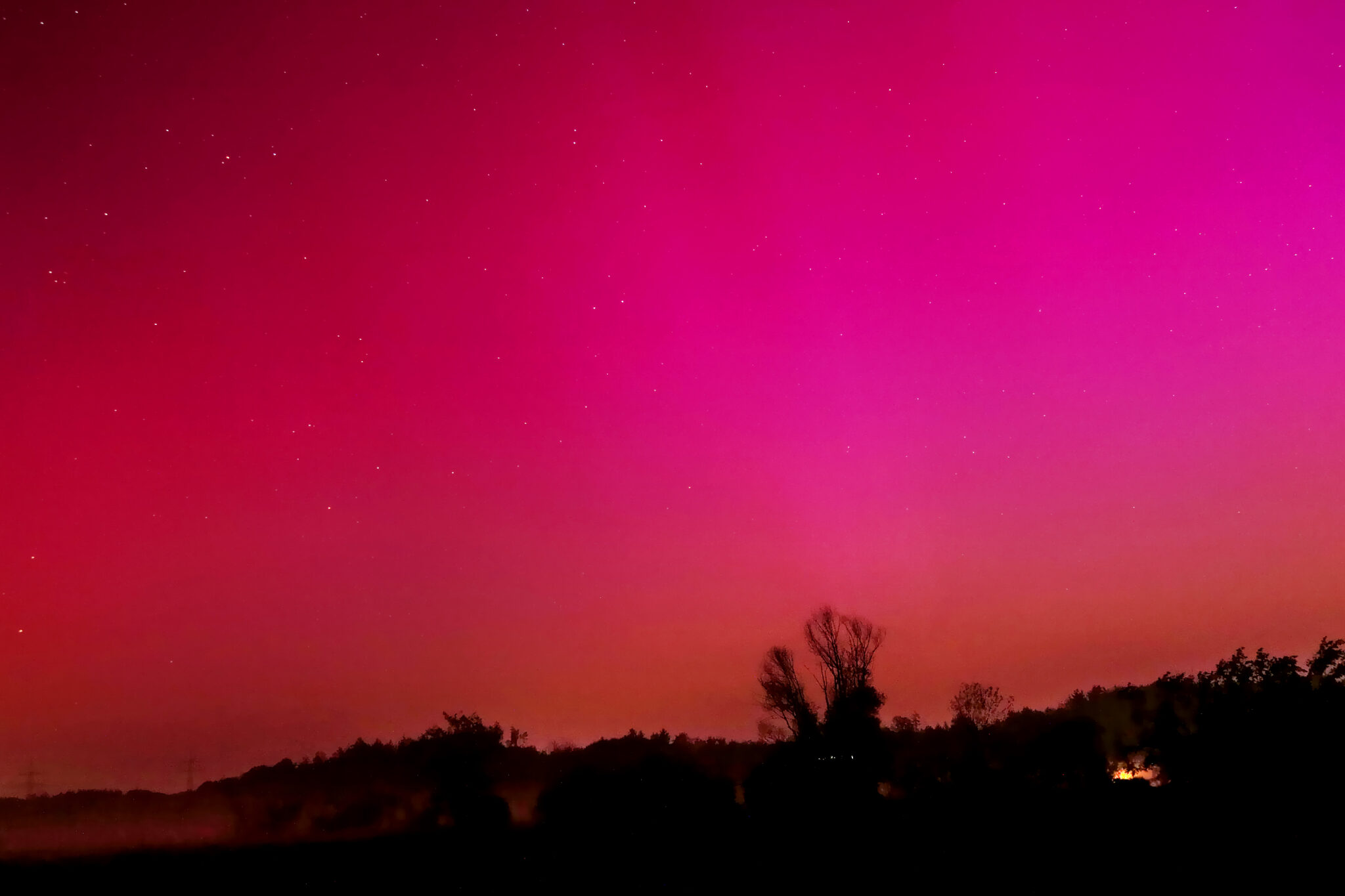
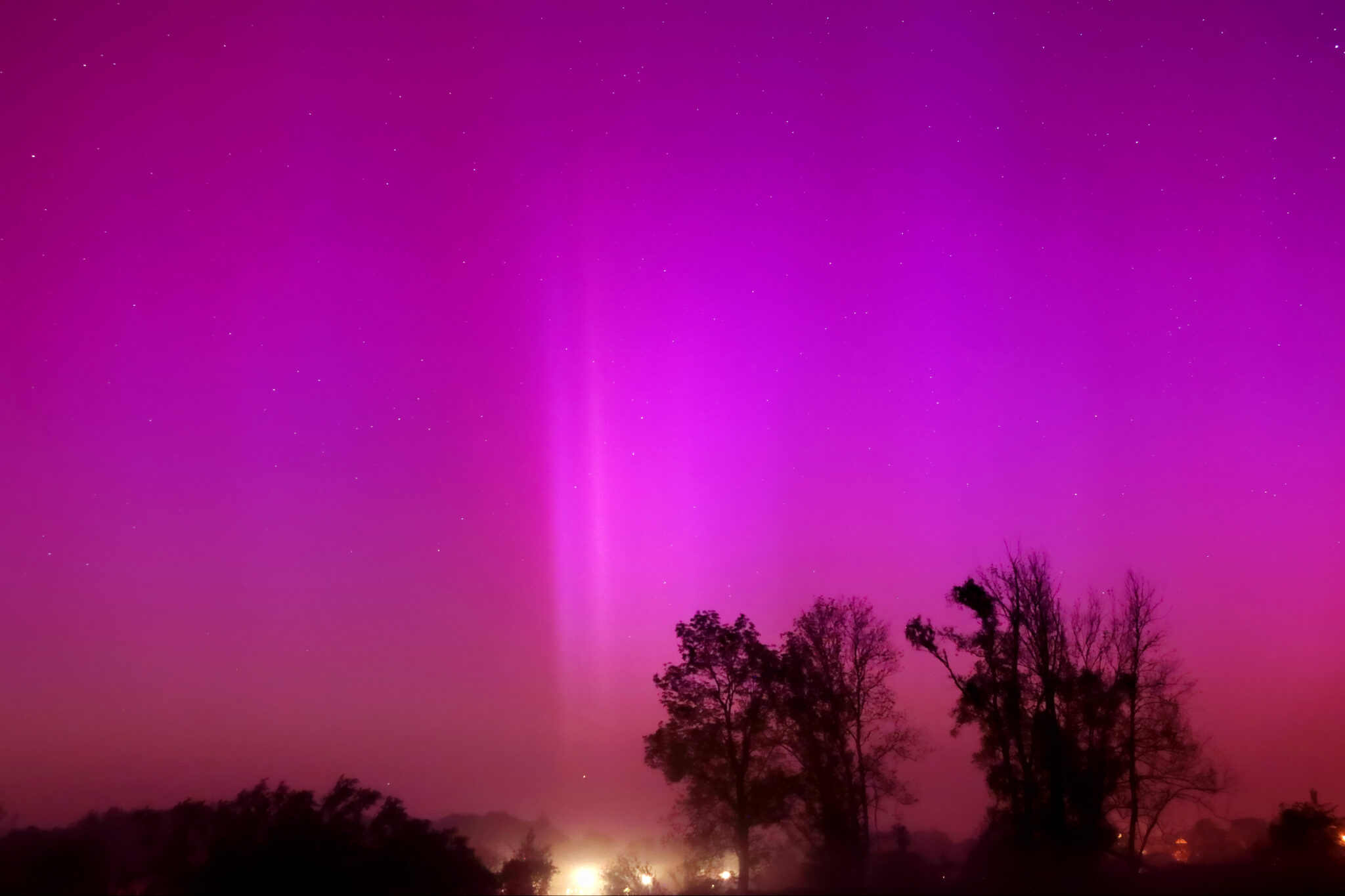
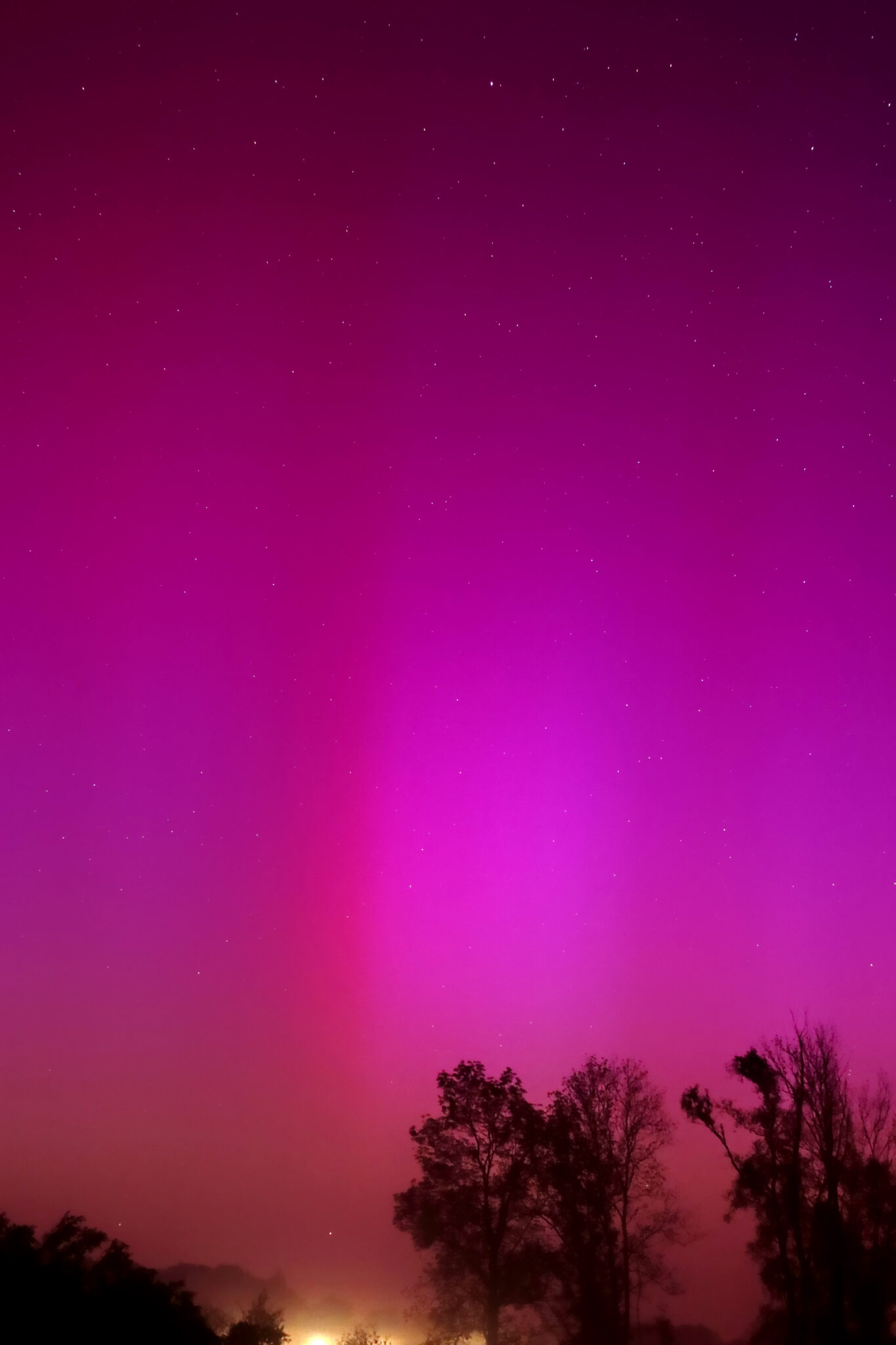
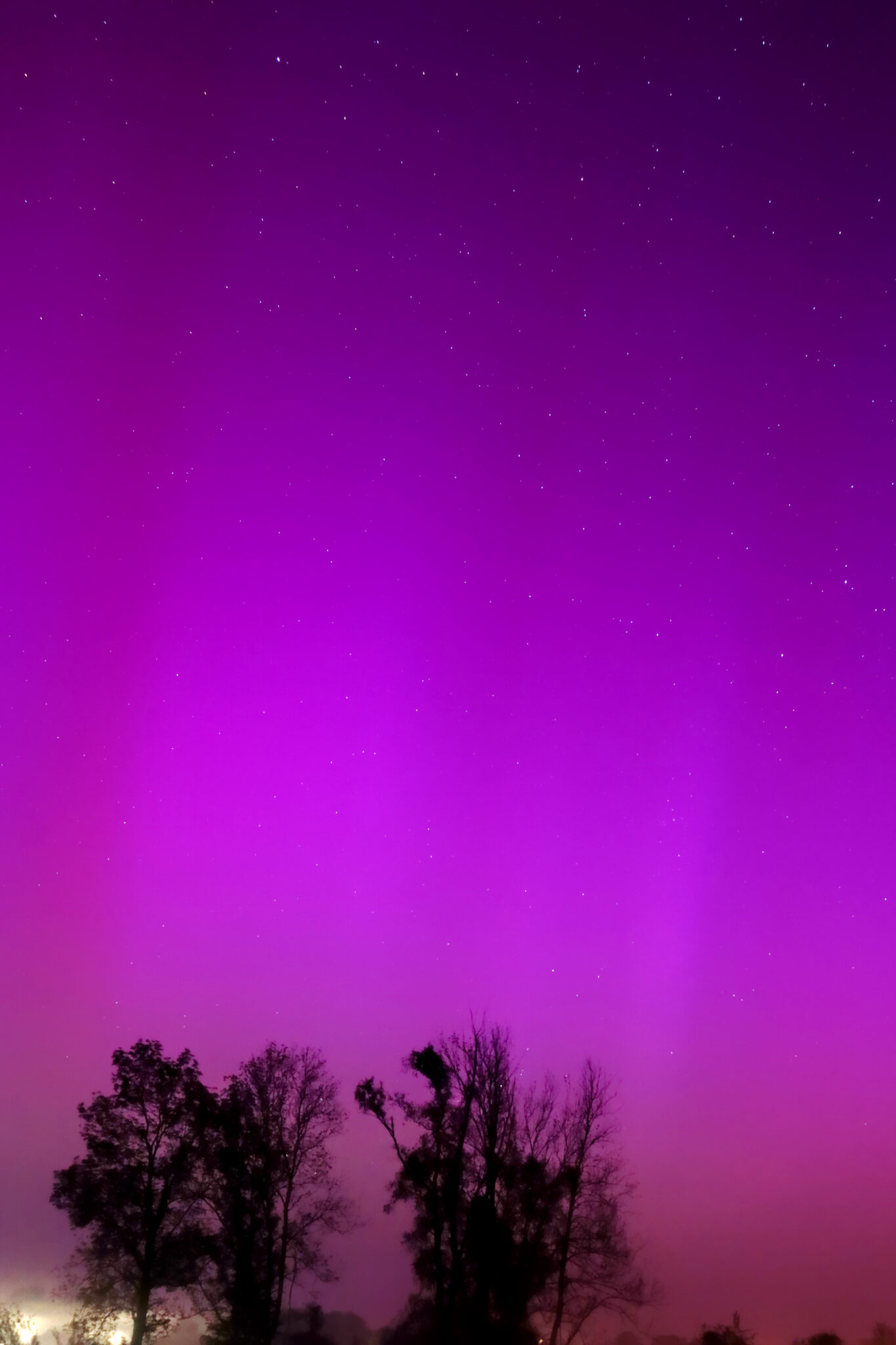
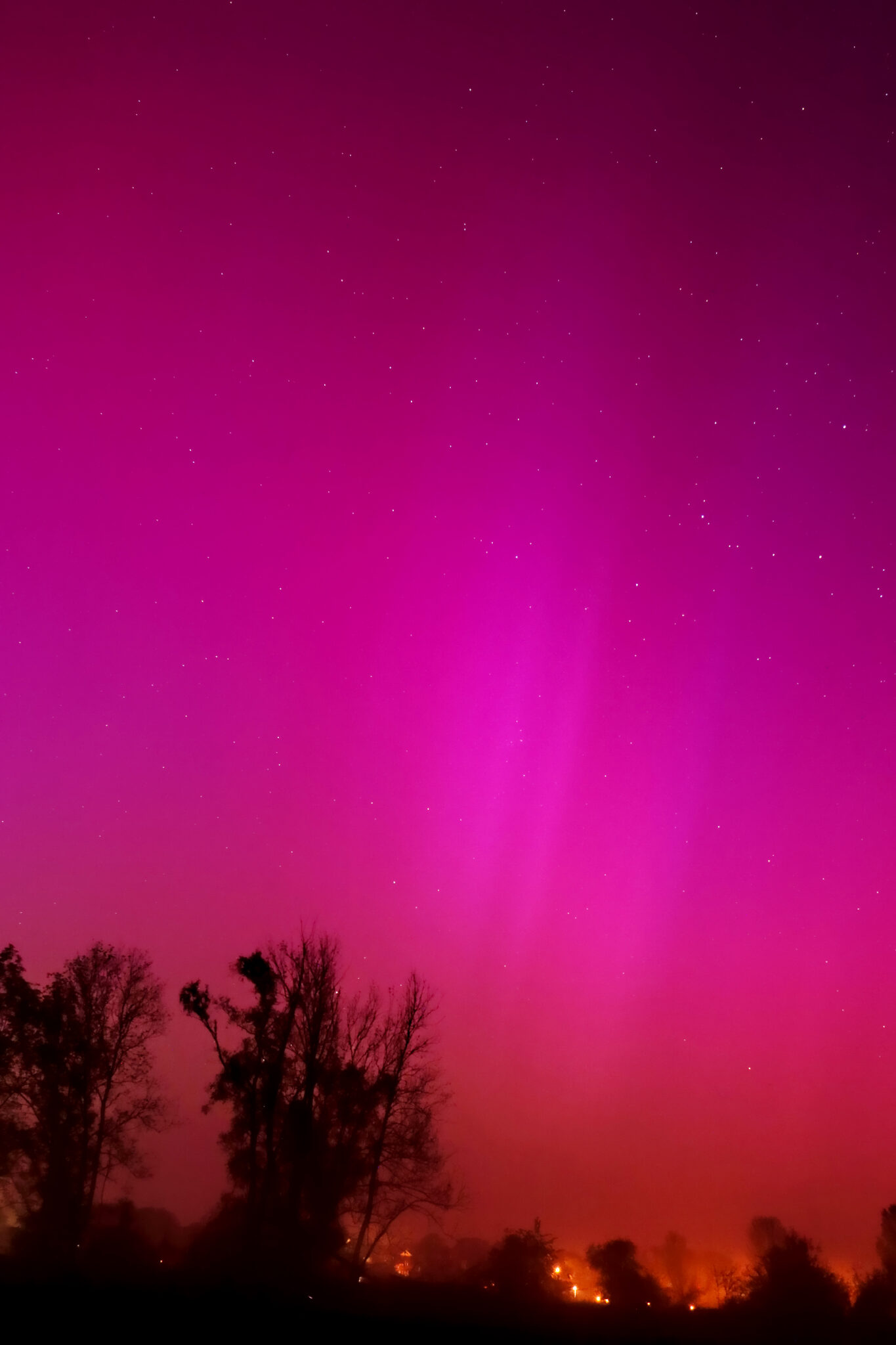
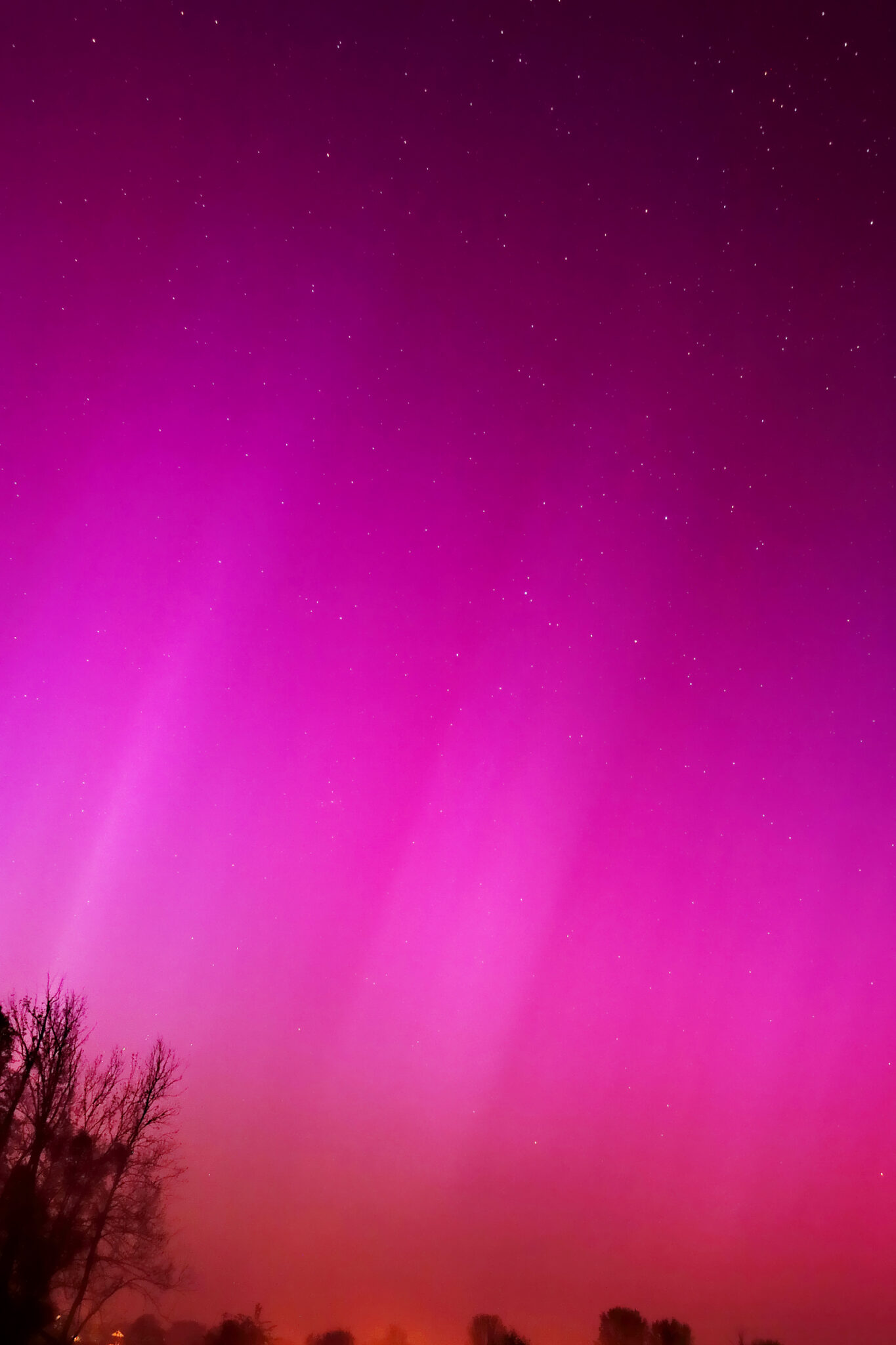
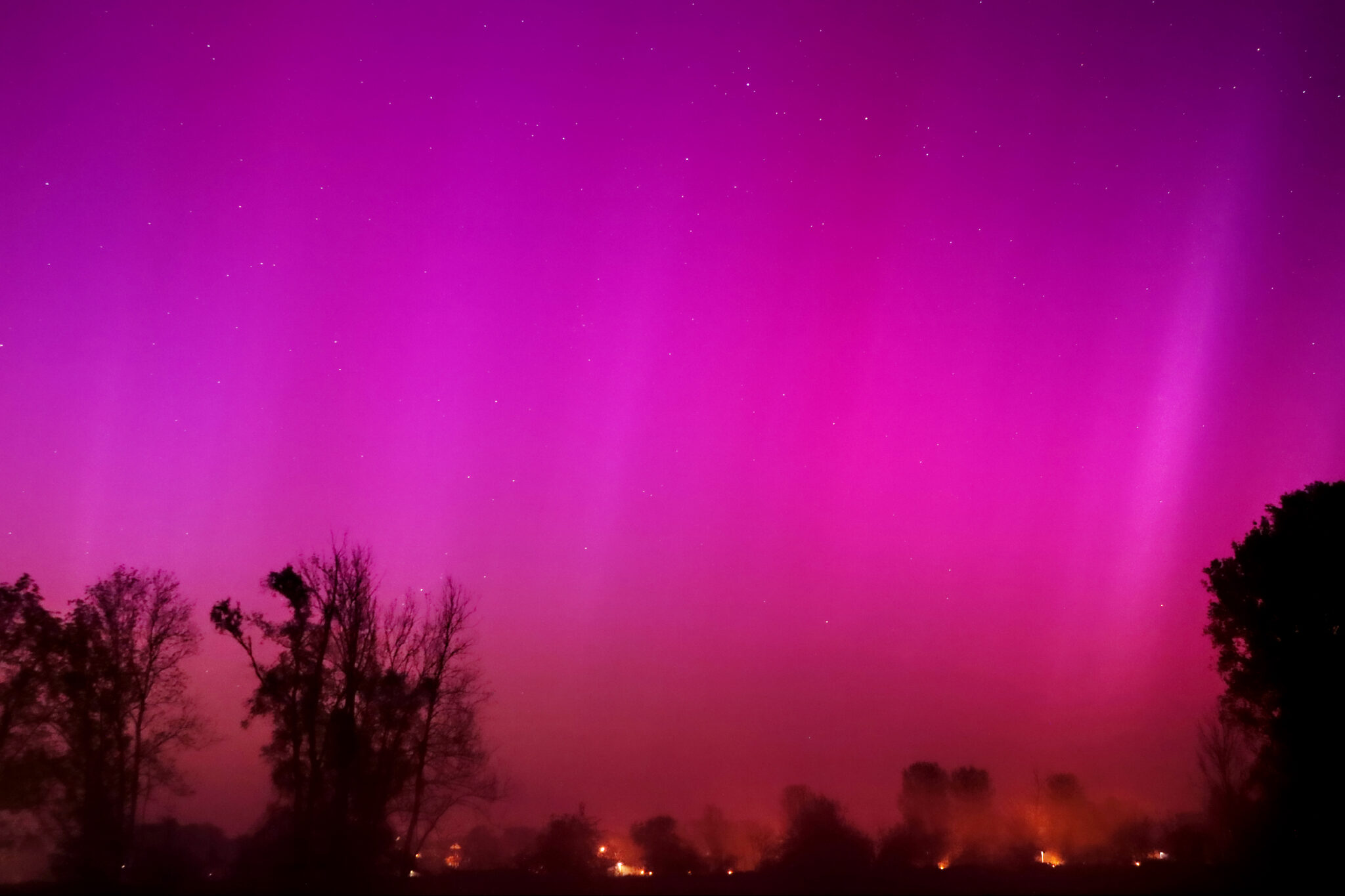
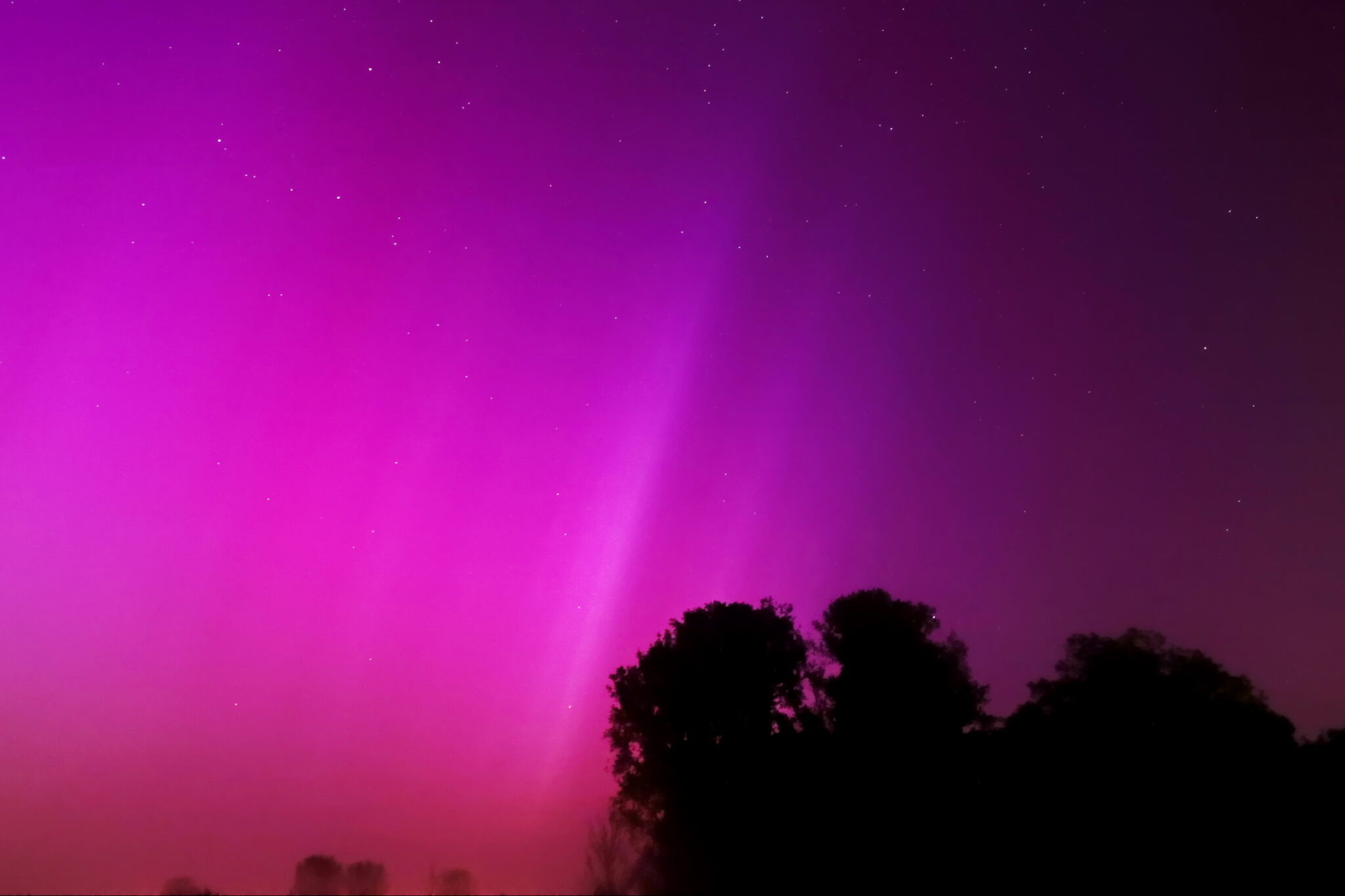
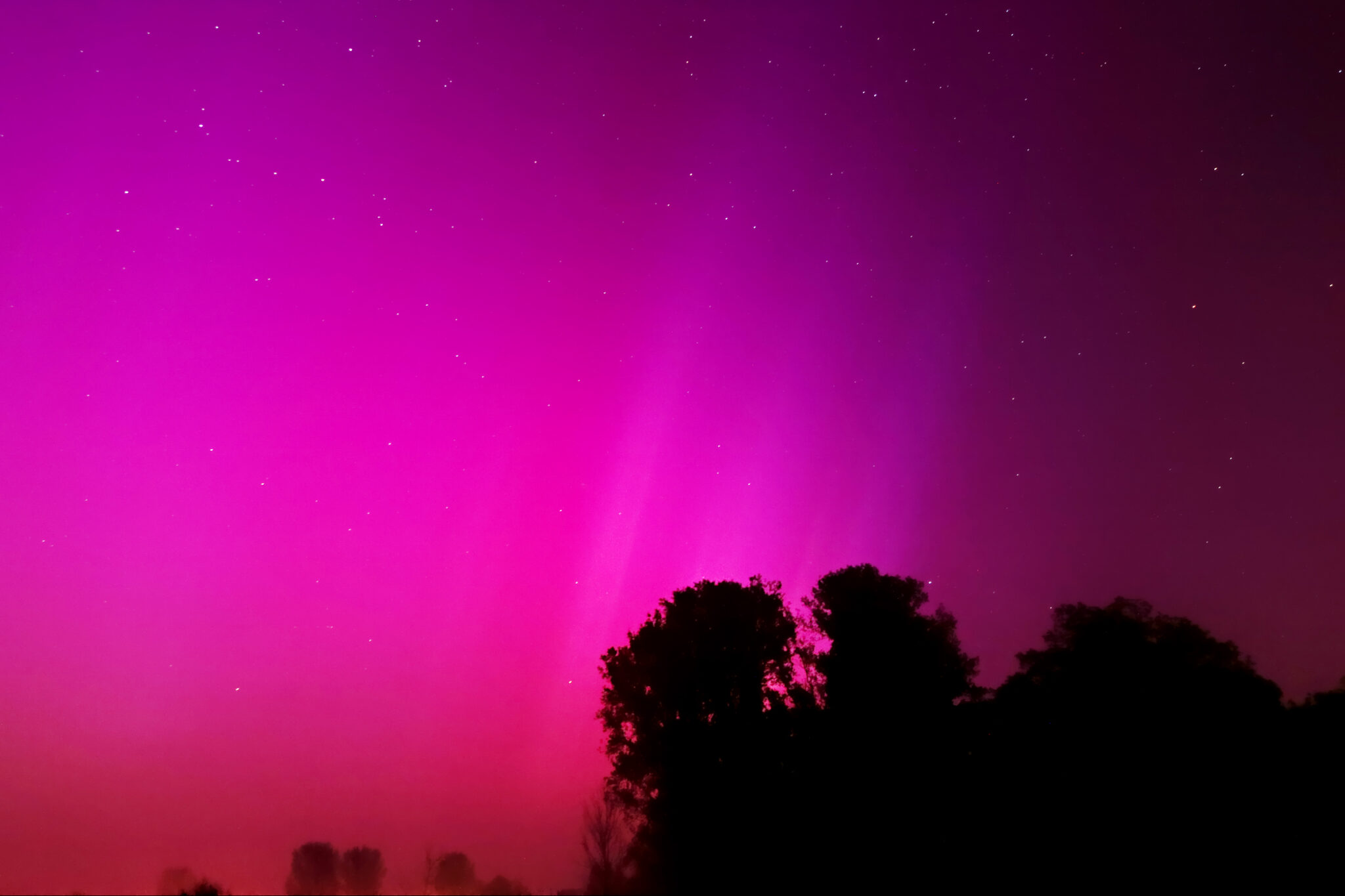
On the night of May 10/11, 2024, an extremely strong geomagnetic storm reached Earth, triggered by several coronal mass ejections (CMEs) that erupted from the sun in quick succession. The activity index (Kp index) reached a G-scale value of G5 (extreme) with a Kp index of 9, corresponding to a severe to extreme geomagnetic storm. When this stream of particles hits the Earth’s magnetic field, it is directed towards the poles. There, particles at an altitude of approximately 100 to 300 kilometers stimulate the molecules of the upper atmosphere to glow – mainly oxygen and nitrogen. The different colors are created by interactions between charged particles from the sun and the Earth’s magnetic field and atmosphere. The primary colors of the aurora are green, red, and purple. Green auroras are created when charged particles, mainly electrons, collide with oxygen molecules at an altitude of about 100 to 240 kilometers above the Earth’s surface. In these collisions, the energy of the electrons is transferred to the oxygen molecules, which then release this energy in the form of green light. Red auroras are created by the interaction of charged particles with oxygen and nitrogen molecules at high altitudes between 240 and 320 kilometers.
As a result of the strong interaction of the solar wind with the Earth’s magnetic field, aurorae have been observed far outside the usual polar regions. In Central Europe and parts of Germany, distinct auroral emissions were visible, primarily in the red spectral range (oxygen emission at 630.0 nm), locally supplemented by greenish structures (557.7 nm). Even in Germany, the phenomena were visible to the naked eye. The intensity, duration, and geographical extent of this event make the aurora night of 10/11. May 2024 will be one of the most significant aurora events in the past few decades in mid-latitudes. With a Canon 750D and an EFS 18-55mm wide-angle lens, I took around 300 individual shots that captured the fascinating play of colors in the sky, with red, violet, and green hues.